HOME > >
INDEX of OTHER TRIP REPORTS
Report on tour of Northern Italy May 2026
Itinerary
(filename: i-itin.htm)
Safely home again... again! (No sooner than I got back from Italy, I was away again for about three weeks. Sigh. At some point, once I've made significant progress with the trip report, I may presume to send you an email with a reminder that this page is here. If you'd LIKE that, please send me an email with permission? (It would be best to send that to my private email address, not the public one this page has a link to.) I'll try to remember to keep this paragraph up to date.
I'm afraid that the page will not evolve systematically. Additions may appear here, there or anywhere. Sorry. At 12 Jul 26, there were about 85 images, maps, etc on the site.
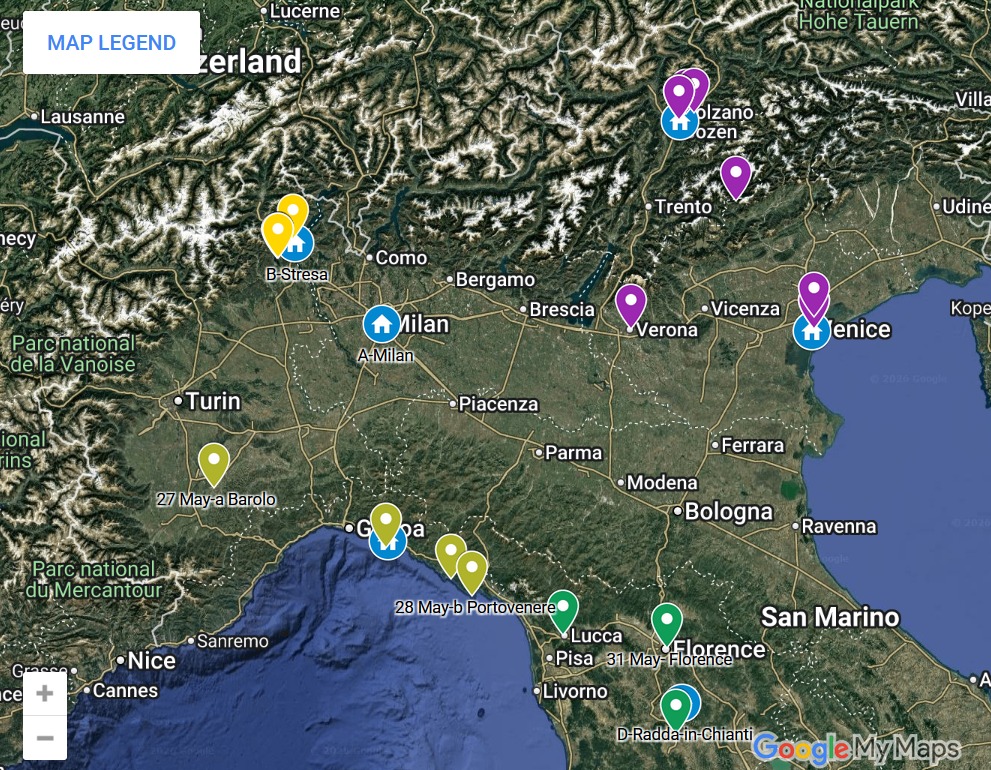
I've done a Google "My map" covering where we went.
(There's a simpler map on my "Overview" page.)
The image to the right is static... and not a lot of use!
However! If you click on the "Map" link below... or even better, if you are on a desktop PC...
- make this window take less than the full screen
- right-click on the link below
- select "open in new window"
Whatever you do, the link should open an interactive version of the static image here.
Interactive map of the tour
You can zoom in, pan around.
If you open the Map Legend, you get an outline of our trip. The last layer of the map, "Hotels", has our hotels... as you might have guessed. Their pins are blue, with a "hotel" icon.
Once you have the Map Legend open, you can turn layers on and off... the illustration here has the "Lines" layer turned off. (The Lines only show transfers between hotels. All points visited in a day trip from a hotel, or en route to it, are shown in a color specific to the hotel we were at, or going to.)
The lines are only scematic. They do not show our precise routes.
If you use the three-dot menu at the upper right of the Map Legend, you can choose to view the map in Google Earth. If you do that, you can choose between the satellite basemap and the "map" basemap. Each has its charms!
In a few cases, I have done some lines connected with a day's outing.
(Click on the "v" next to the "All items" items (!), and you get lists of the pins in that layer of
the map.)
After the "Hotels" layer, there are further layers, one for each place we were based. And the pins for each layer each have their own color.
Especially if you, gentle reader, went on the tour, I think you'll enjoy zooming in and seeing again where we went. Does this, for instance, bring back Radda for you? If only the image could show the third dimension! For those who weren't there, this tiny village was perched on a hilltop. The ground fell away sharply and far, on all sides of what you see in the image.
The tour operator was Odysseys Unlimited, they have done an excellent job for me many times. I am very grateful to the friend who introduced me to them.
We had a very good tour director. I enjoyed travelling in his care.
DAY 1: Saturday, 23rd May, 2026
I set out from the UK. Arrived in Milan late afternoon, with time to enjoy a bit of the town.
Excellent Metro system! Got to hotel easily, and then went back to area near Duomo (cathedral).
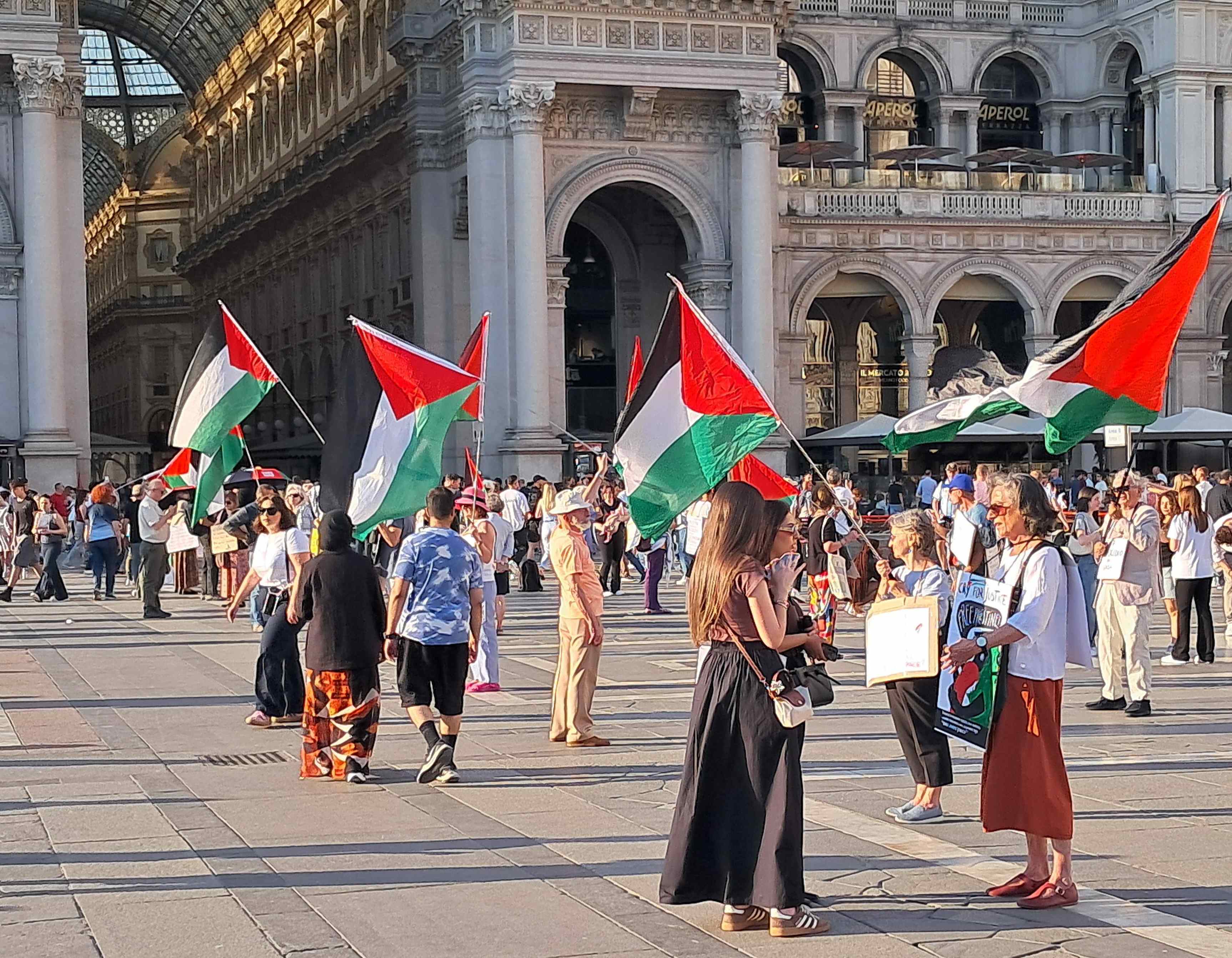
There was a very impressive demo in support of Palestine in front of the cathedral. Peaceful. Ordinary people. Solemn. But still very powerful.
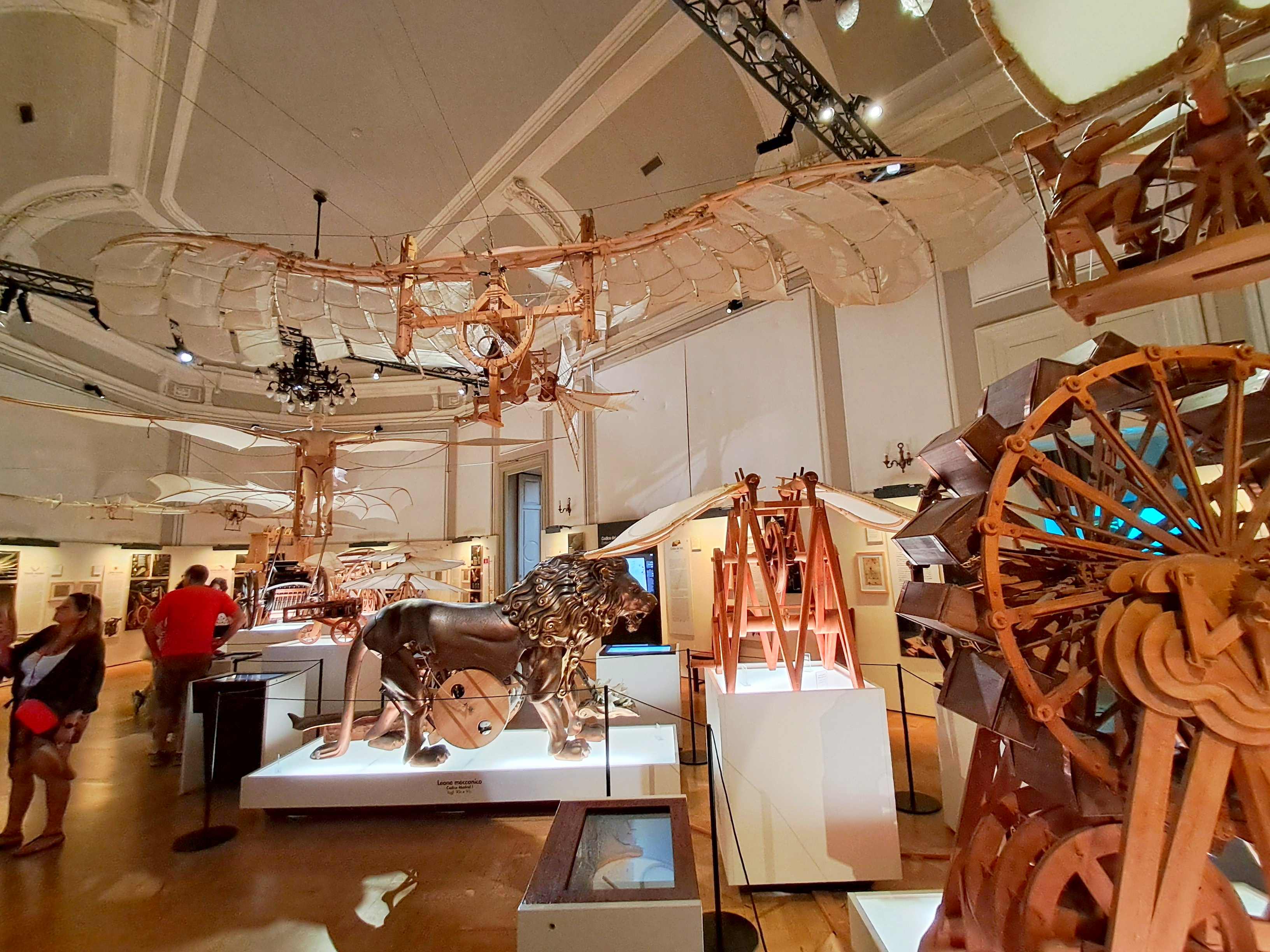
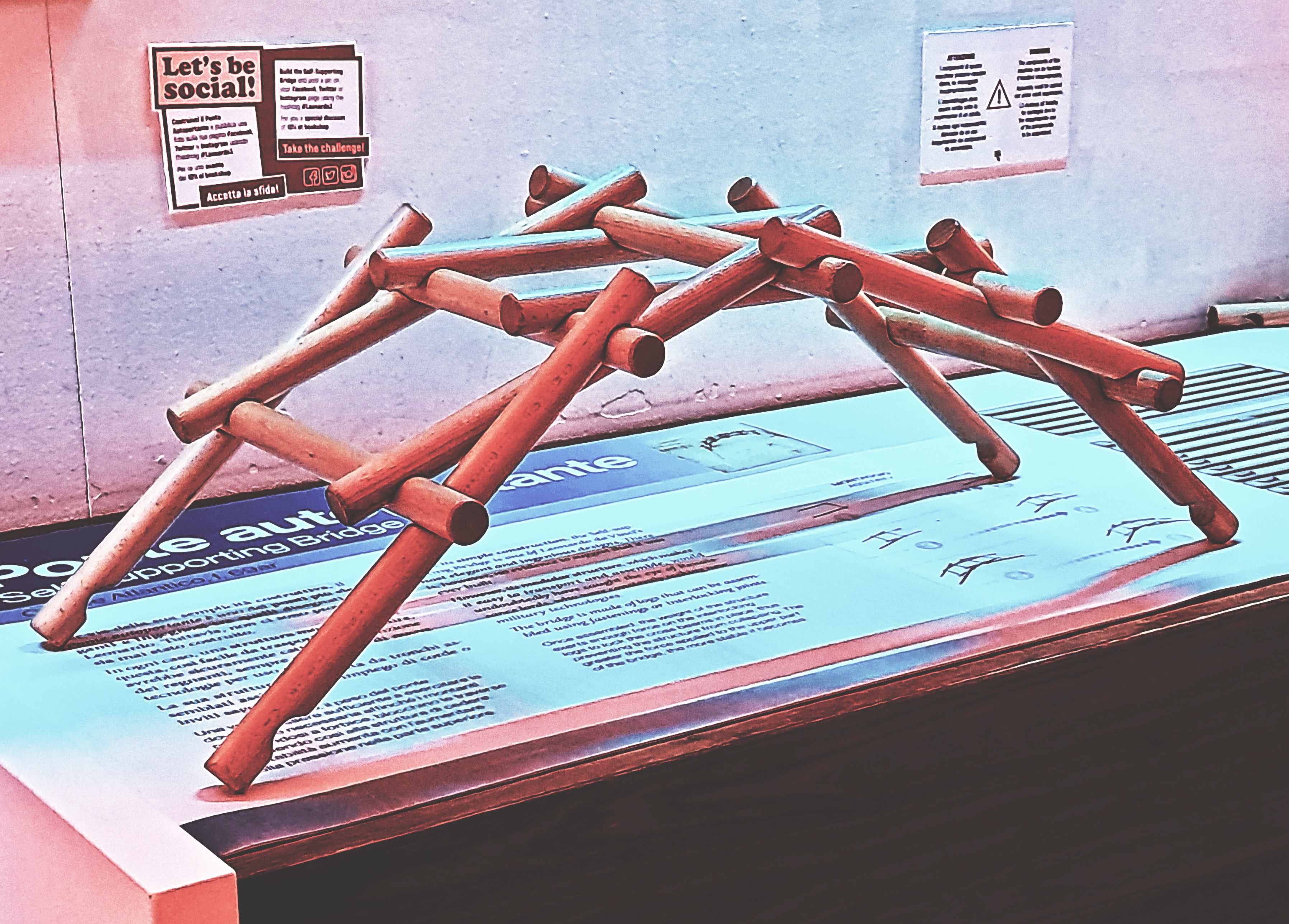
Visited stunning museum celebrating Leonardo, who spent a good part of his life in Milan. Working models you could play with of things from his sketchbook. Building one of his self-supporting bridges took multiple sets of hands, and I had fun working with parents and kids.
DAY 2: Milan/Stresa, Sunday, 24th May, 2026. Began three nights at La Plama Hotel
I spent Sunday morning enjoying a bit more of Milan.
Science Museum... outstanding... Lunch in family run (since 1909) tiny cafe at entrance to railway station. I'd had breakfast there. Back to hotel for collection at 3, where I was collected for drive to beautiful Stresa.
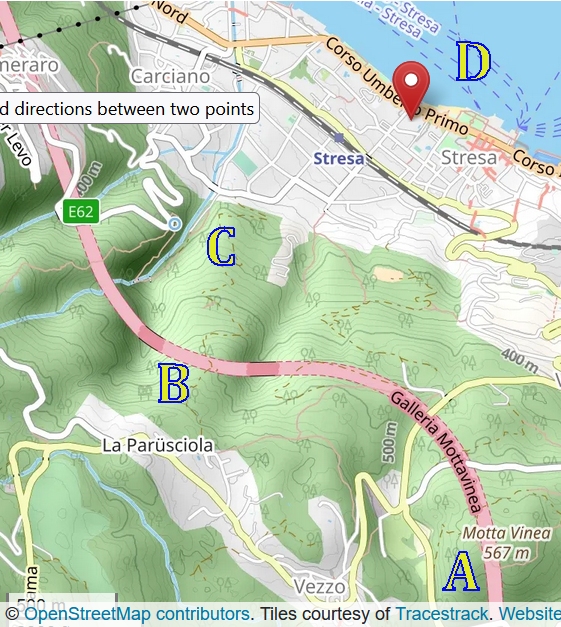
I'd been a bit foolish... opted for an expensive private hire car when there's a perfectly viable train... but it was so convenient, and the arrival in Stresa spectacular...
Late the journey we entered a tunnel. ("A" on the map, lower right.) After nearly two miles inside the mountain, we came out at "B". I'd not noticed how we'd climbed higher and higher durig the journey from Milan, and so first view of the lake and the town from 1500 feet above the town was dramatic! ("B" on the map, lower right.) Then down the switchback road ("C"), with tantalising glimpses of the town on the way down. And and thence to hotel, where the map pin is.("D") A superb hotel on a superb spot.
A great start to the Odysseys part of the trip! Very nice introduction to this ancient resort town on the vast mountain lake.
The tour director gave me personal greeting and mini briefing as I entered hotel. Impressive! Immediately likeable, friendly. And as the tour progressed, it became clear that he is a very capable and efficient person.
In the words of the tour operator... (Always in the following style, sometimes tweaked a bit...)
Stresa is on beautiful Lake Maggiore. More than 40 miles long and six miles wide, the lake sits on the Italian-Swiss border – a touch of paradise surrounded by green hills and gracious villas.
Early evening: meet my fellow travelers and hear welcome briefing from tour director, followed by dinner at the hotel.
DAY 3-Stresa, Monday, 25th May, 2026
We embark this morning on a short ferry transfer to Isola Bella, the beautiful Borromean island set in the middle of Lake Maggiore.

Fully occupied by 17th-century Palazzo Borromeo and its extravagantly landscaped gardens, the island offers lovely views of the lake and surrounding mountains.
We take a guided tour of the palazzo, where we have time to admire the priceless works of art on display inside, including tapestries, furniture, statues, paintings, and stuccoes. We also stroll through the palazzo’s flower-decked gardens before having lunch together at a restaurant on the nearby island of Isola dei Pescatori.
Upon returning to our hotel, we have the remainder of the afternoon at leisure to enjoy our charming lakeside environment and to dine on our own.
Accommodations: Hotel La Palma
Meals: Breakfast, Lunch
The Isola Bella was a significant element in the view in front of our hotel.
It would be reasonable to think that it was named "The beautiful island". In fact, the name is a contraction of "Isola Isobella", Isobella being one of the women of the Borromeo family
The Borromeo's, to quote Wikipedia, "... started as merchants in San Miniato around 1300 and became bankers in Milan after 1370." They remain a significant family to this day. Their base was and is in Milan. The island was and is a "holiday home".
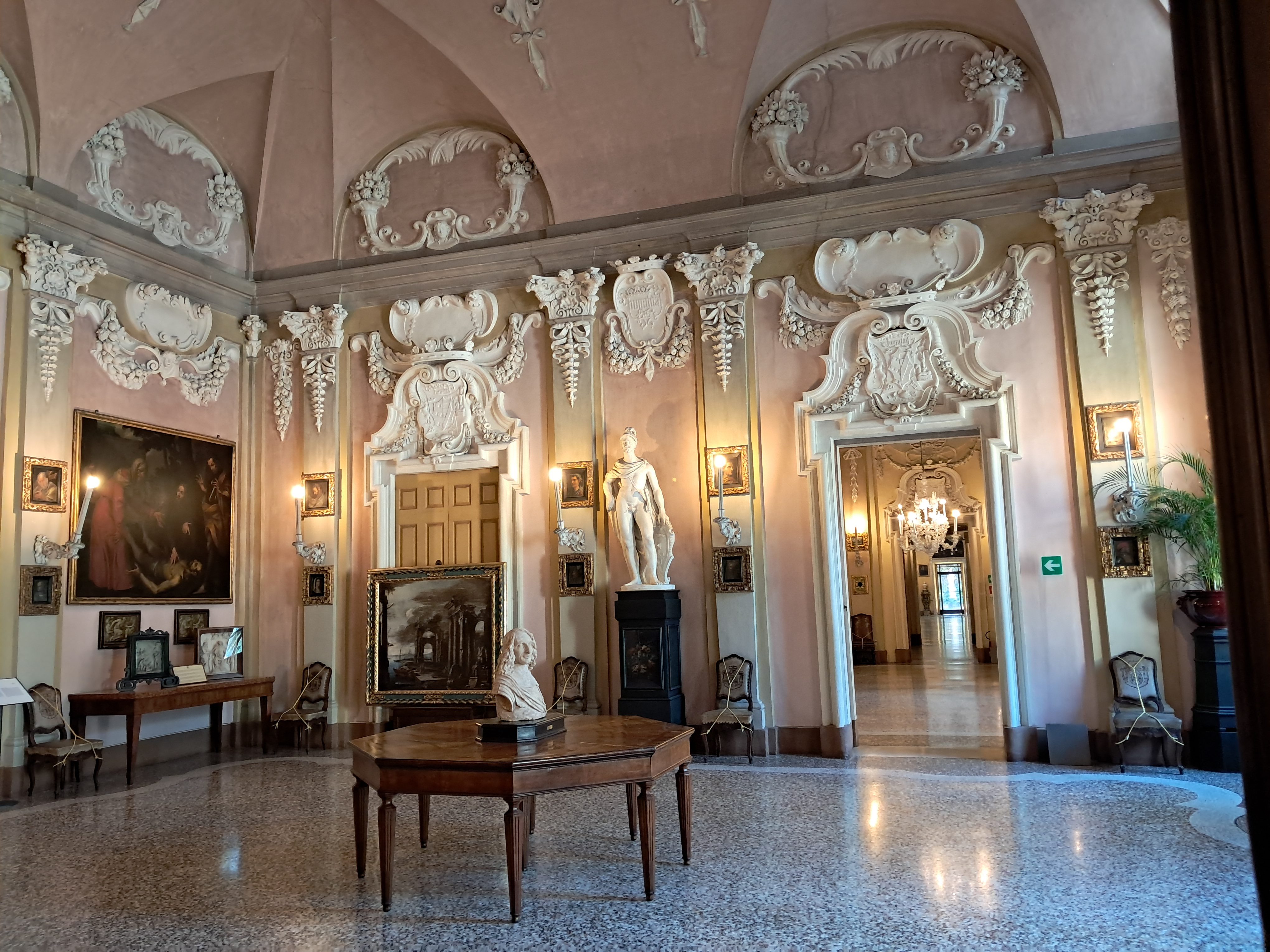
The 34 rooms of the house we saw were magnificent. That was less than a third of the house, most of it remains private.
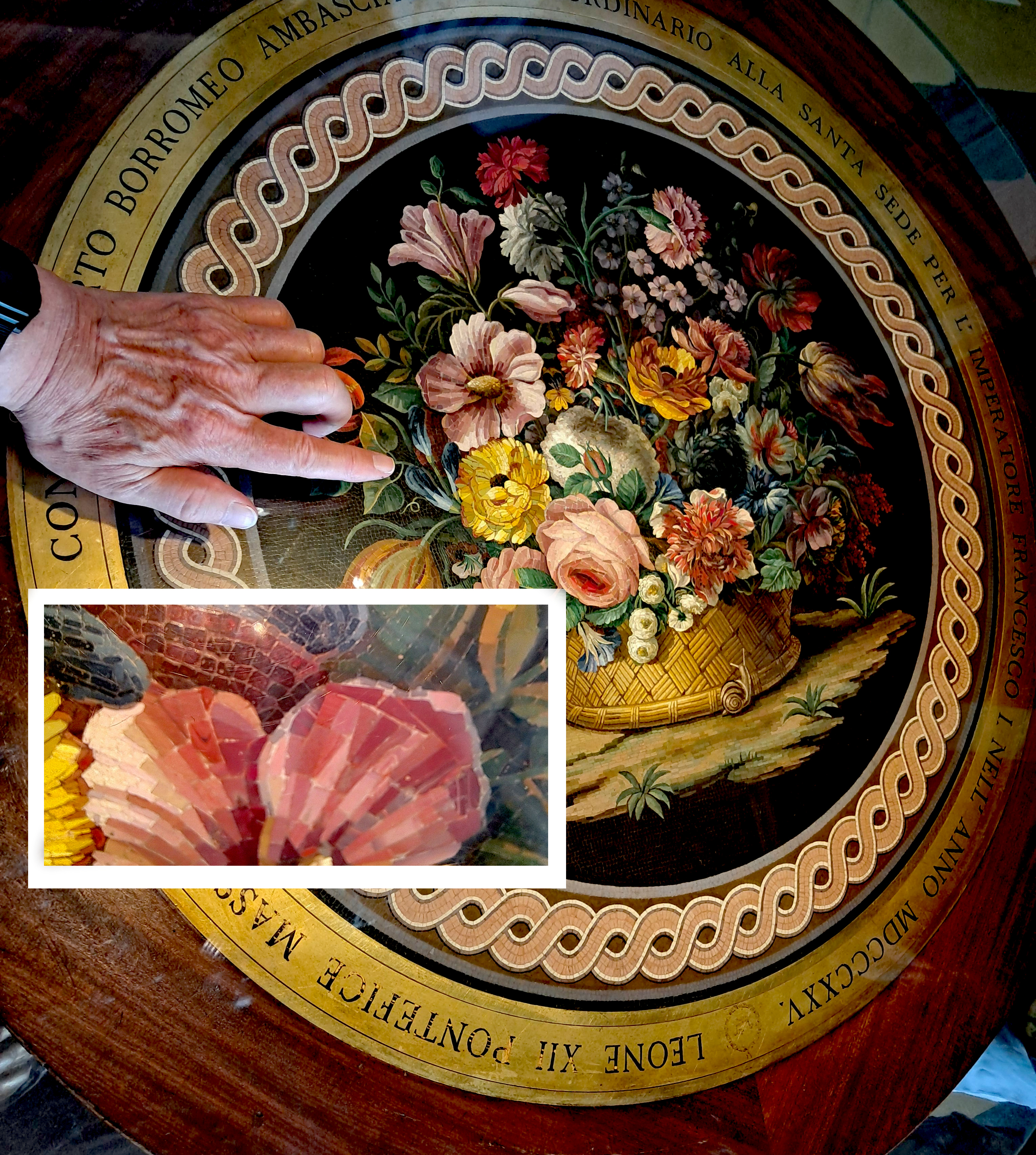
I could do pages and pages on the treasures we saw. One was a table with a breathtaking still life of flowers adorning the top.
To my great frustration, I've lost the notes I made at the time.
The artwork is an example of the micromosaic technique. The image is created by literally thousands of tiny bits of glass. You can see how tiny they are from the inset. My thumb would eclipse one of those petals. (RauAntiques.com state that there can be 5,000 tesserae per square inch in micromosaics of this era. In some parts, e.g. the braid border, larger tesserae are used, but in many cases, they are specially shaped for the place they are used. You can see that in the pieces to depict the petals, shown in the inset.
Someone else's trip report said that it was created by Domenica Molea, 1780-1862, and tha the spent approximately 10 years on the project. It was a gift to Giberto Borromeo from Pope Leo XII (reigned 1823–1829). (Note the direction of travel. The Borromeos were important!.)
-----------
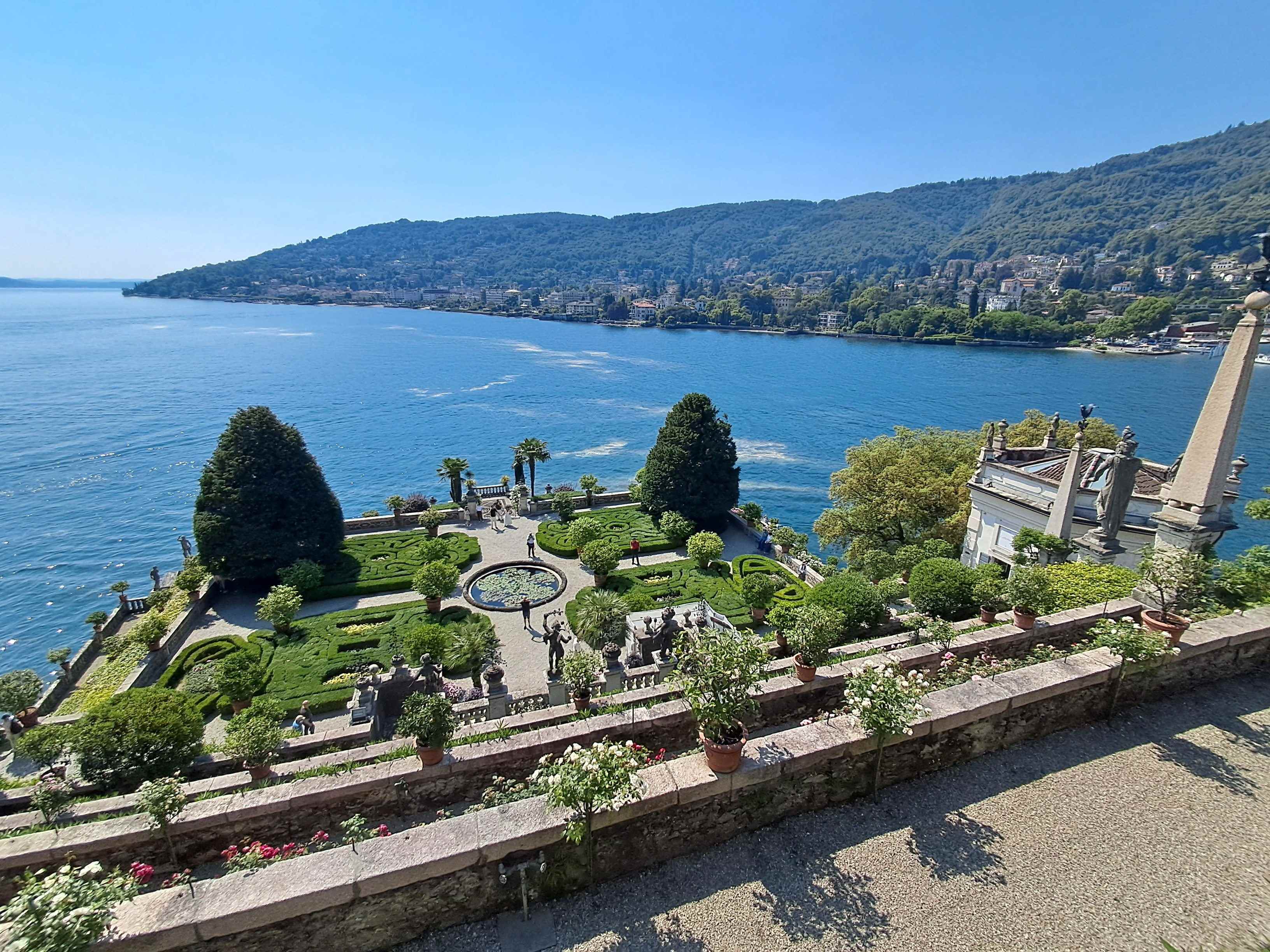
The gardens were splendid and extensive. Very grand. They are on many levels, "draped" over a small "peak" at the east end of the island. And of course there was a hothouse with jungle exotics.
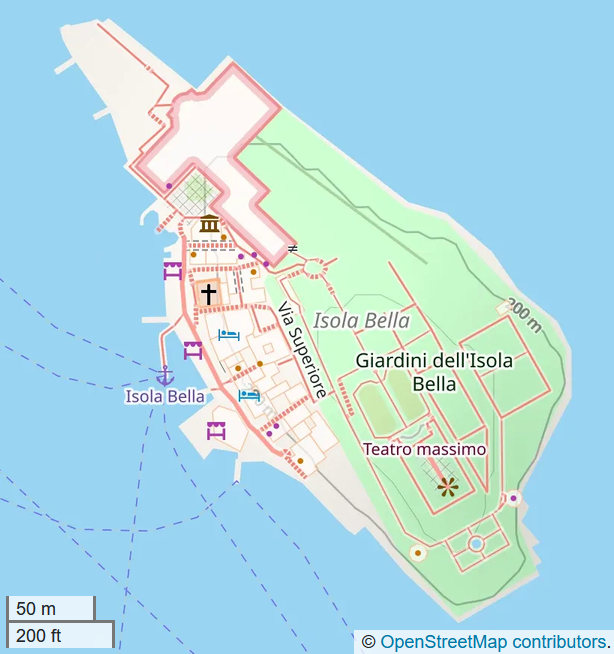
Below, to the right: the view southwest from Isla Bella, back towards Stresa and our hotel. It was taken from the "top" of the garden. The piazza you can see was at the lowest level.
-----
I'm afraid the "balance" in this trip report is poor. At the time I wrote this, I'd said more about Isola Bella that I'd said about Florence! Sorry. Isola Bella was a relatively "small" element of the experience that Odysseys Unlimited gave us. Relatively small. It is wonderful, though! I won't apologise for the space devoted to it. I will apologise for failing to give each experience we had the space it deserves.
-----
Ha! In looking up something for this, I came across someone else's page about their Sept 2024 visit to Isola Bella. More pictures for you of this splendid place!
DAY 4- Stresa/Orta San Giulio, Tuesday, 26th May, 2026
This morning, we visit the picturesque medieval lakeside town of Orta San Giulio. Dubbed “God’s watercolor” by Italian writer Piero Chiara, Orta San Giulio features cobblestone streets, a frescoed 16th century town hall, and medieval houses flanking the inviting town square. The beauty of placid Lake Orta has captivated the imaginations of Robert Browning, Friedrich Nietzsche, and Honoré de Balzac, who referred to it as a “grey pearl in a green jewel-box.”
After lunch on our own here, we return to our hotel for an afternoon at leisure and dinner on our own this evening.
Accommodations: Hotel La Palma
Meals: Breakfast
I liked the pacing of the trip. We didn't hang around our hotels in the mornings. Up! Out! Off on the day's adventures! Quite often it was breakfast from 7, depart on day's outing at 8. We often had free time in the late afternoon or evening with thiings to explore independently if we wished.
There were frequently meals which were not part of the tour... so we could have a big meal, a small meal, whatever we wanted. And a meal not with "everybody". A great deal of help was available in respect of what restaurants were known to be good near wherever we were.
Lovely coach, many more seats than our group of 21 required, so everyone has a window, and an empty seat beside them for day pack, etc.
Easy drive... 45 min?.. to Orta. A nice town on one of the smaller lakes (West of Lake Maggiore, where we're spending several nights in Stresa.)
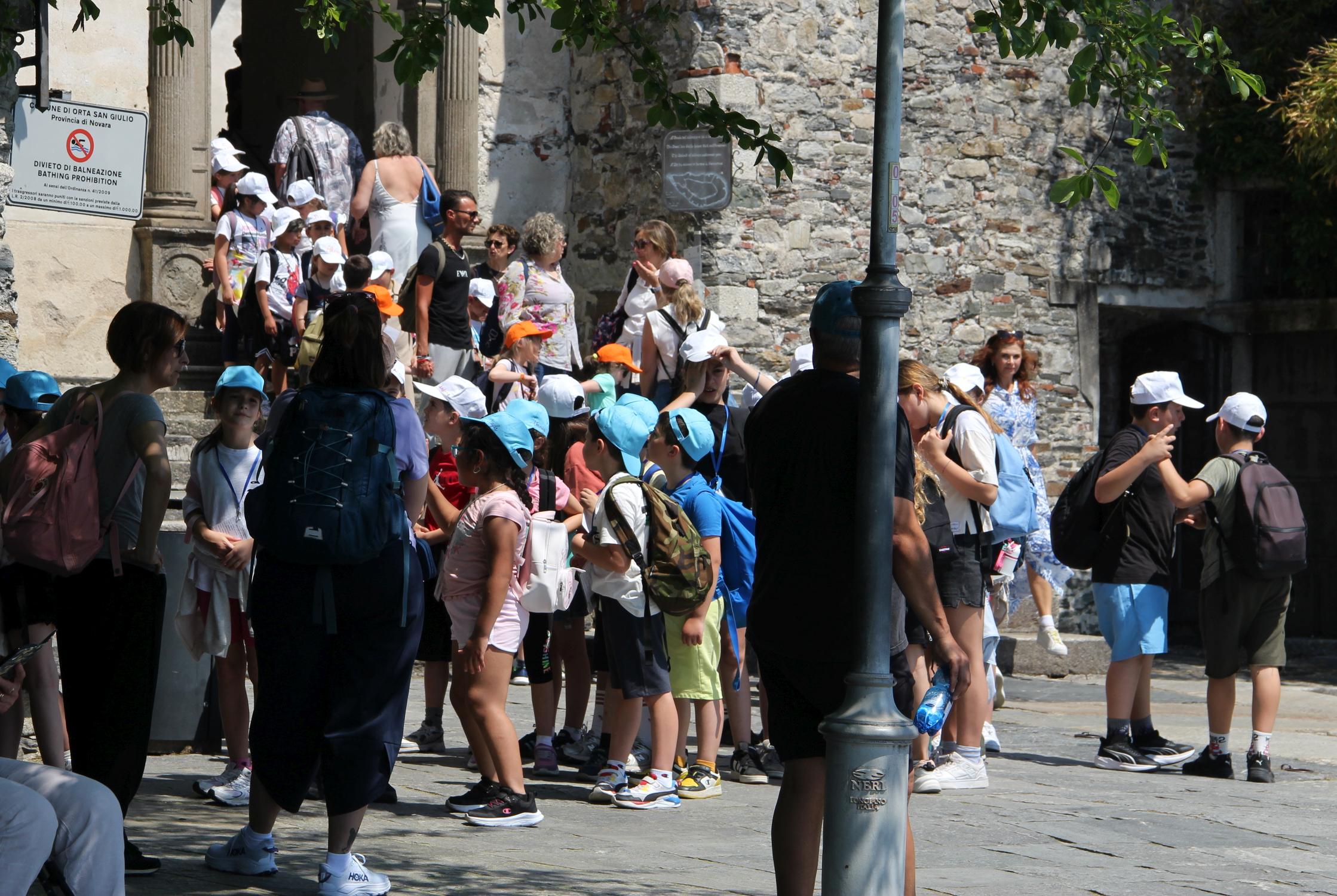
We were in Orta as the school year was coming to an end. There were many many school outings in town. We had to abandon any hope of getting the use of the public bathrooms when we arrived. Dozens of kids queuing. Ironically, later in the day, I passed by the same facilities and no one was using them! They had not been trashed by the kids, by the way.)
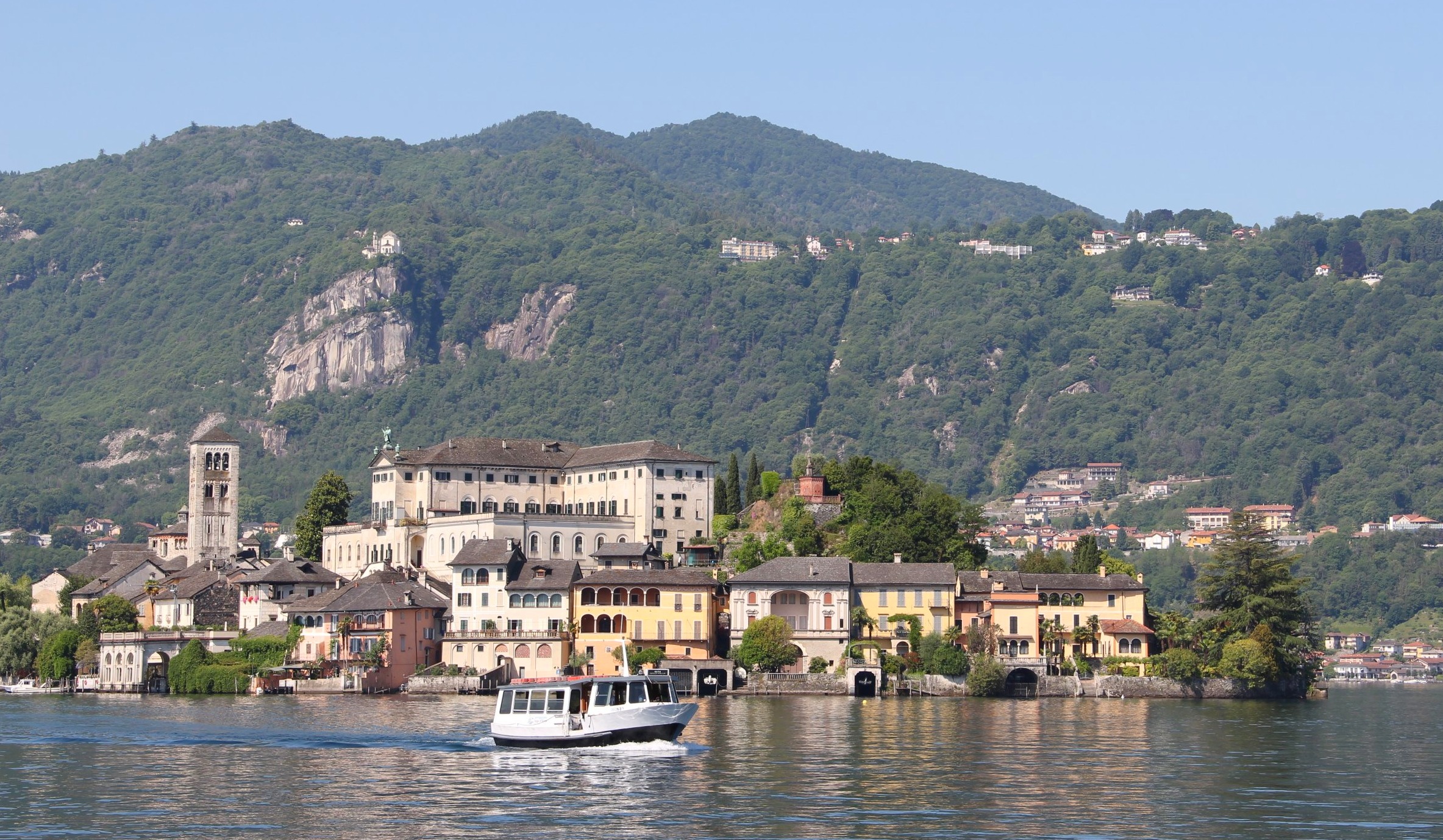
A good local tour guide showed us around, then we took boat out onto the lake. We had a nice wander on another island in a lake, Isola San Giulio, very different from yesterday's visit to Isola Bella. This island was centerd around a large Benedictine community. The site is historically linked to Saint Julius of Novara, who, according to legend, tamed dragons and snakes to evangelize the area in the 4th century.
Leo (search.brave.com's AI) further tells me: "The Benedictine nuns residing on Isola San Giulio live as a cloistered community, maintaining a near silent lifestyle, in support their life of contemplation and prayer. This deep silence pervades the island, influencing visitor guidelines and inspiring the Via del Silenzio (Path of Silence) that encircles the basilica." (We walked the path. It was a serene place.)
I was confused. I was reading on the internet that it was a monastery, inhabited by nuns?
Here, for the people like me to go down rabbit holes, is what Leo told me...(edited)...
It is technically a monastery (specifically an abbey), but it is inhabited by nuns.
The community on Isola San Giulio is the Abbazia Benedettina Mater Ecclesiae (Benedictine Abbey of Mater Ecclesiae). While the term "convent" is often used colloquially to describe a house of nuns, the official designation is a monastery or abbey because it is an autonomous community living under the Rule of St. Benedict.
Founded in 1973, this cloistered community of Benedictine nuns dedicates their lives to prayer, study, and work (such as restoring ancient textiles and making liturgical vestments). The site functions as a "territorial abbey," meaning the abbess holds jurisdiction similar to a bishop within the monastery's bounds.
Abbazia Mater Ecclesiae Isola San Giulio history
So! Now we know! Moving on...
In the picture, besides the monastery on the island, note the monastary perched on the outcrop high above the lake, on the far shore. It looks tiny in the photo, but it was a long way away.
I hope to say more about the island later, but for now I'll move on.

(I took the picture from above the island later in the day, from up on the "Sacred Mount" behind Orta.)
I'd seen these two lovelies early in the day, but hadn't been able to introduce myself. Happily, a second chance arose later. And no, neither of them is significantly closer to the camera than the nice lady.
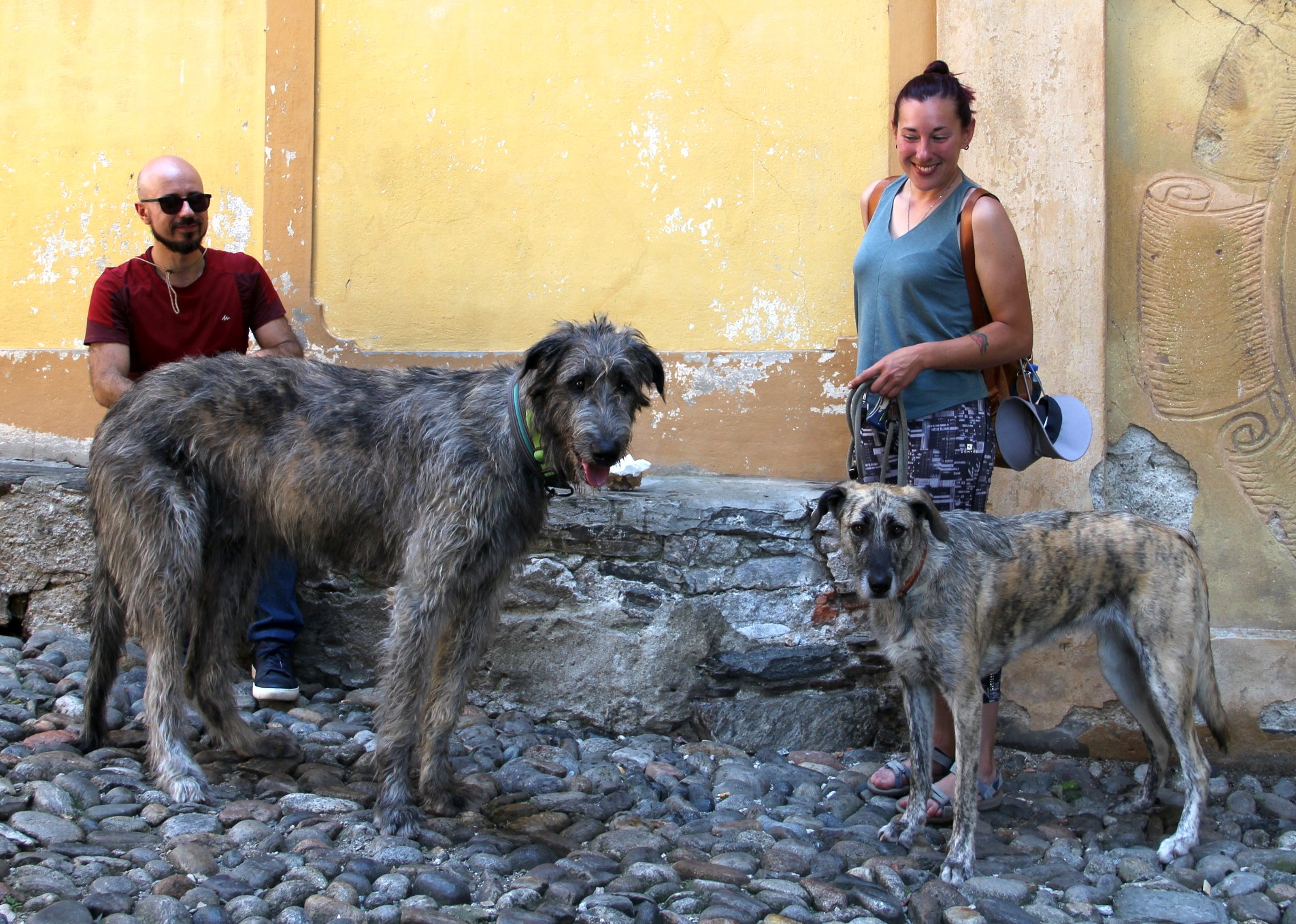
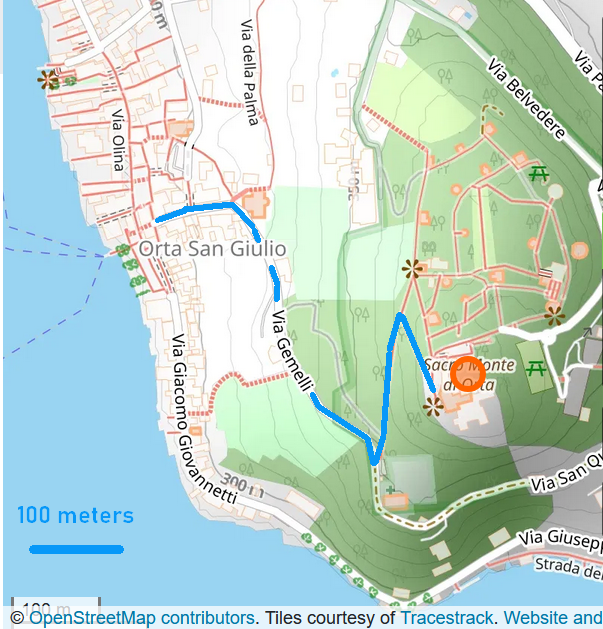
When we got back to Orta after our trip on the lake and visit to island, there were several options. I elected to climb the hill, the "Sacred Mount", behind the town to the church and other religious buildings at the top... 1,300 feet.
The view was splendid, as I hope the photo above shows. Then I went into the main church on the site. All alone. It was very dark. And silent. I don't think I've experienced such profound silence for a long time. No fans. No mechanical ticking. No birdsong. No buzz or hum from transformers. It was extremely peaceful.
(Speaking of the ambiance inside churches... Several times we went into unattended churches and found very suitable music, often Gregorian chant, playing quietly.)
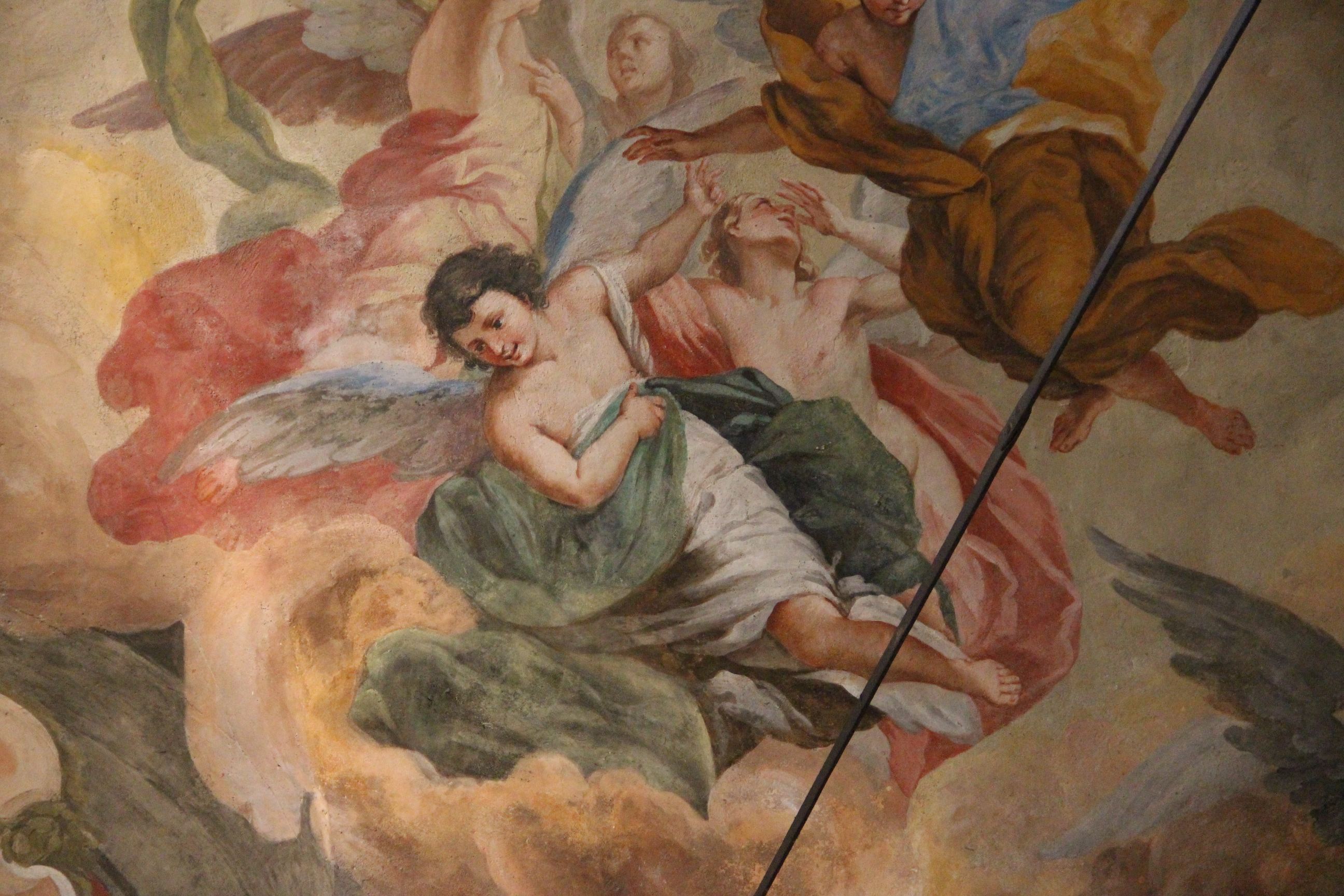
The ceiling below was in one of the other churches on the holy site at the top of the hill.
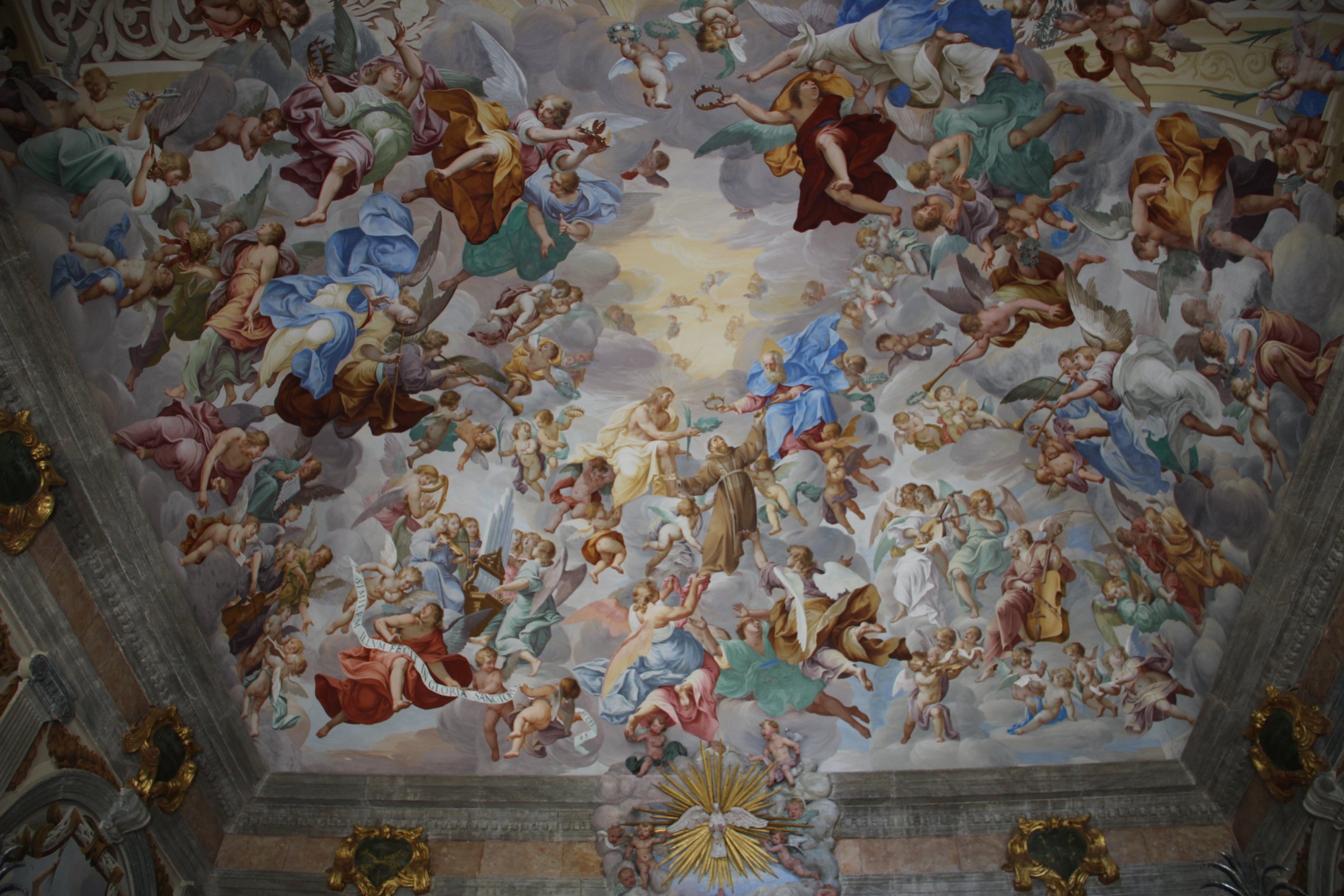
From an information board...
"The Sacred Mount of Orta has been a UNESCO World Heritage site since 2003. It is a complex on the highest part of the peninsula. It consists of twenty-one chapels with 900 frescoes and 366 statues.
Pilgrims arrive at the Church of Saints Nicholas and Francis of Assisi. In the Church's sanctuary, a pieta of the Swiss-German school sculpted in cherry wood has been venerated for about one thousand years."
Wikipedia's Orta article, edited, tells us it "is dedicated to St. Francis of Assisi. Construction of the complex began in 1583. The plans called for thirty six chapels. Twenty were built by the time construction ended in 1788."
Moving on...
Please let me know if a hasty collection of assorted photos doesn't appear below here? (I did an Experiment. Resolution is poor. Sorry.)
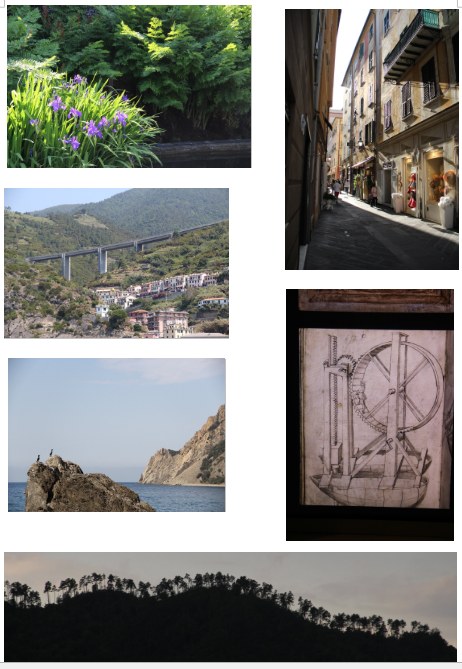
You MIGHT get the same pics by clicking here. (They're sharper that way!)
DAY 5- Stresa/Barolo/Santa Margherita, Wednesday, 27th May, 2026. Began three nights at Hotel Metropole
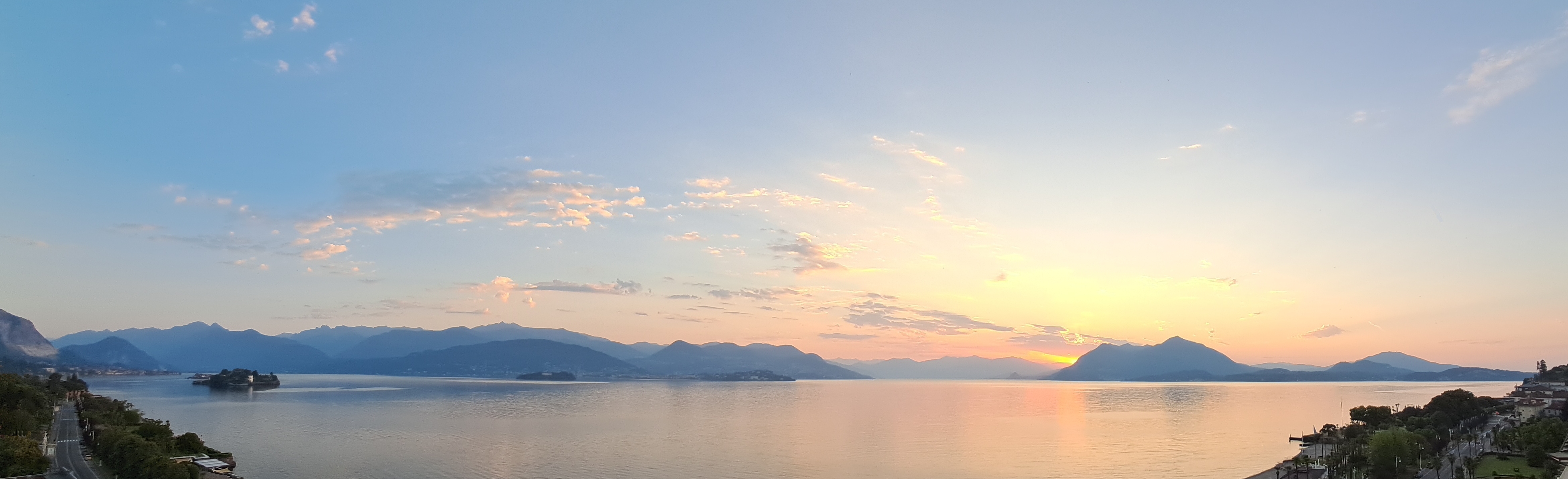
I actually managed to get up in time to enjoy the sunrise on our last morning in Stresa, from our hotel's rooftop terrace/ bar/ pool area. (The island at the left is Isola Bella (see above)).
We leave Stresa this morning and travel southeast to the Italian Riviera resort town of Santa Margherita, sitting north of the Cinque Terre, a UNESCO World Heritage Site. En route, we stop in the village of Barolo for lunch and to sample the “king of wines” (which shares a name with the town, Barolo) at Marchesi di Barolo, Italy’s premier vintner. The two-square mile town is famous for its vineyards and many varieties of red wine made from the Nebbiolo grape. From every point in town, we have views of the 10th-century castle situated in the middle of town, initially built to protect the settlement from invaders.
-----
I've had "wine tastings" many times. Few have impressed me, some were distinctly ho-hum.
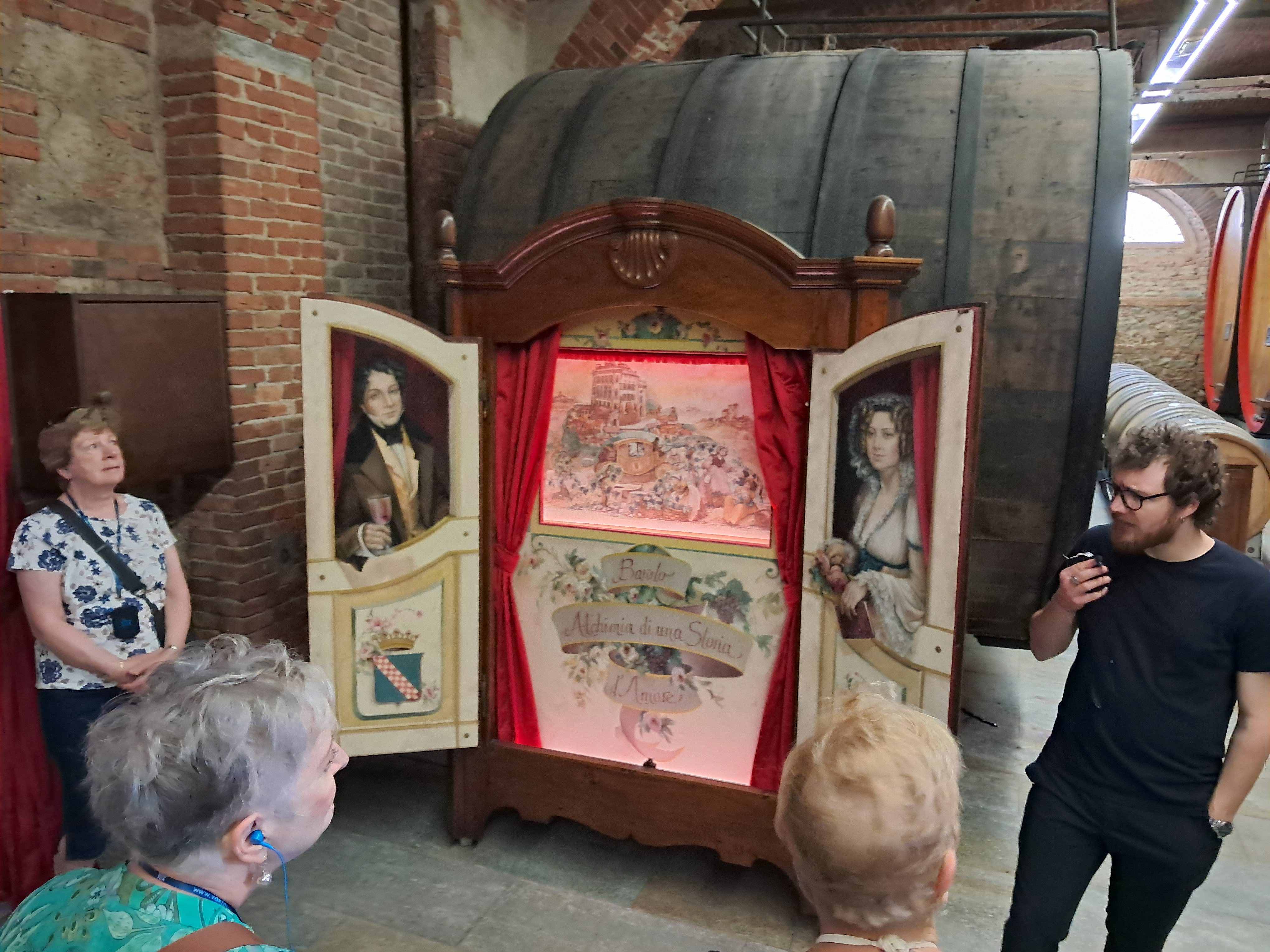
But the tour we had at the Barolo establishment was outstanding. (Arrived 10:50).
For a start, we saw more of the production facilities that is usual. Parts of the cellar we visited dated from the 1800s.
"Barolo" is a DOC... something like a trademark. And you can't sell a wine as "Barolo" unless several conditions are mett. The grapes must have been grown in a specific small area... 11 townships. It must have been aged at least 38 months, 18 of the in huge wooden casks. Five of the casks in use today com from the 1820s.
And they had a great story to tell, had gone to a lot of trouble to tell it in and interesting manner, and the person doing the presentation was good at his job. I hope to come back to this and say more. In the meantime, look up Julia Colbert, Marchesa Guilia.
Eventually contol of the winery changed from the aristocrats to a local family 180 years ago.
The people making the wine today are from the 5th and 6th generations of that family.
After the tour and history presentation, we proceedeed to an excellent meal... antipastta, primo plata, secundo plata, dolce, with glasses of wine to enjoy vs ssips to experience.
The meal was magnificent, and so much more than a mere "tasting".
We continue on to Santa Margherita, with its palm-lined esplanade overlooking the harbor. Tonight, we enjoy dinner together at our hotel.
Accommodations: Hotel Metropole Santa Margherita
Meals: Breakfast, Lunch, Dinner
I will mention many times how splendid our tour director was.
I would also like to recognize Alessandro who drove and manitained our very comfortable coach.
Many of the roads we travelled on were narrow and twisty. I'd be hard-pressed to give my passengers a smooth ride in an ordinary car. And yet the ride was never uncomfortable. We never lurched.
Furthermore, even with early starts and days when he had many, many hours of driving, all the windows were spotless... a great boon to the photographers in the group. So THANK YOU.
He was even friendly and pleasant company.
-----
I have an excellent satnav program in my phone. (There are versions for both Android and Apple.) "Navigator" (not a clever name!), from "Map Factor". Include that in your search to get the right one. I operates without internet access, if you load your maps before you leave your home, and don't need live traffic reports. (They aren't free, but everything else is, and the cost of the reports is minimal.)
ANYWAY... When I fired Navigator up, I was puzzled. Was there some glitch in the display??? I know Venice is sinking, but I hadn't realised that a large chuck of the country SW of Milan was.
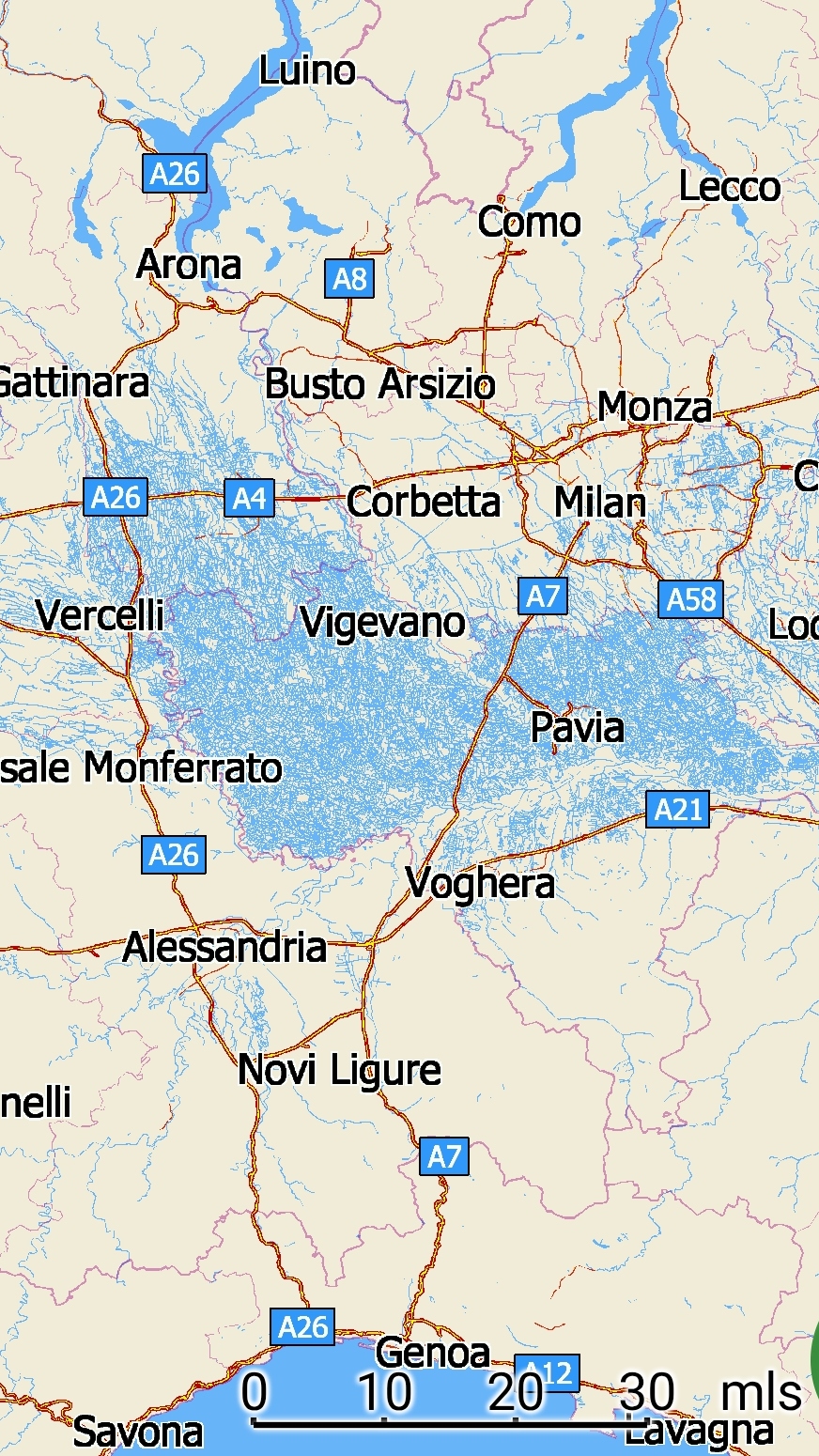
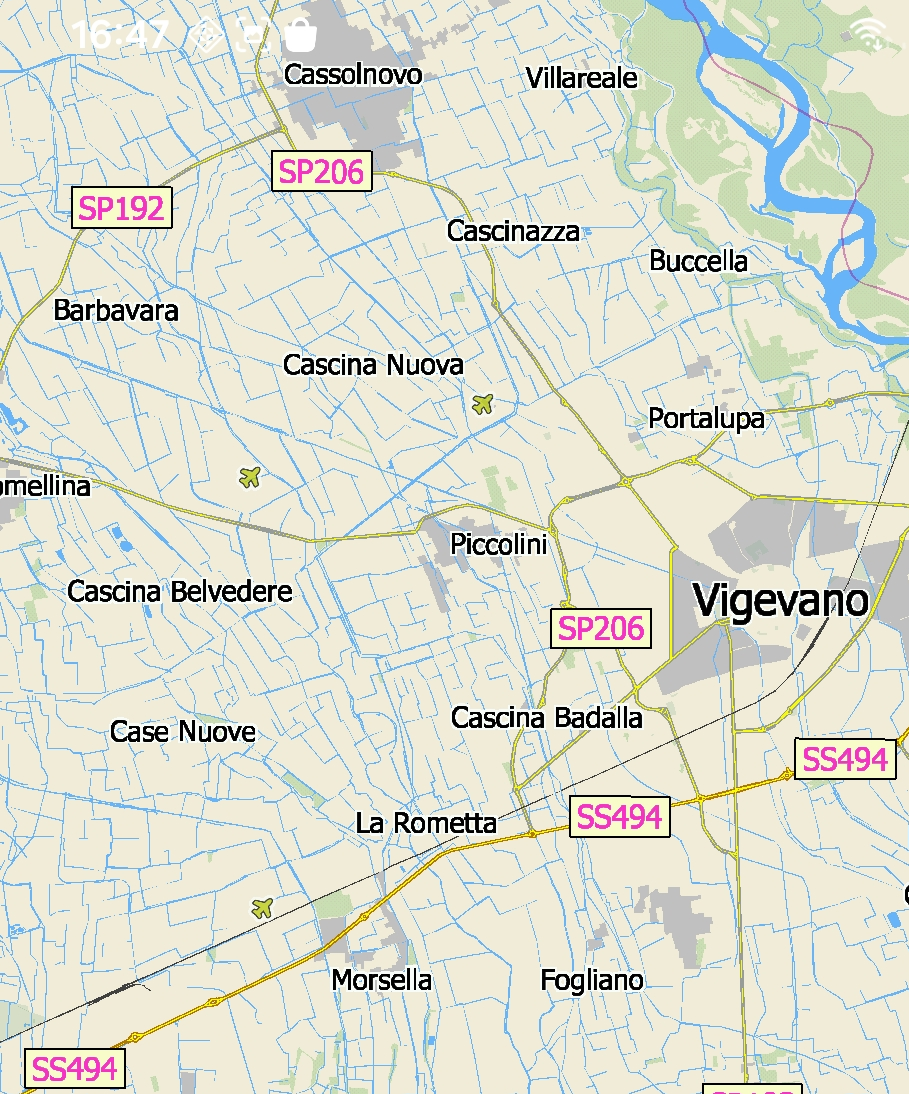
I didn't keep a record of our exact route. The line on the interactive map is "as the crow would fly". But whatever route we took, we were, at least for some of it, driving through the canals country, and the mystery was resolved.
Some of the land is used for rice paddies, but other crops were present also. The scale of the operations was impressive. I was stuck by that in respect of other industries, too. Also the road and rail infastructureimpressed me. Much of Northern Italy is hilly. The highway engineers have bored many, many tunnels to make travel easier. Also, even in areas subject to frosts, the road surfaces were in good condition.
I guess if you've been tapping abundant water from the mountains for 2,000+ years, the irrigation system becomes extensive. The farms were very impressive. (Photos to come.)
As we got closer to Barolo, the land became much less flat. Many hilltops sported towns or fortresses or monasteries.
After Barolo, first we passed into some beautiful very steep, very big hills. Might even be called small mountains! Thickly covered with dense deciduous forest. I don't know how it managed to establish itself on the slopes because the were so steeep. I understand that wild boar is common, bears not unknown, and even some wolves... but the latter may be further north.
I would have loved to wander those forests... but my legs wouldn't be up to it today.
I've praised the scale of the farming. But "progress" hasn't entirely eradicated all trace of the past. Particularly in the flatter area, it wasn't unusual to see charrming older establishents. Some seemingly still in operation, others in variouis stagees of genteel decay. Many were built robustly in stone.
About 3:30 we got into the neighborhood of Genoa... a major transport hub, and interface to marritime transport. Roads, bridges, tunnels: stupendous.
Our destination, base for the next few days, was Santa Marherita.
My sat nav listed about 20 "Santa Margheritas"! We stayed in Santa Margherita Ligure. Near Portofino. About 12 miles ESE of Genoa, the very impressive port we passed through en route to Santa Margherita. 44.335208, 9.214468!
DAY 6- Santa Margherita/Cinque Terre/Portovenere, Thursday, 28th May, 2026
Ha! We have a really good tour director.
Today was SUPPOSED to be what you see below as what we did TOMORROW. (And tomorrow we did what was supposed to be done today.)
The Italian trades unions decided to prove they have power by doing a general strike tomorrow. So on our Day 7 (29 May) there were no trains. Sigh.
So our amazing tour director, during the first few days of the tour, swapped our programs. He...
- Changed 22 train tickets from the 29th to the 28th
- Changed the tour bus booking that took us back to the hotel on the 28th.
- Changed the booking for the local guide who showed us around Porto Venere.
I think, I hope, our ferry tickets for Portofino were not day-specific... but maybe those had to be changed as well.
I believe he was at least spared changing meal bookings. We were in the same hotel, morning and evening both days, and "home" in time to eat as originally planned.
All of this somehow done while he was taking full care of us. And still cheerful with it!
Anyway! If any reader ever notices that the timing of events shown below does not line up with timings you may have seen elsewhere, that's the explanation!
We depart this morning by train for the hour-long trip south to the Cinque Terre (literally, “Five Lands”). Here, five cliff-clinging villages tumble down from the foothills of the Apuane Alps to the Mediterranean, with homes, shops, cafes, and courtyards piled atop one another in postcard-perfect order. The original medieval people who settled here were farmers who tamed the steep, fertile slopes of the surrounding mountains with row upon row of stone terraces and cultivated grapes, olives, and the sweet Sorrento lemon. Many of these terraces remain today – though legend has it that during the agricultural heyday of the Cinque Terre, the combined length of the terraces exceeded that of the Great Wall of China. The five towns are now connected by a scenic rail line and several hiking paths; locals often travel from town to town via small boats.
We stop first in the scenic village of Vernazza, noted for its harbor-front piazza (plaza), Renaissance campanile (bell tower), and labyrinthine steps that wind through the town. Then, we board a boat for a comfortable cruise along the rugged coastline, giving us a fabulous waterborne view of the Cinque Terre. We also stop in one of the other towns (from north to south, the towns are Monterosso al Mare, Vernazza, Corniglia, Manarola, and Riomaggiore) for some time to explore. (Please note: This visit is dependent on boat schedule and weather conditions.)
Finally, we take to the sea again for a cruise to Portovenere, a port town harkening to medieval times with clusters of colorful column-shaped houses facing the Ligurian Sea, their backs to the surrounding mountains. We enjoy a brief walking tour of the Old Town, including a visit to the venerable 12th-century Church of San Pietro, and then have time for lunch and to wander on our own. We return to the hotel via motorcoach, arriving early this evening. Tonight, we dine together at the hotel.
Accommodations: Hotel Metropole Santa Margherita
Meals: Breakfast, Dinner
So... to recap the above... we took a train from Santa Margherita to Vernazza. This was "just" a regular train. But clean, comfortable. We had assigned seats in coach 6, as I recall. But "coach 6" is not necessarily the 6th coach in the train! People seem to cope.
Had a nice tour at Vernazza with a local guide. Boarded a ferry. Went a bit down a beautiful coast to a small town. Visited small town. Got on another ferry; went a bit further south. Repeat!
The ferrys were a regular service up and down the coast. A bit like busses in a town!
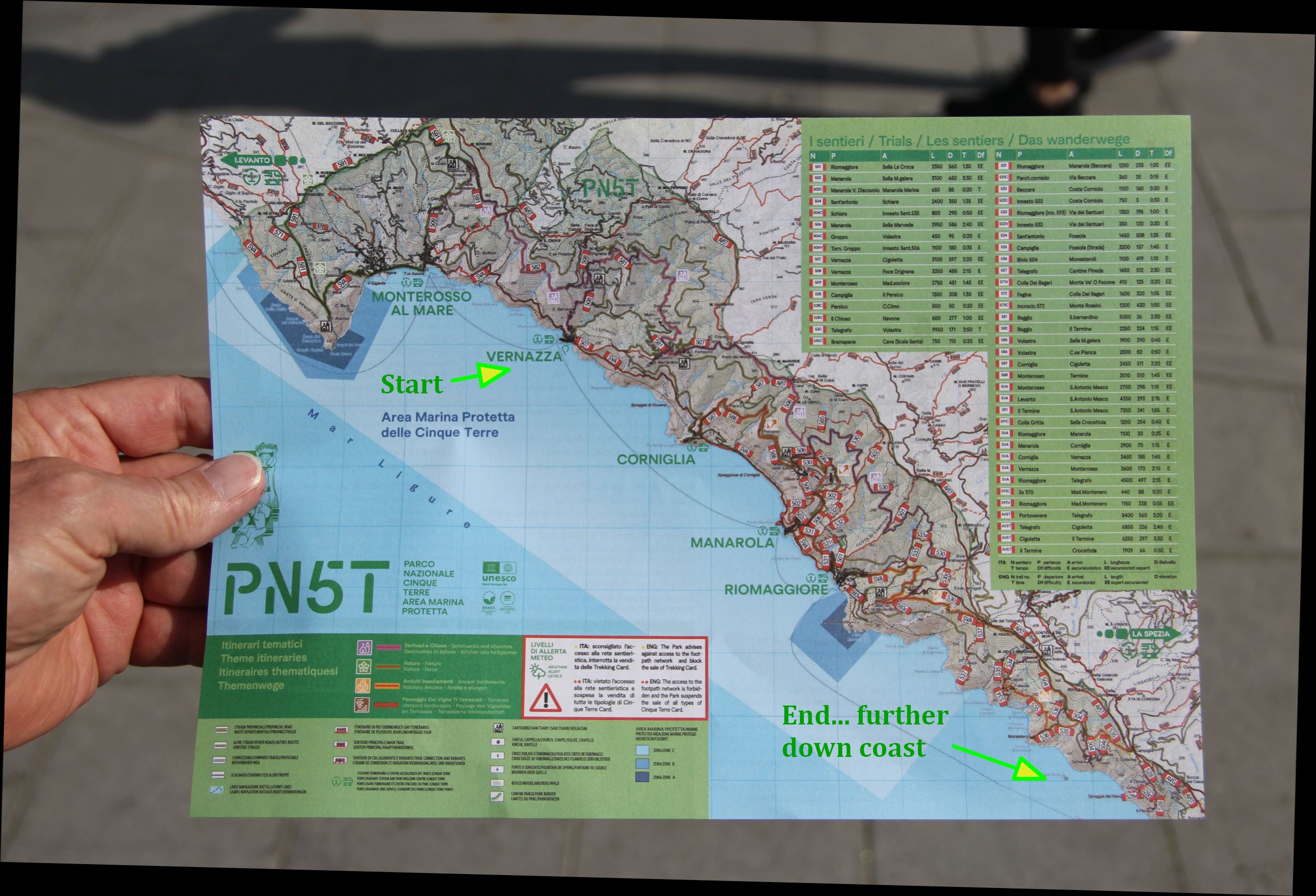
The time on the ferry was fun. The time in the towns was fun.
A good day! We travelled 9 miles among coast. If you look closely at teh map, our start and end points are indicated.
I'll try to provide more detail in due course.
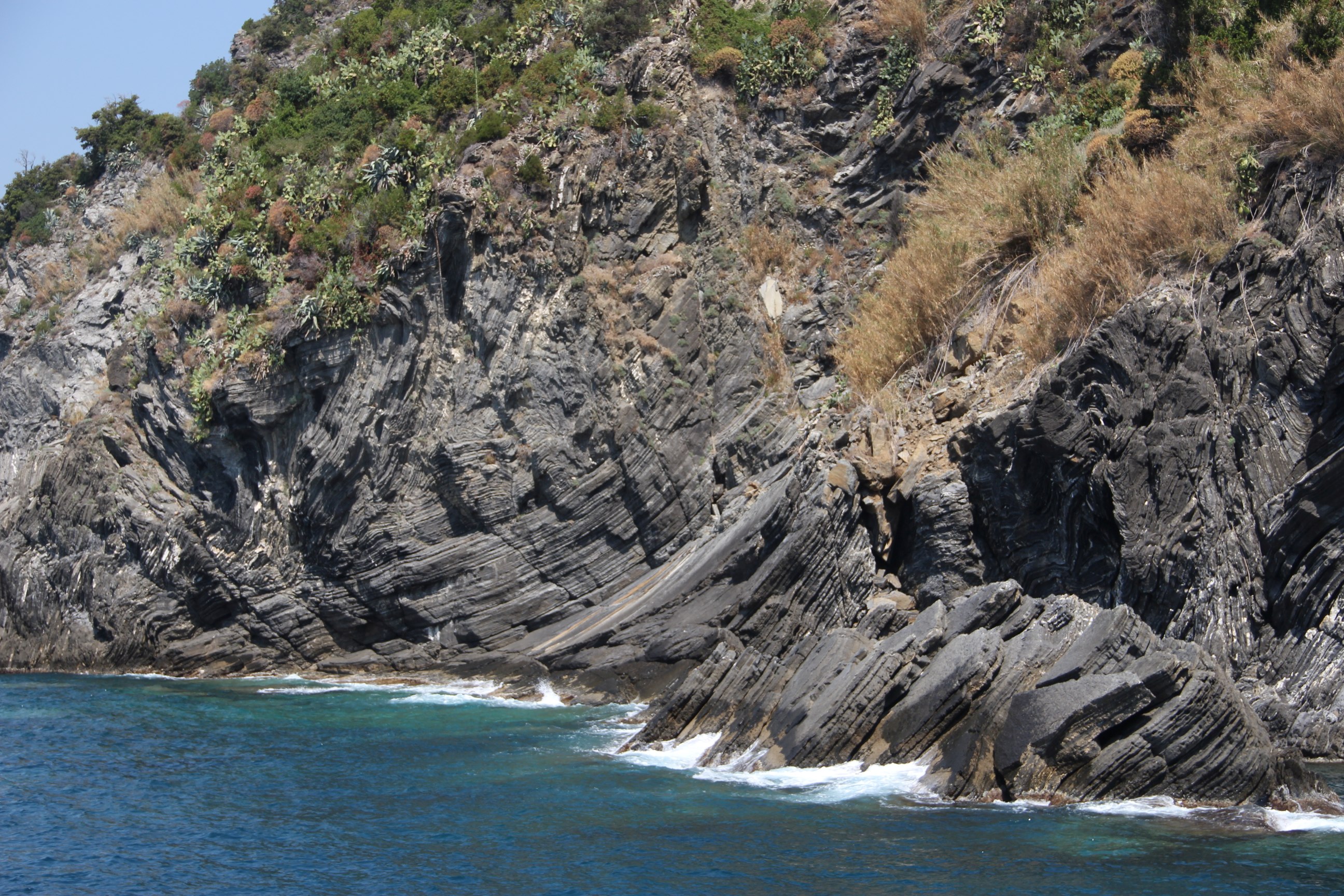
These rocks were at the mouth of one of the harbors. I wanted a photo for a page about geology. I went out on some huge rocks, piled together as a breakwater. And stumbled. It could have been very nasty. I got lucky. I landed on elbow and cheekbone... and my camera. Damaged the UV filter, but there was no other apparent damage. BIG whew!
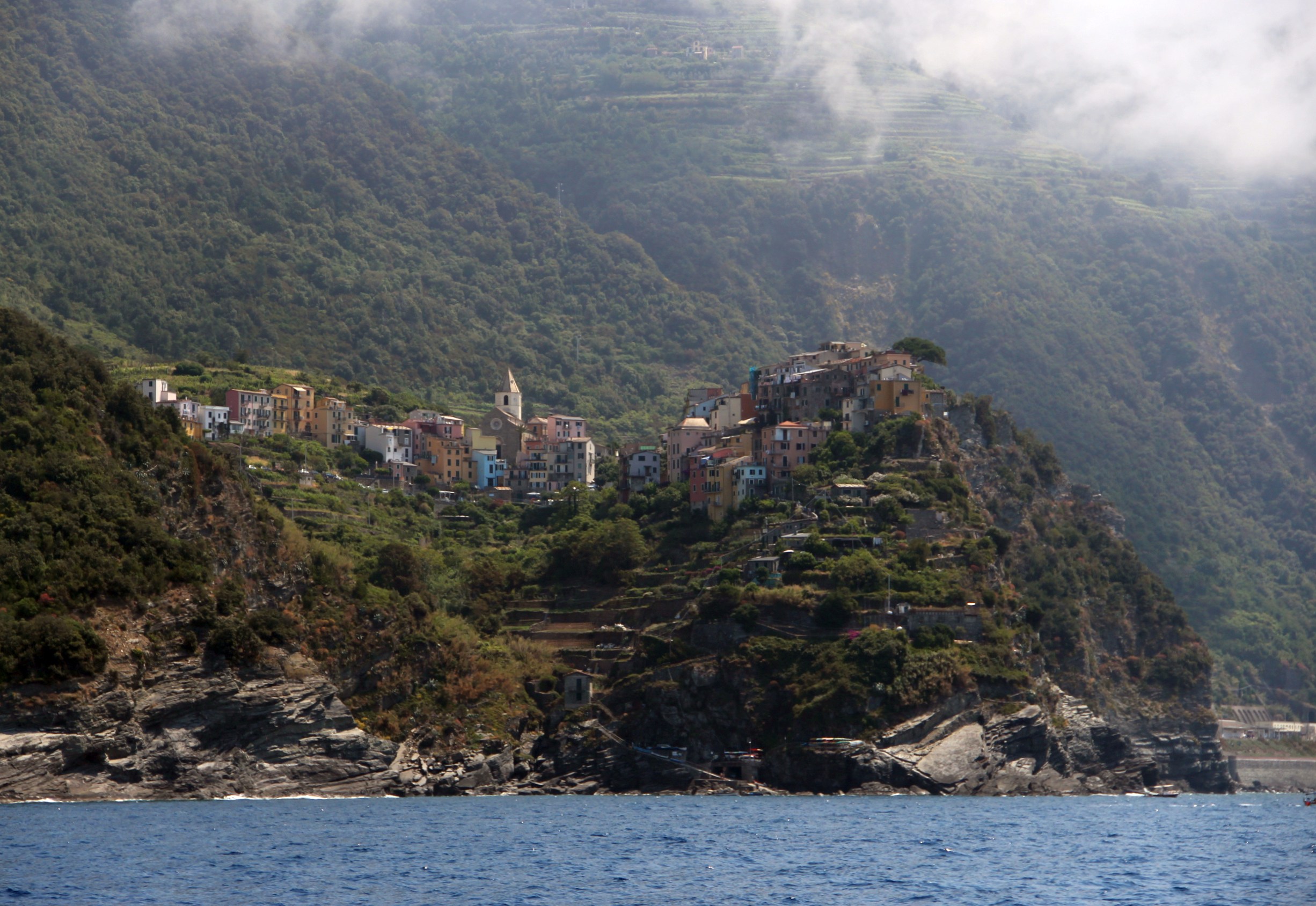
The towns were charming. The coastline is rugged, and the land rises steeply from the sea. Years ago, they were isolated fishing villages.
Nowdays magnificent road transport infrastructure connect the towns making them much less isolated that they once were. (In the past... I'm not sure it still runs... a train ran along the coast, not far above the water. Again... it meant many, many tunnels!
At least one town was even more isolated- it didn't have a harbour adequate for the ferry.


Speaking of the trains....
In Italy they have a high speed service for some journeys. We saw one flash by one day when we were in a coach, and it was impressive.
(In a moment there's a crude bar graph to display the numbers I'm about to cite...)
(a) Original design spec: 220 mph
(b)Current maximum speed tracks can support: 190 mph
(c)Small plane (Cessna 150) cruise speed: 145 mph
(d)Speed Cessna lands at: 65 mph
a: ***********
b: *********
c: *******
d: ****
To put it another way: Superman has a better chance of catching a small plane than of catching an Italian fast train!
search.brave.com (Leo) tells me that on the New York to Boston route, the Acela train achieves an average speed of 66 mph."
I know it can go faster, and that it is the rails that are limiting in places. Maybe someday the politicians will realize where they should allocate funding!!!)
DAY 7- Santa Margherita/Portofino, Friday, 29th May, 2026
Today’s highlight is our excursion by ferry to nearby Portofino, the renowned port where the rich and sometimes famous enjoy la dolce vita by land and sea. We are free to explore and eat lunch on our own here, and to perhaps to shop in the chic boutiques or simply people-watch from a seat at a comfortable café. This multi-colored village boasts a jet-set reputation that far exceeds its size; with its seaside setting, olive groves, and palm and cypress trees, it’s one of Italy’s prettiest spots. We return to Santa Margherita early this afternoon and the remainder of the day is at leisure. Tonight, we are free to enjoy dinner on our own in Santa Margherita.
Accommodations: Hotel Metropole Santa Margherita
Meals: Breakfast
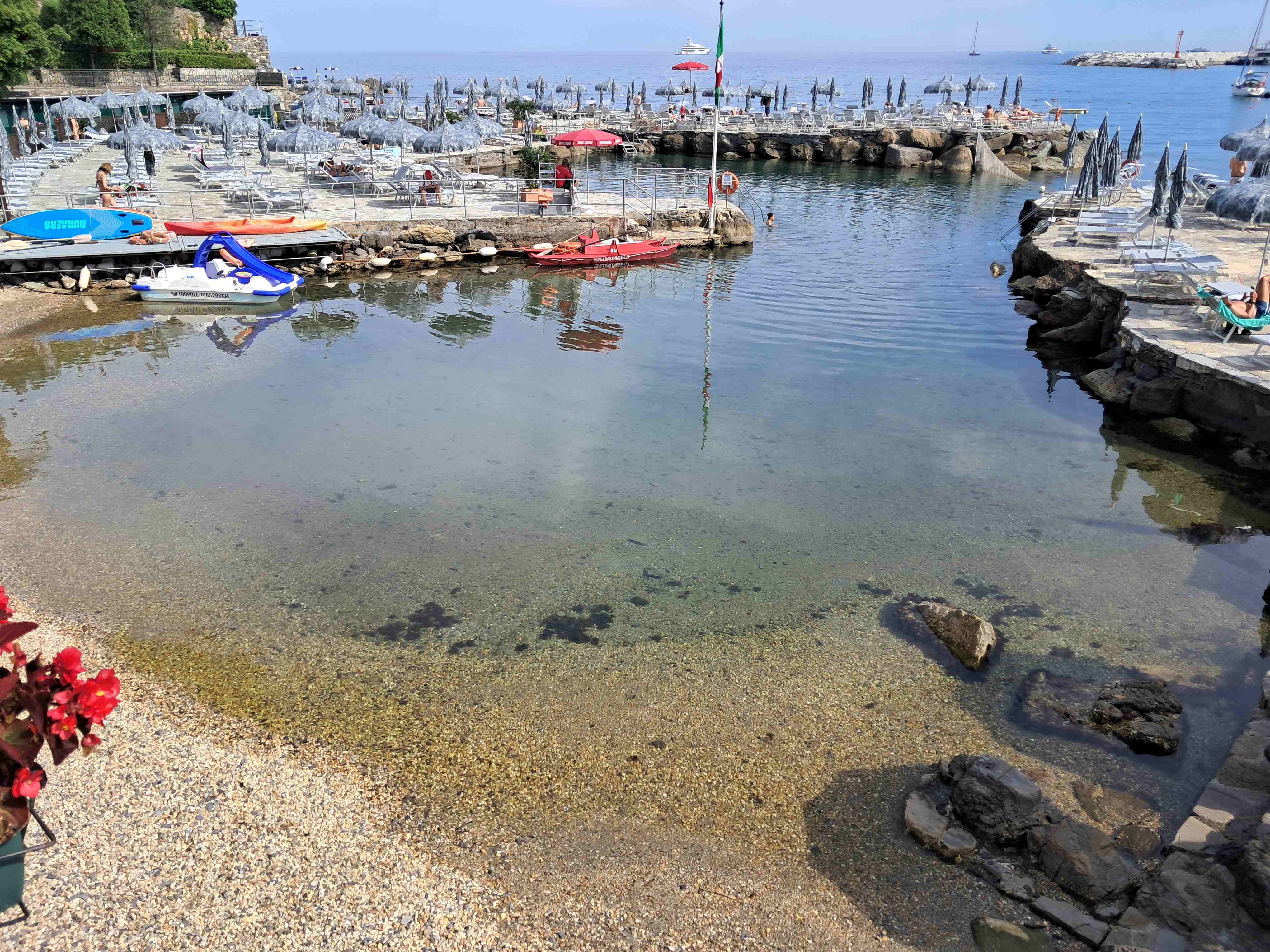
Today, Day 7, Friday, 29th May, 2026, after we came back from Portofino, I went swimming!!! In the sea! (Well, a cove in a bay, directly connected with the sea!) This was in Santa Margherita, after our outing to Portofino. I didn't even have a bathing suit in the morning. (Bought one in Santa Margharita on the way back from the Portofino trip.)
As a child, I was a fish. Always swimming whenever the chance arose. For many years I swam regularly either in school swimming pools or at the local leisure center.
However, it has been years since I last swam. I'm not even sure when it was. In the mid nineties (I think) I swam a few times in the pool at Essex Meadows. (It's a retirement village in the town where I go in the US.)
The last time I swam may have been then the fantastic experiences I had SCUBA diving with Cornell Adult University in Belize, in 2011!!!
But our lovely Hotel Metropole here in Santa Margherita has both a pool, and a swimming area down below the hotel, in the sea!
(The hotel is an "old school" grand seaside hotel. Impressive building, stylish. (Not brutal modern, efficient, glass and concrete.) It was quite a way above the sea, but with lovely gardens wending down to the sea, and an "establishment" at the sea-side for swimming. (The gardens, in addition to the pool, have food and beverage service, a spa, etc.)
DAY 8- Santa Margherita/Lucca/Radda-in-Chianti, Saturday, 30th May, 2026. Began three nights at Palazzo Leopoldo
Leaving Liguria this morning, we continue our route south to beloved Tuscany.
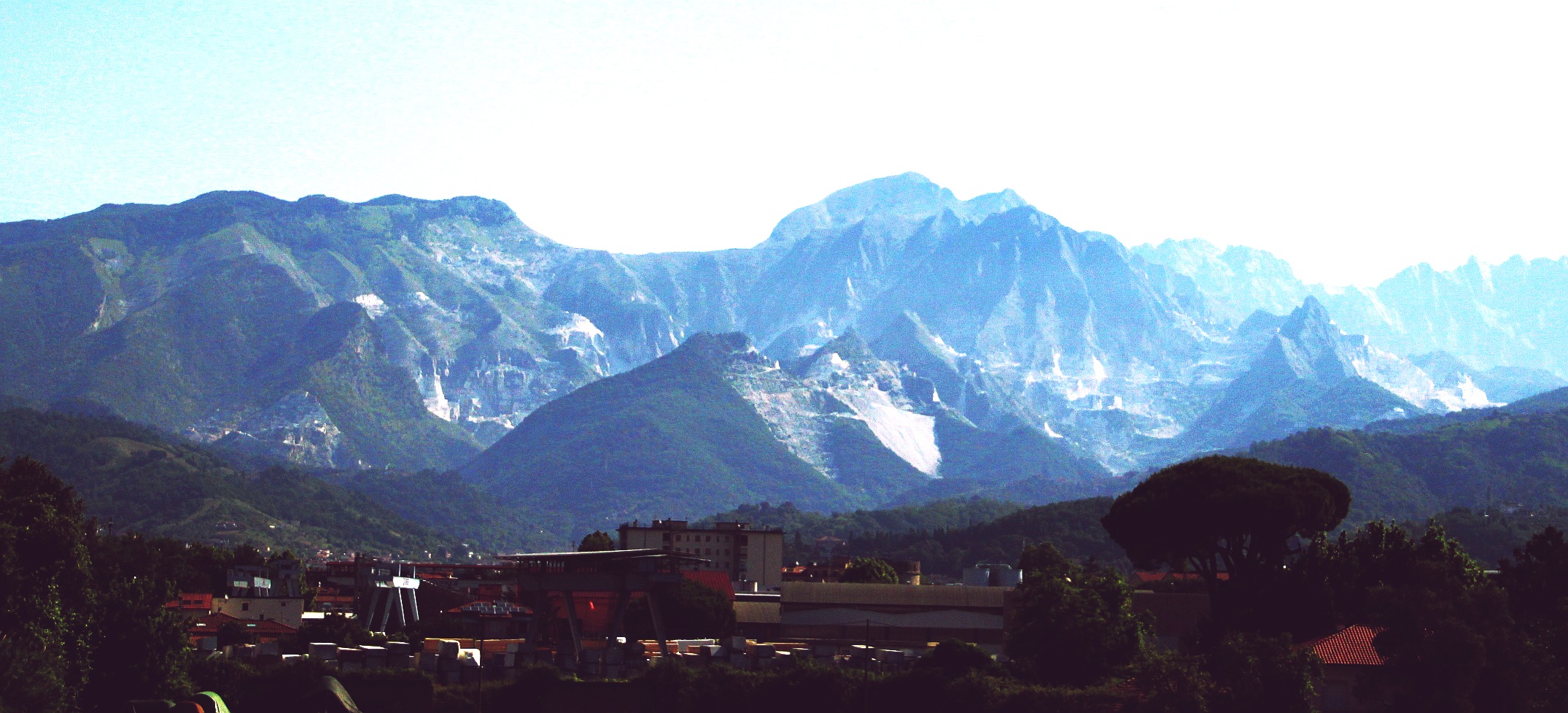
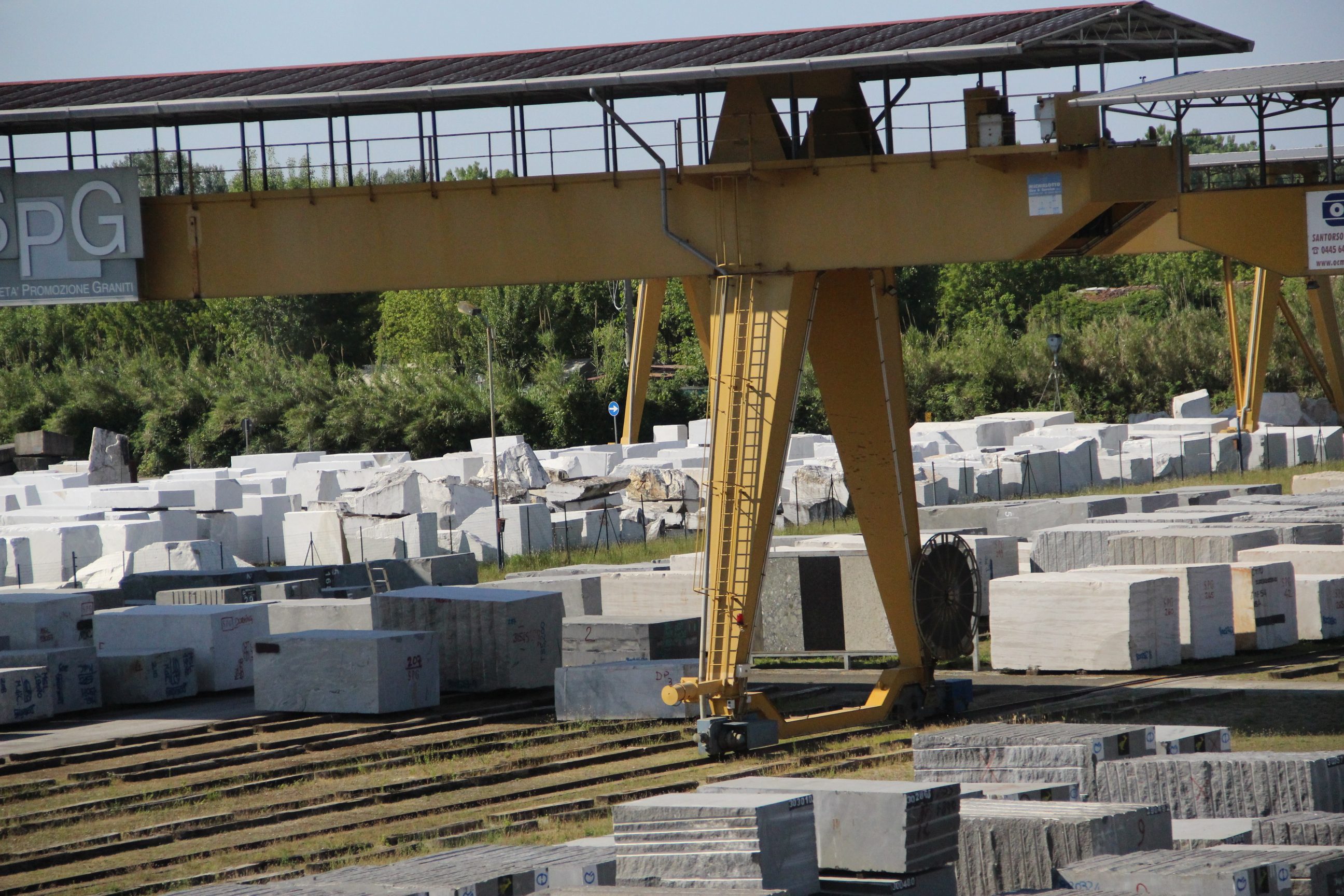
Not long into our journey south along the coast, we had a splendid view of the Carrera marble quarries, and the very impressive yards where the stone is processed. I was going to write about the marble, but the scope of that article overwhelmed me. I'll merely hint at it by mentioning that Michelangelo's David was carved from it.
Some of the blocks in the lower picture were the size of a van. (Note the spacing of the rungs of the ladder on the leg of the crane to grasp the scale.)
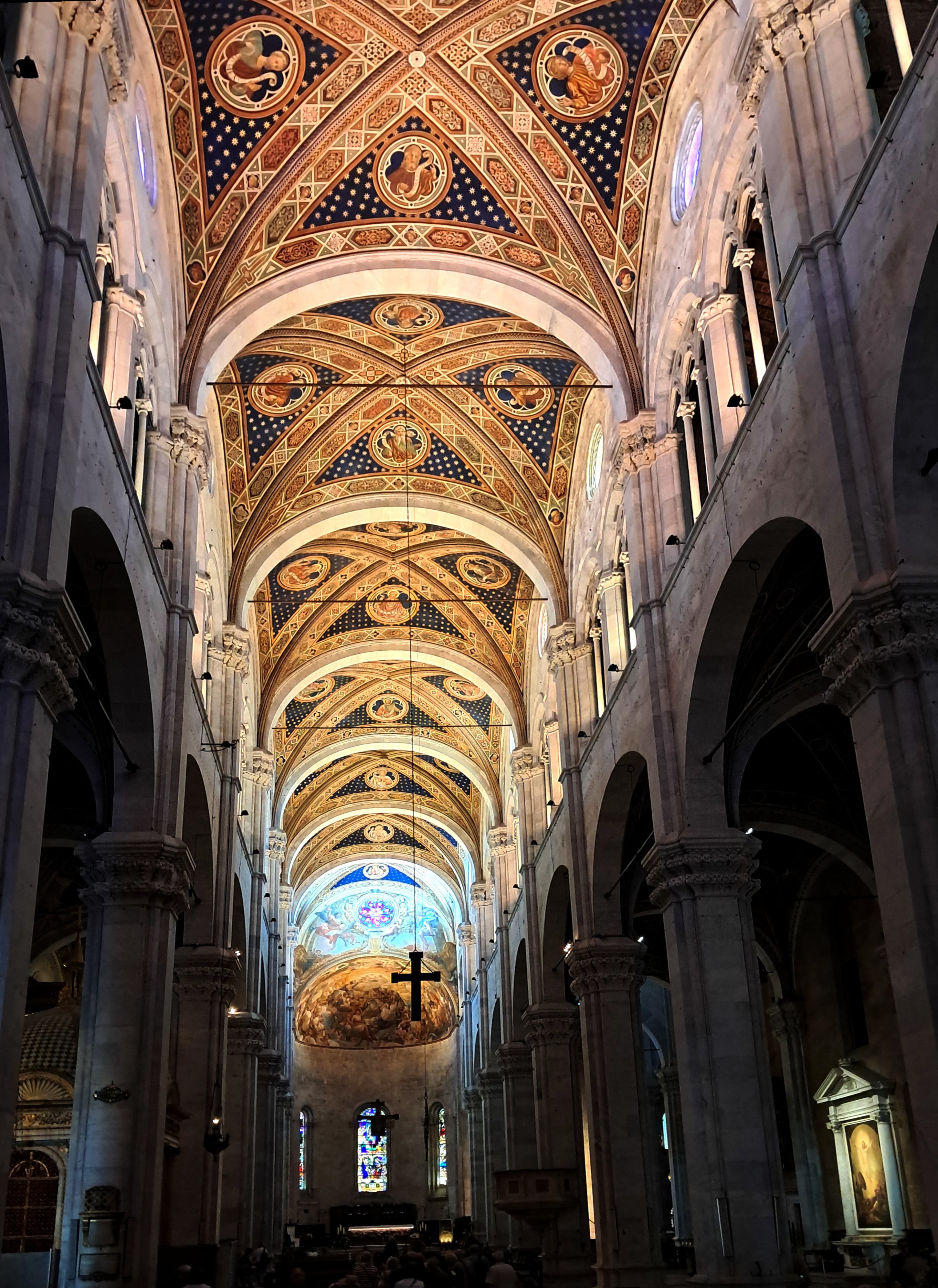
En route, we visit the atmospheric medieval town of Lucca. We take a walking tour of this incredibly well-preserved gem, whose city walls and ramparts – spanning more than two miles – remain intact and serve as a popular attraction. Today a bustling plaza that forms the town’s epicenter, the Piazza dell'Anfiteatro was originally a 1st-century CE Roman amphitheater that seated 10,000 spectators; we can still discern remnants of it around the plaza. After time for lunch on our own, we continue on to our lodgings, where we dine tonight.
Accommodations: Palazzo Leopoldo Dimora Storica & Spa
Meals: Breakfast, Dinner
Inside Lucca's duomo (cathedral)...
I have no problem with the fact that Odysseys took us to some "headline" towns, in spite of the fact that they are, today, overrun with (other!) tourists. There is nothing like Florence or Venice. The price is worth paying
However, I greatly appreciate that they also took to less well known places, where the pressure of tourism isn't as great. Lucca was a case in point.
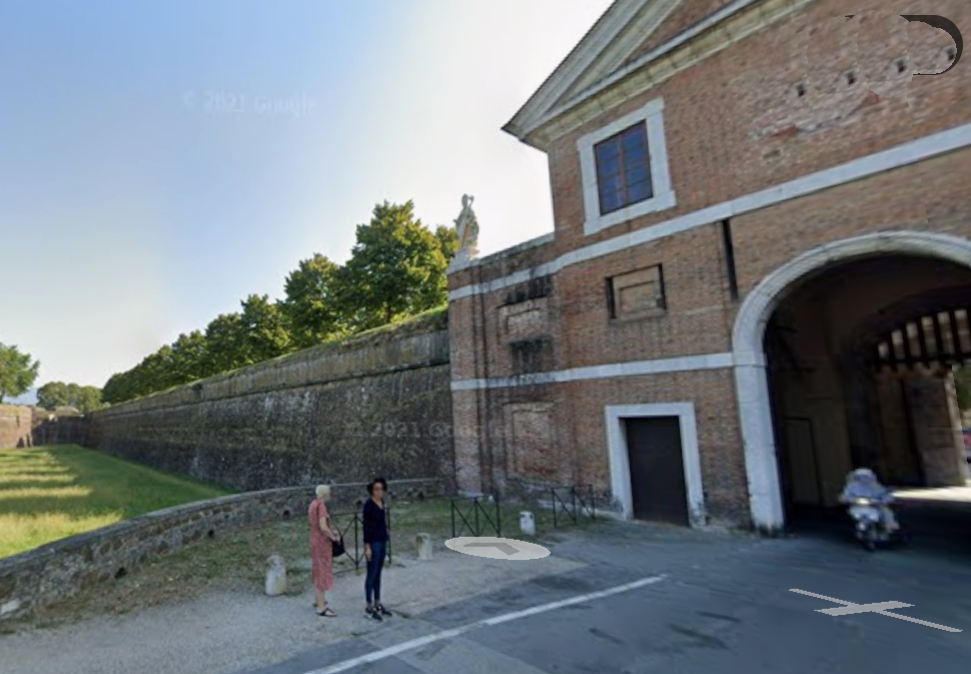
The green area inside the orange lines (roads) in the big map below, Lucca, is just over one mile across. The green parts are the city walls and gassy parks outside them. We had a stroll on part of the pleasant wide pedestrian/cycle walkway along the top of them, "Via dlle Mura Urbane". It is intact around the whole city.
The grid inside the city walls shows where roads are, of course. Use that as another incication of the scale. If you forget the eastern 1/3rd for a moment, and use a little imagination, I think you can see the ghost of the intial Roman city, which almost always grew up around a starting point of two main streets- one north/south, crossed by one east/west.
Where I live, 650 miles to the northwest, right hand map, we have the same thing, for the same reason. And reasonably intact city walls, too! (We're "a bit" smaller!)
Below the map, the right hand image is the walkway. (Courtesy of Google Streetview.) The city is on your left. A serious drop awaits if you jump over the low wall on the right. The lower photo shows you the wall as seen by would-be invaders. Also from Streetview.
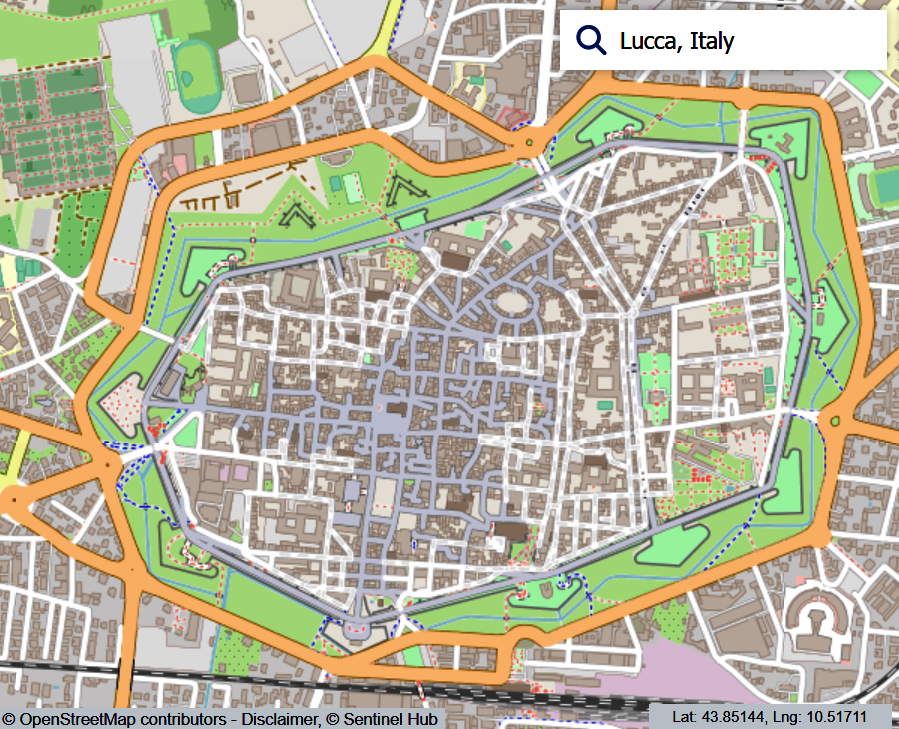
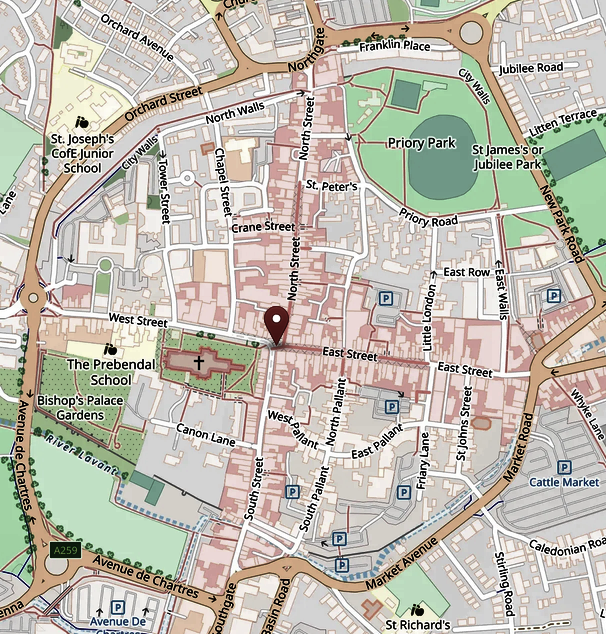
(These maps are from OpenStreetmap.org). No obtrusive advertising! They can also show topography.
Visiting such places sometimes involved time in our comfortable coach to get there. Fine. That price was well worth paying.


The aerial on the left is of Radda. The blue "house" icon marks our hotel. Radda is a delightful small village, perched, like so many Tuscan villages, on the top of a dramatic hill.
After dinner our first night, some of us were strolling in the town and chanced upon a very enjoyble free choral concert in the town's church.
(The blue "house" icon marks our hotel. The church is the building at the center of the town, entrance via the labelled piazza to the SW of the church. We walked to and from the large paved area at the right of the photo to get to/ from our coach. Even that short walk involved a significant change in elevation!
Viale Giacomo Matteotti, along the north and NE sides of the town was way above the surrounding countryside. The views were stunning, especially from the lovely small park at "two o'clock". The image below was taken from there.
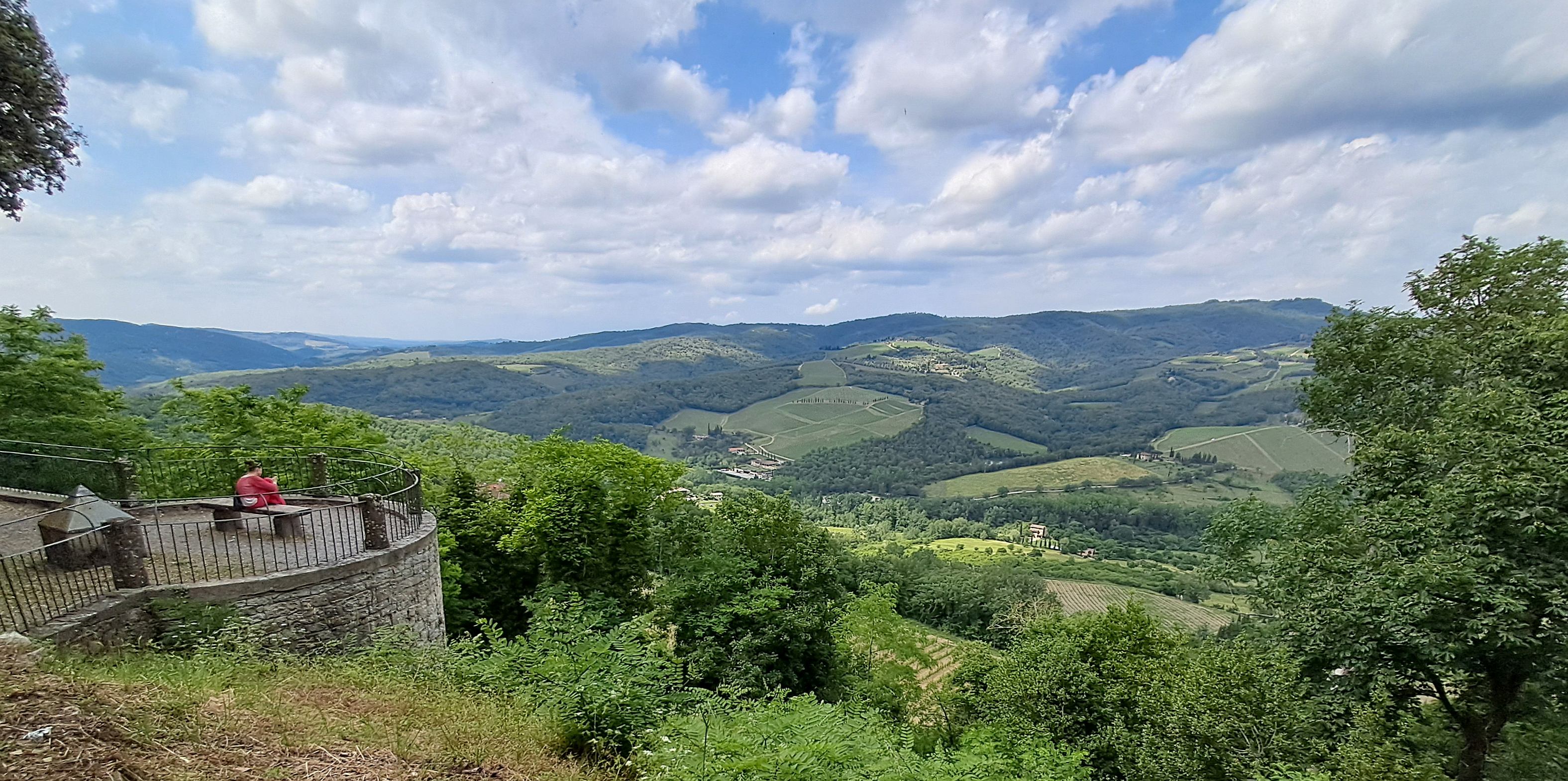
Radda-in-Chianti was delightfully isolated.
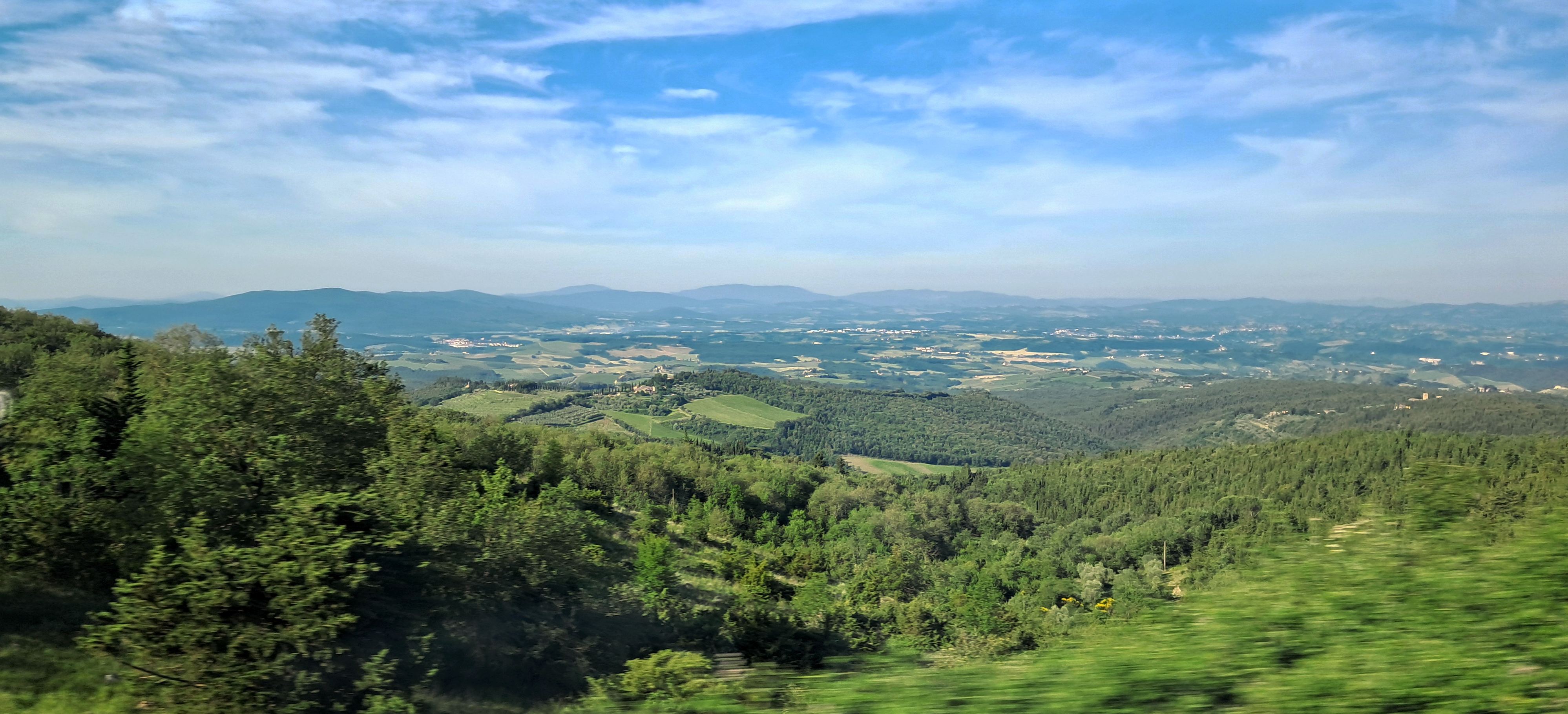
Radda was our home for several days, and the getting to it and driving out from it each morning was a delight for us. Probably not quite so delightful for our wonderrful coach driver. The view below is from on the road just outside Radda. We could enjoy it on each of our several trips into and out of Radda.
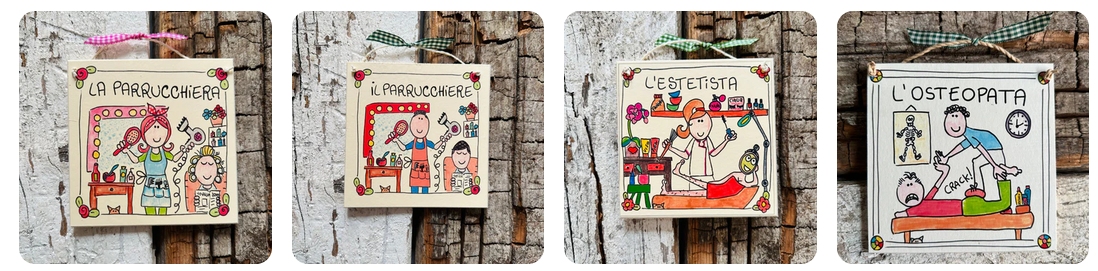
In Rada I came across a board selling some things a bit like fridge magnets. Very whimsical. There was a huge variety, but the ones I particularly liked were to celebrate the professions of the adults living in a household. Have a look: fridge-magnet-like plaques...etc!. I'm afraid the gifts and site is all in Italian, but I hope it will amuse anyway.
DAY 9- Radda-in-Chianti/Florence, Sunday, 31st May, 2026
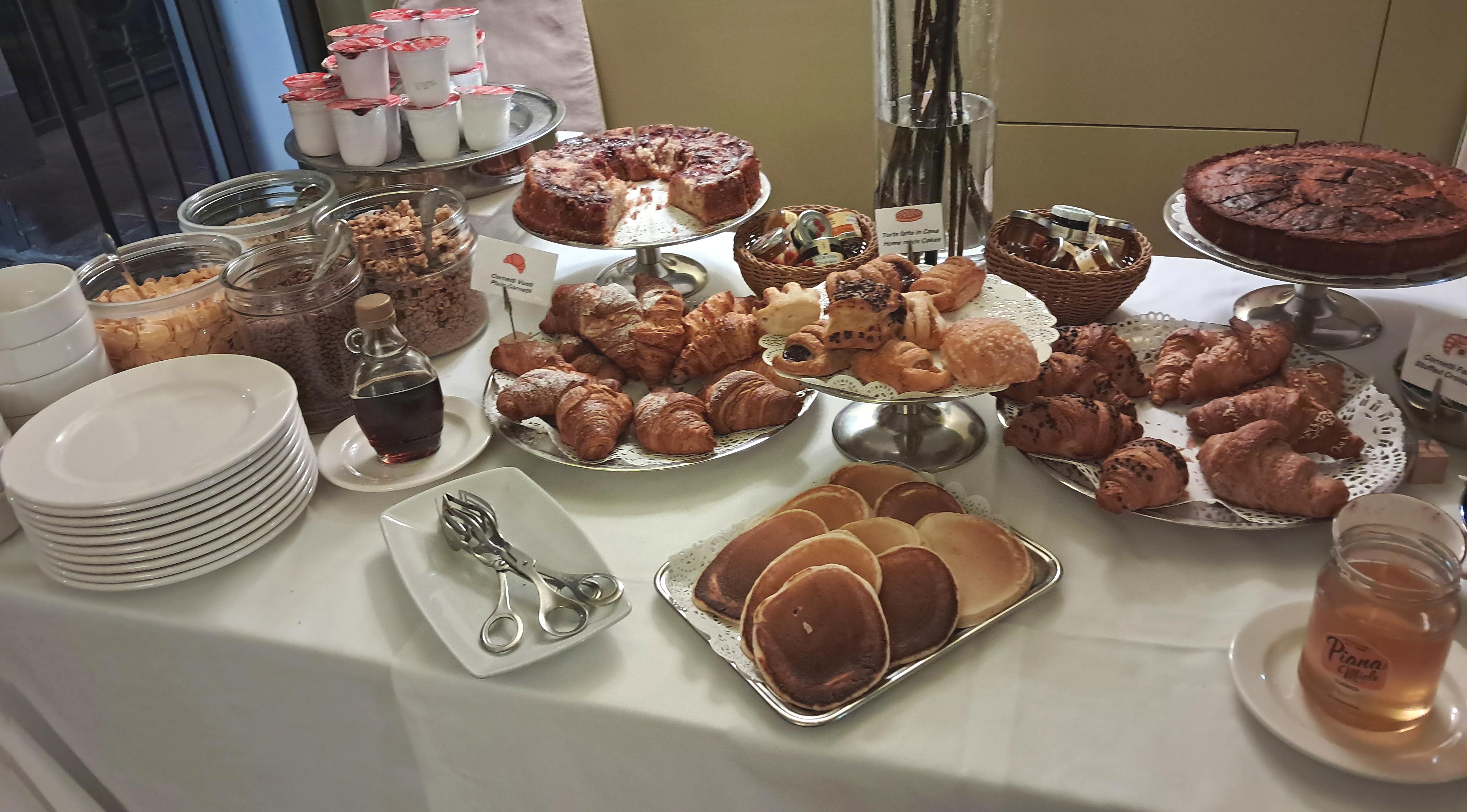
Our breakfasts were always at least excellent, often glorious. The selection below happens to have been part of the buffet in Radda, but there were similar offerings in most of the places we stayed. I only had croissants every other day. Though some days I wasn't sure if I'd had one yesterday, so had one, just in case I hadn't.
Today we discover Florence, city of Renaissance artists and thinkers and filled with sublime art treasures and splendid churches. Since buses are not allowed in the historic center, we will be dropped off a short distance from where we begin our morning walking tour, which includes the Galleria dell’Accademia, home of Michelangelo’s masterpiece David and his pieces for the papal tombs; the soaring Duomo, whose dome was the masterwork of Brunelleschi; and Piazza della Signoria, one of Italy’s most beautiful squares, surrounding the Fountain of Neptune.
This afternoon is free for lunch and to discover more Florentine delights on our own. Among the possibilities: Giotto’s Bell Tower, considered the most beautiful campanile in Europe; the Baptistry, the oldest structure in Florence; the Medici Chapels, housing the Michelangelo-designed New Sacristy; the Ponte Vecchio, the 14th-century bridge lined with jewelry shops; Piazzale Michelangelo, the lively square set above the city and offering splendid panoramic views; or a visit to any number of shops selling leather goods, artful Florentine paper, clothing, and so much more. We return to our hotel in the mid-afternoon, and dinner tonight is at a local restaurant.
Meals: Breakfast, Dinner
Ah, Florence...
It can't be explained. You need to go.
I used my free time in Florence to visit the Bargello, one of Florence's less well-known museums. It is famous for its stunning sculptures, but it offers many other things, too. It is in a splendid edifice built in the 13th century- sometimes a prison, sometimes a fortress housing the secret police. But it has been a museum since 1865. One of the several "David"s curated there...
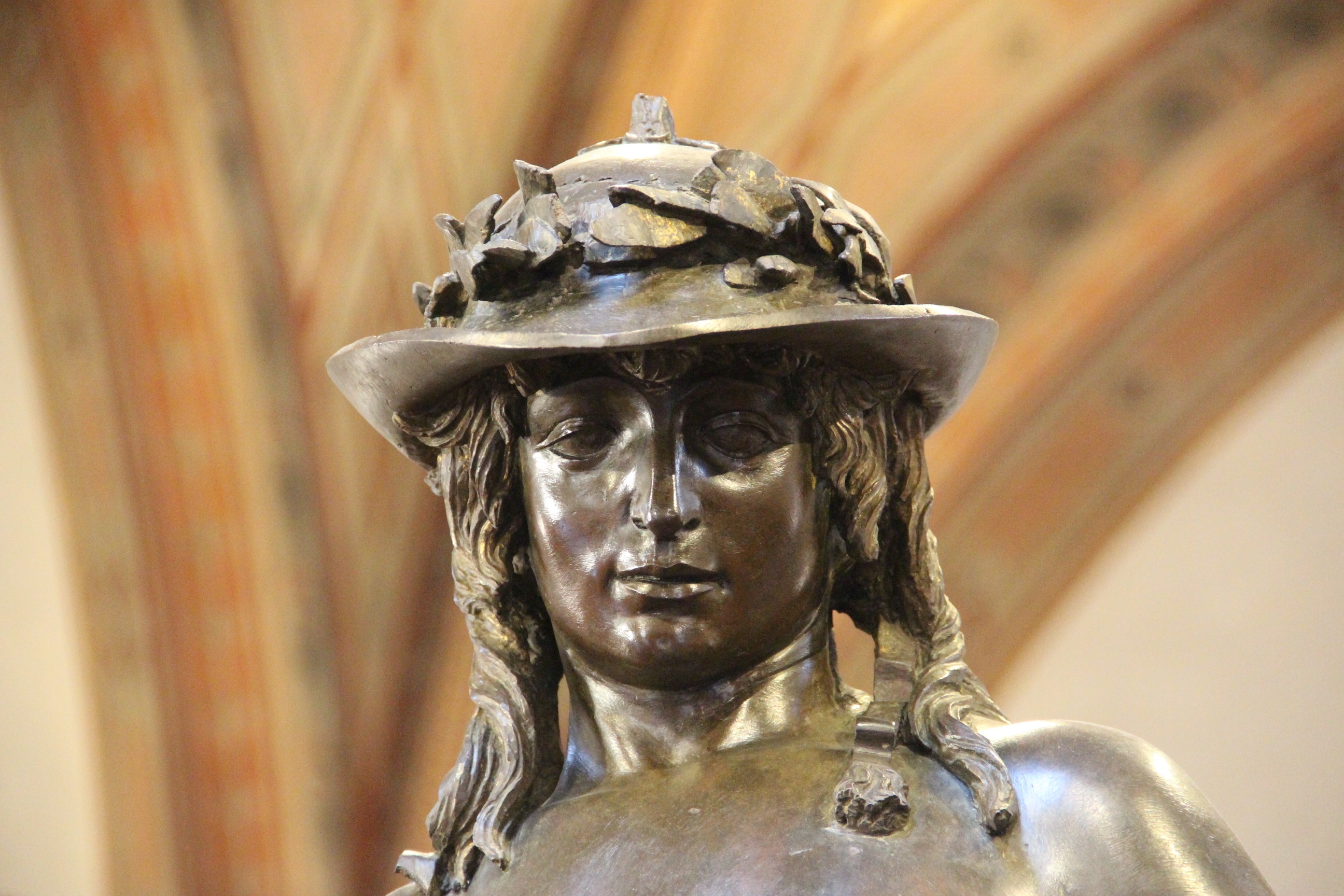
The Bargello is a wonderful place. Selfishly, I'm delighted that other places in Florence are better known- the Bargello is less over-run with tourists. (You cannot visit a place like Florence today, and not encounter hoardes of tourists. I was so lucky to have had other visits to Florence years ago.) (Odysseys Unlimited took us to the "big" places, of course. In spite of the tourists, you can't miss Florence. But they also did a good job of taking us to less over-run places, not yet "discovered".)
The Bargello has happy memories for me. I stumbled across it by chance on my first trip. (The third and fourth images on that page were taken at the Bargello, and I took the same picture again 20 years after taking those.) I love the Bargello still. More comments and photos later!
For now, here is a 360 degree panorama of the courtyard. The pale area is the grand staircase leading to the upper floors. Its grandeur does not come across in this image... but if you look at the size of the people near it, you may begin to grasp its scale.

DAY 10- Radda-in-Chianti/Siena, Monday, 1st June, 2026
Today we visit the walled city of Siena, whose ochre-colored buildings and ancient ramparts vividly evoke the city’s medieval past.
-----
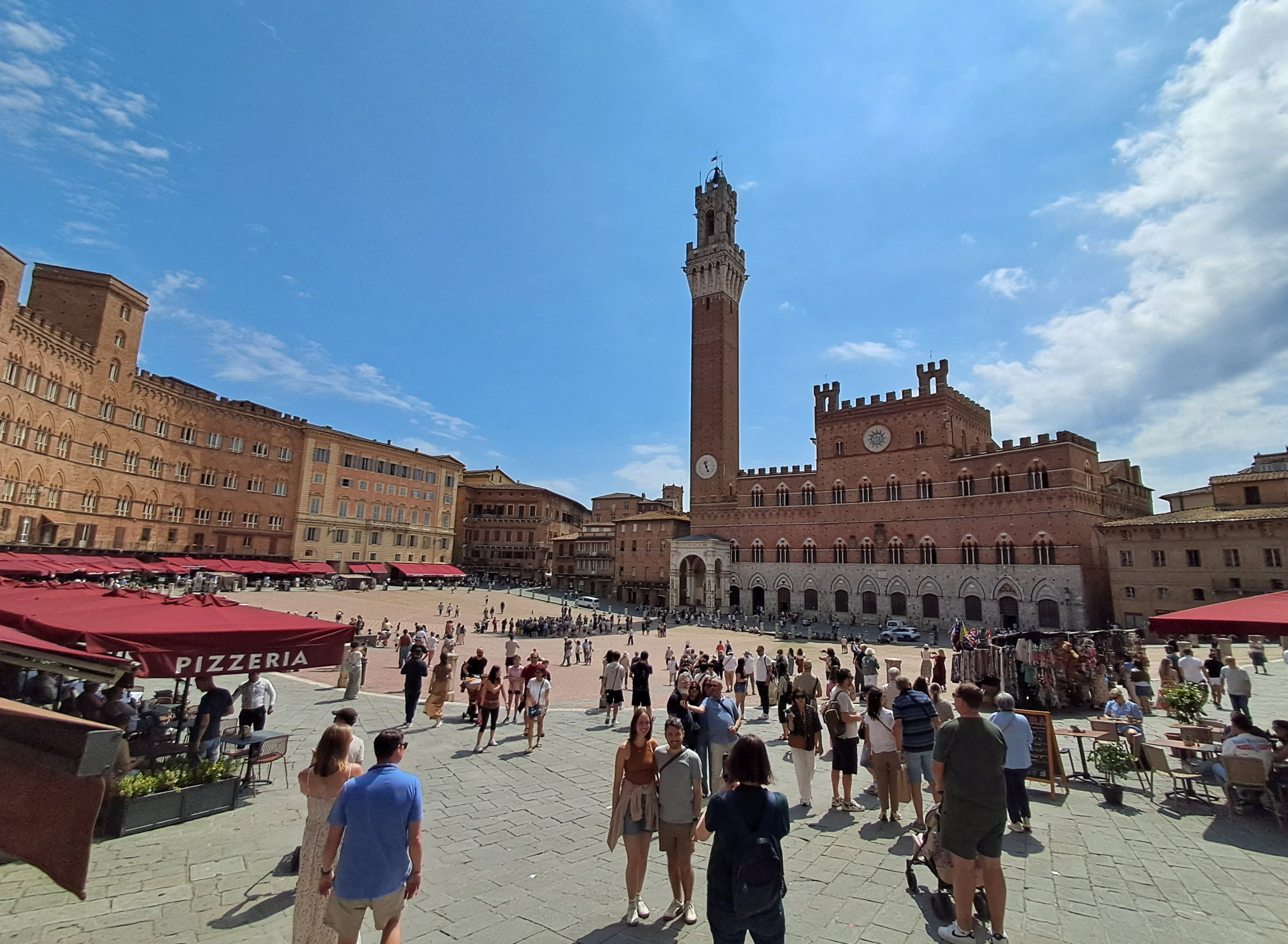
Arrived Sienna 9:15.
(It was nicer than the photo might lead you to believe! Use your hand to cover over all the tourists. They weren't hard to ignore... in Sienna. Who knew H.sapiens was photophobic? (Note distribution of people in the campo.)
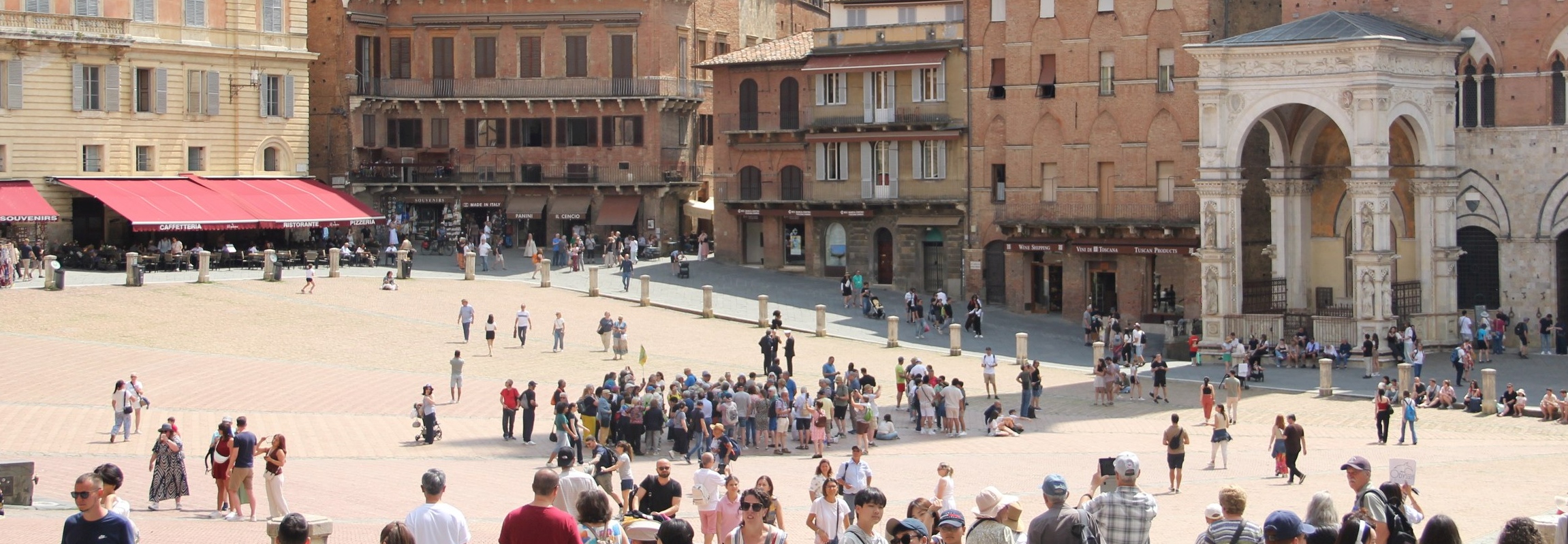
Fan-shaped Piazza del Campo is one of Europe’s greatest public squares.
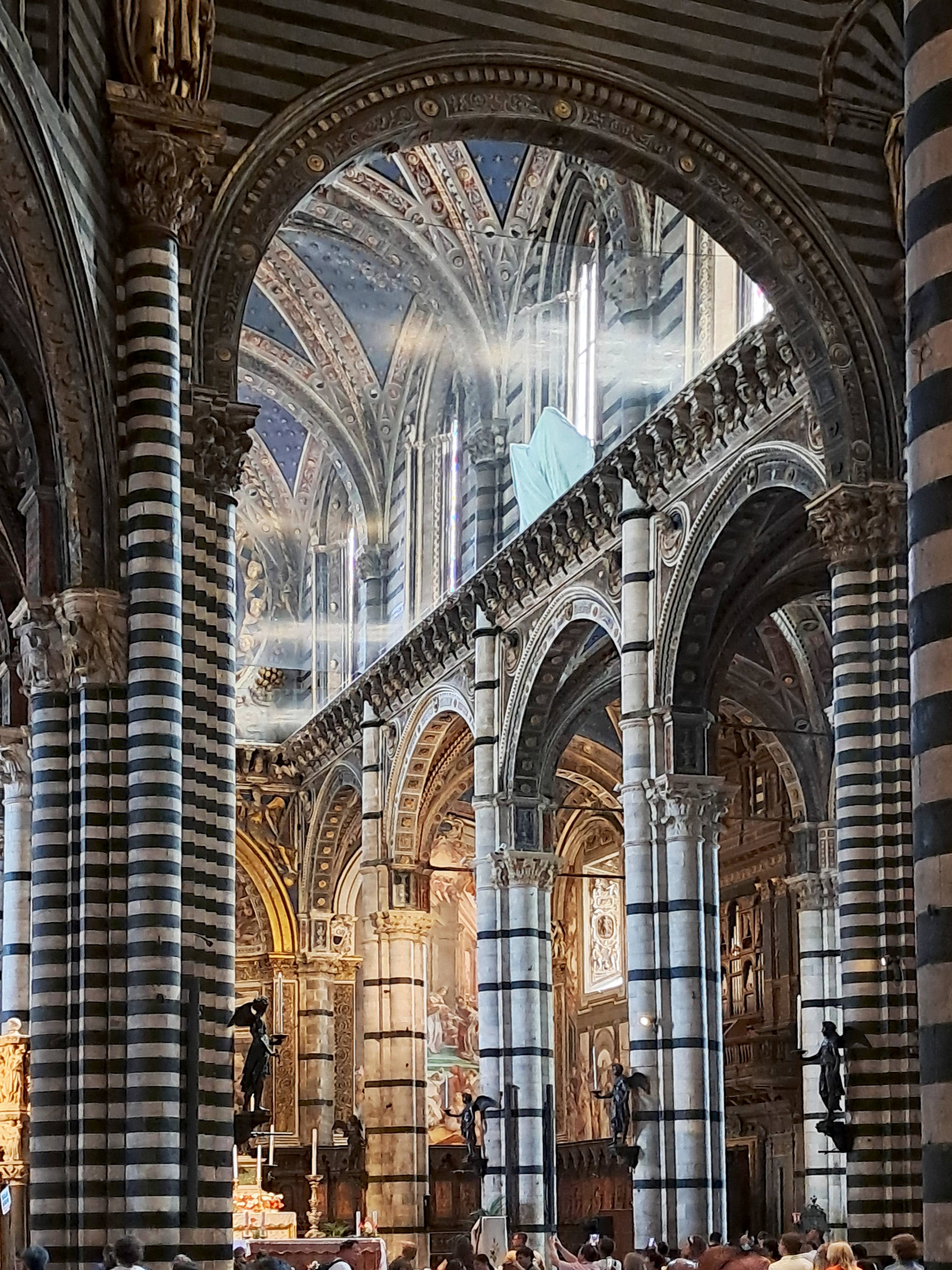
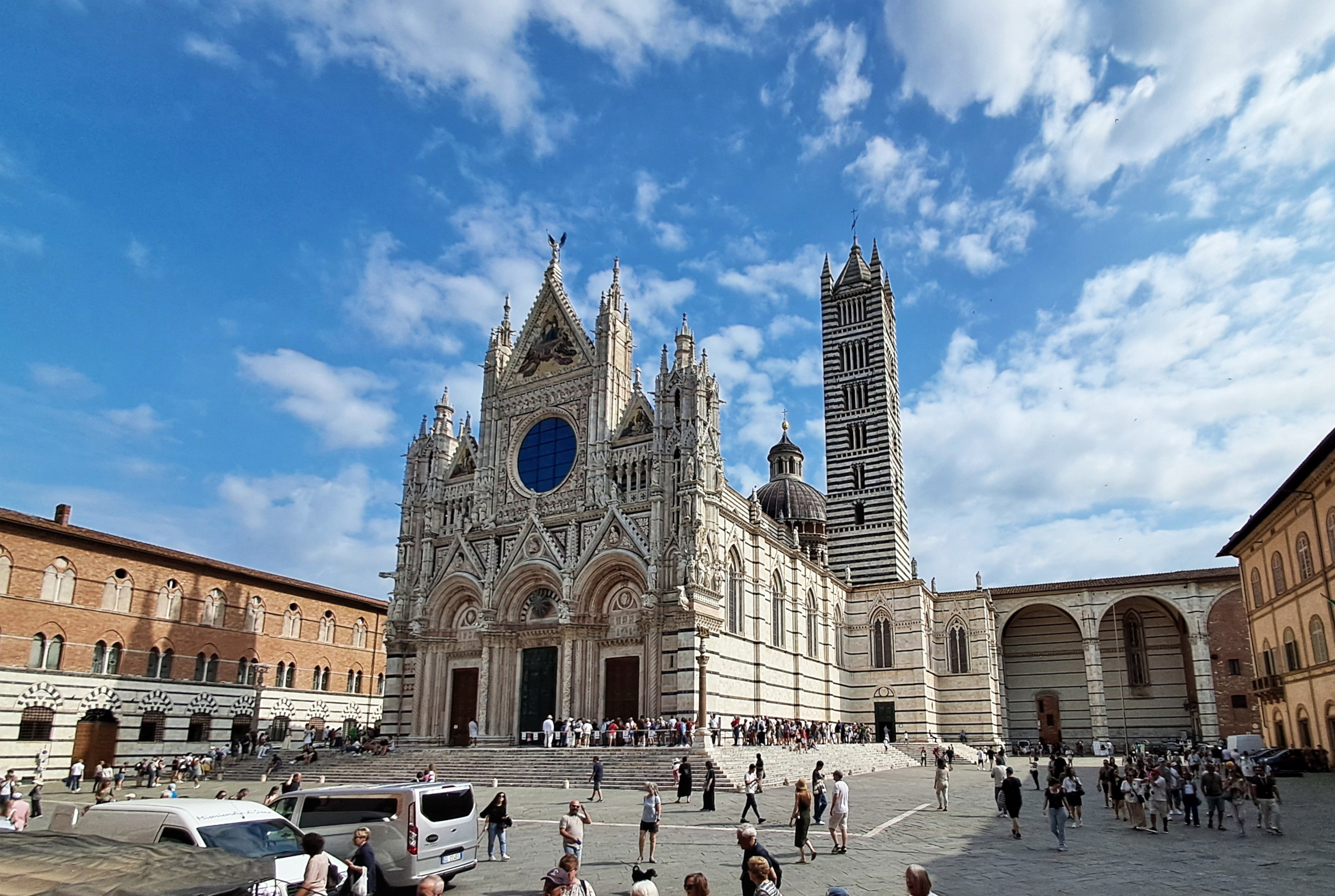
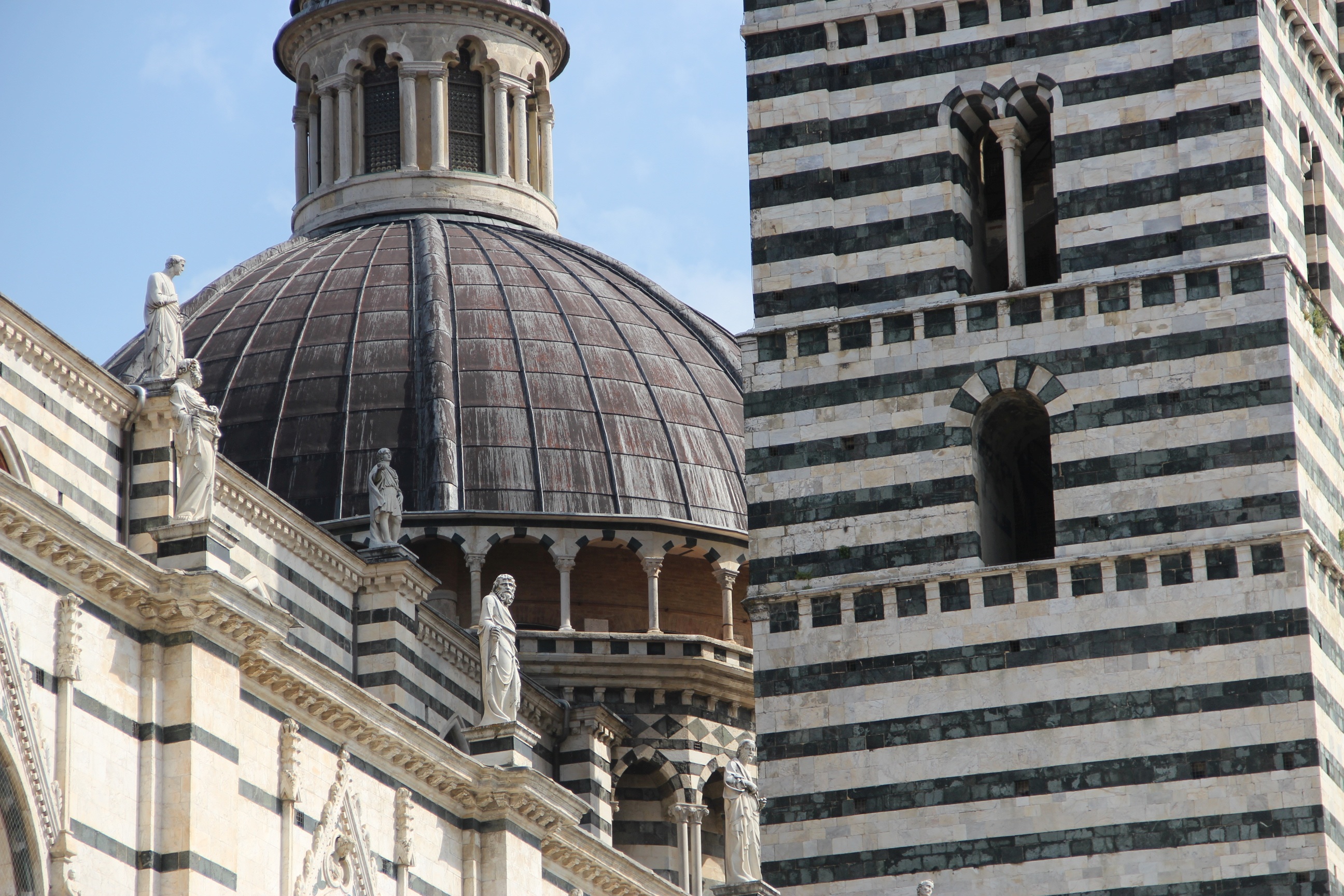
Its Duomo (Siena's cathedral), with pillars of black and white marble, is one of Italy’s finest, housing masterpieces by Donatello and Michelangelo. We pay an inside visit to the Duomo, which was built in the 12th century in the Romanesque style before being transformed into one of the world’s great examples of Italian Gothic architecture in the 13th century. It boasts a lantern atop the dome by Bernini, a Carrara marble pulpit, and an inlaid mosaic floor considered among the finest anywhere. We continue our guided walking tour; afterward, we have free time for lunch and to explore on our own. The town is packed with museums, churches, and monuments to explore. We return to Radda-in-Chianti in the mid-afternoon, with the remainder of the day at leisure. While in Siena, we must leave the bus outside the historic city center and walk into town, and then, after our touring, walk back to the bus.
Accommodations: Palazzo Leopoldo Dimora Storica & Spa
Meals: Breakfast
DAY 11- Radda-in-Chianti/Verona/Bolzano, Tuesday, 2nd June, 2026. Began two nights at Hotel Scala Stiegl
As we travel north today, we stop in fair Verona, renowned as the setting of several Shakespeare plays, including, of course, Romeo and Juliet. A UNESCO site, Verona boasts well-preserved monuments from the 1st century CE when the Roman Empire took over the city, including a Roman amphitheater still in use today – hosting famous operas such as Aida – which we see on our guided walking tour. We also see Castelvecchio, a 14th-century red brick castle on the banks of the Adige river; Porta Borsari, an ancient Roman gate dating back to the 1st century CE; Piazza delle Erbe, a square that was once the town’s forum during the time of the Roman Empire; the Scaliger Tombs, a group of five Gothic funerary monuments celebrating the Scaliger family, who ruled Verona from the 13th to the late 14th century. We'll pass near Juliet’s balcony, where Romeo promised eternal love in Shakespeare’s famous tragedy. After the guided tour, we have time for lunch on our own and to stroll along Via Mazzini.
We had a long drive north and east today, but it was worth it, and, as usual, broken up sensibly with comfort stops. And en route we had a splendid visit to Verona.
Just before we started our visit to Verona (about noon), we went down, down, down though a long series of enormous tunnels.

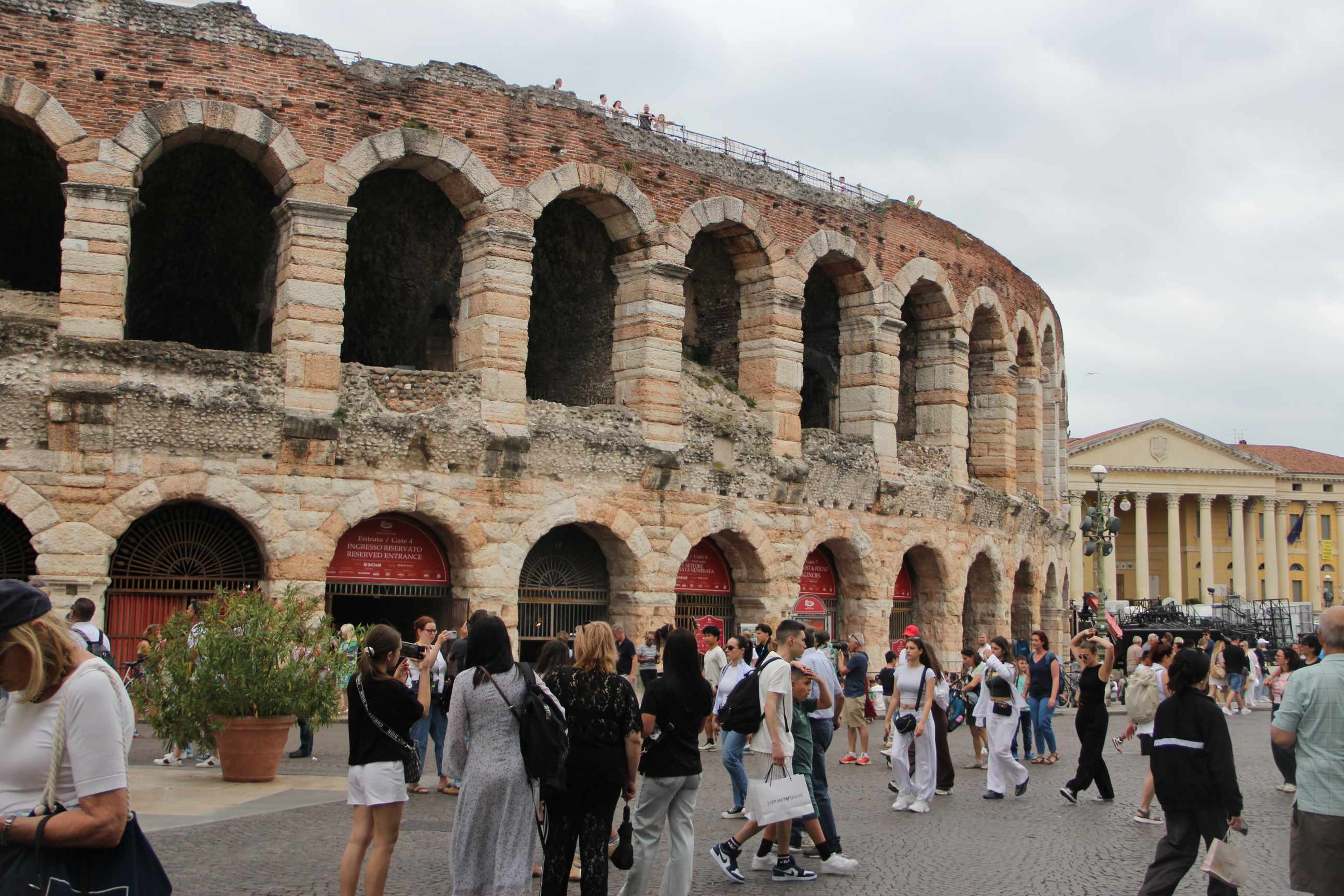
Verona's amphitheatre was magnificent. Wikipedia tells us that systematic restoration efforts that began in the 16th century. It hosted the closing ceremony for the 2026 Winter Olympics. It can seat about 22,000 people today.
(Happily, we left a pilgrimage to the reputed Romeo & Juliet balcony to the many others who felt they needed to see it. (There were Montague and the Capulet families in Verona in the era Will set his play in. A question: How did a thirthy-ish glovemaker's son from rural England in the 1590's know how things worked in aristocratic circles in Italy? I don't think Odyssey's were doing tours then.)
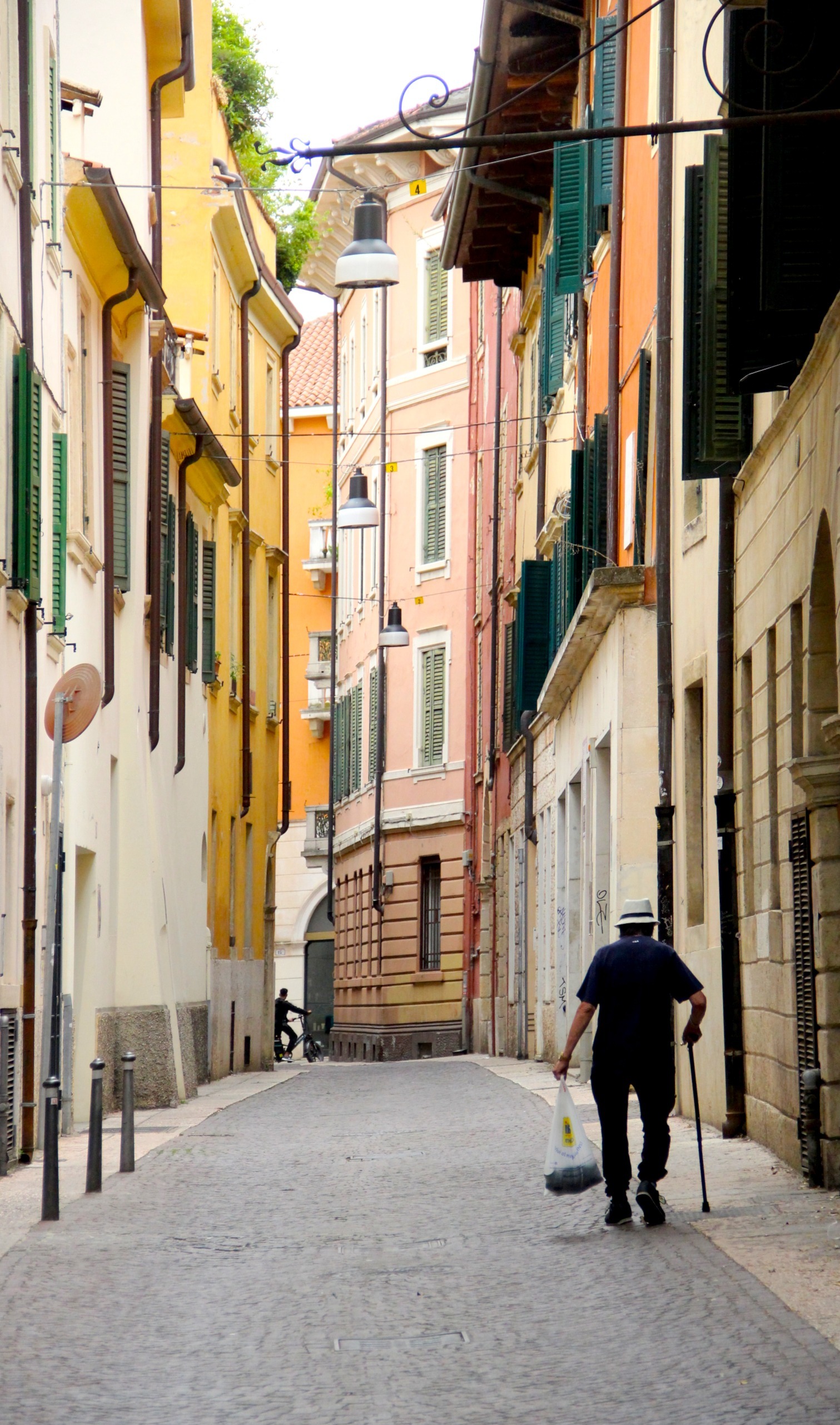
After Verona, we continue our journey to the South Tyrol, Italy’s German-accented northern reaches bordering Austria and Switzerland. We are bound for the regional capital of Bolzano / Bozen, gateway to the Dolomites in the Italian Alps. Early this evening, we reach our hotel, where we dine together tonight.
Accommodations: Hotel Scala Stiegl
Meals: Breakfast, Dinner
I grew up beneath the Rocky Mountains. There's always an empty place in me, if I'm not in sight of moutains. The mountains near Stresa at the start of the trip wre "pretty good"... but the mountains we were in for this part of the tour were magnificent.
The drive into the mountains thrilled me! Even as I reflected on the history of the route we were taking.
I couldn't help remembering the battle for the Brenner Pass near the end of WW II. (We travelled towards the pass, not going quite to it.) It was how Hitler supplied his troops as the Allies pushed them north. And was the way out for those troops, as they were forced north. Fighting on that ground, in winter, must have been a particularly dark corner of Hell. It was here that the 10th Mountain Division made it's name. My wonderful stepfather would have been involved, but his brother had already been taken by the war, so he wasn't posted to this battle.
DAY 12- Bolzano, Wednesday, 3rd June, 2026
Set in a basin surrounded by rounded forest-green hills, Bolzano boasts an enviable quality of life. We take a cable car to a spot for views of the 18-peak Dolomites, their vertical walls and sheer cliffs presenting a magnificent backdrop to the surrounding woodlands, valleys, and pastures.
Accommodations: Hotel Scala Stiegl
Meals: Breakfast
Cable car: almost three miles long, vertical travel: 3,120 feet, travel time: 12 minutes. Thirty people per cabin.
Often far above the ground!
Beautiful views, including below us.
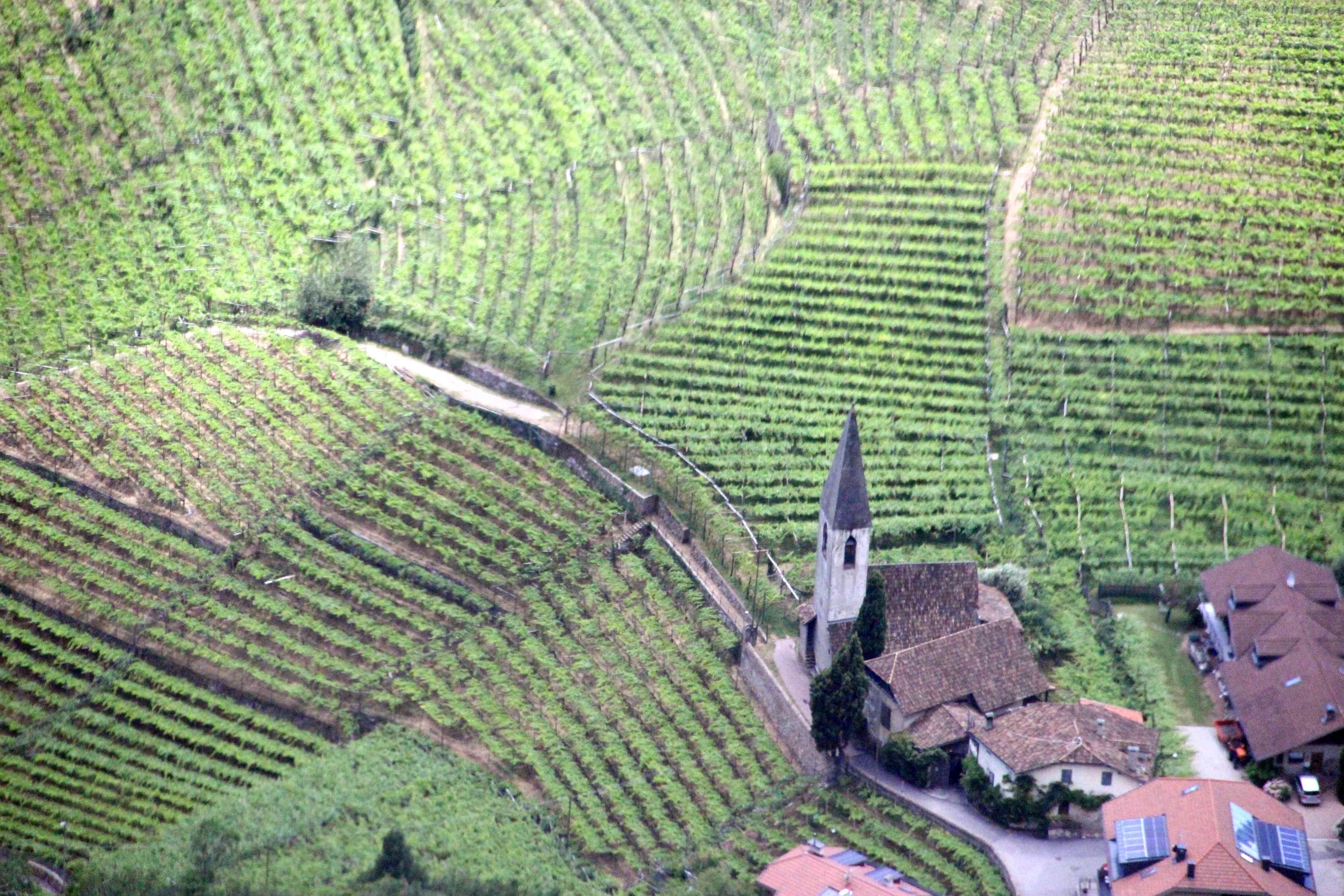
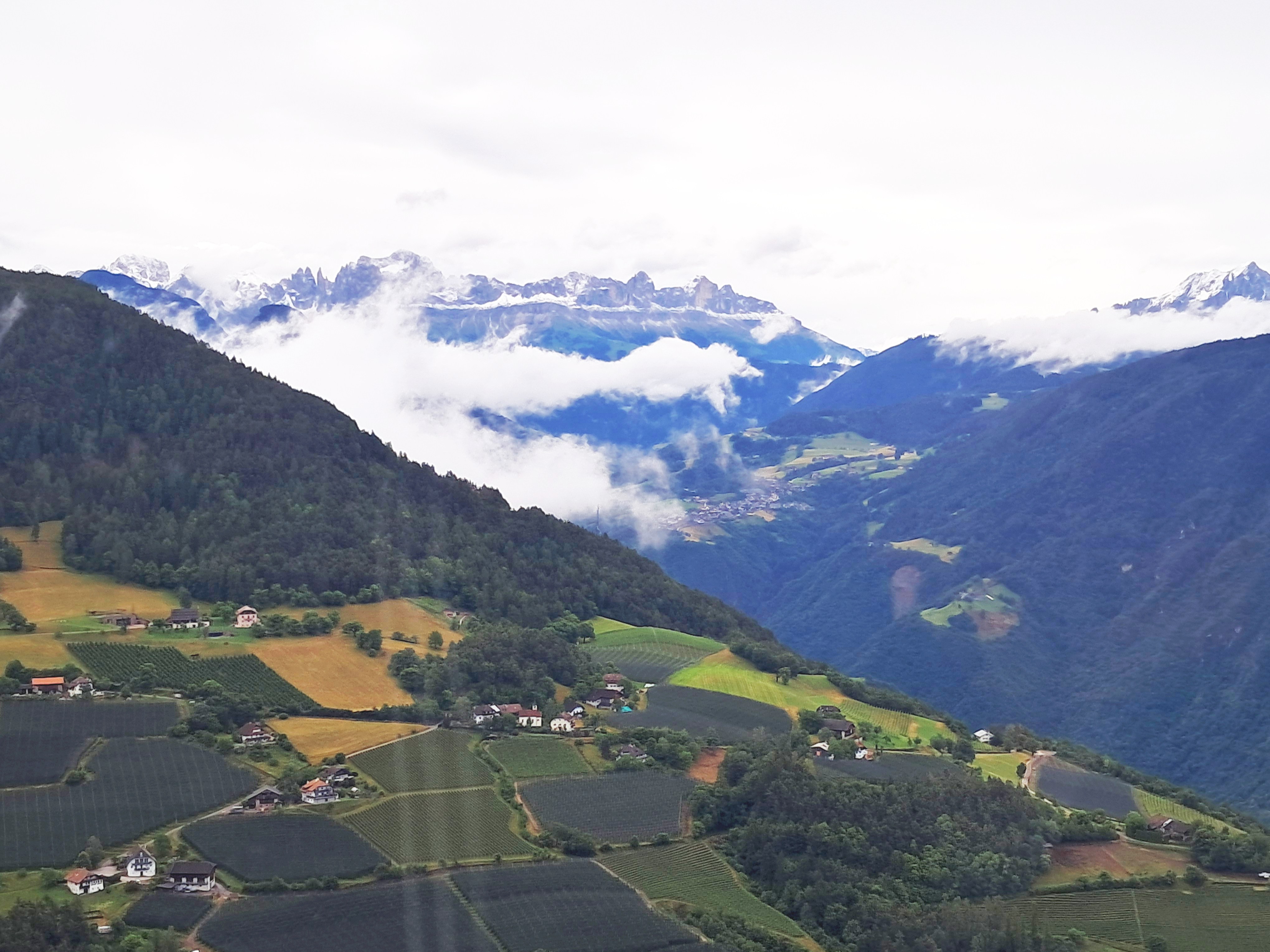

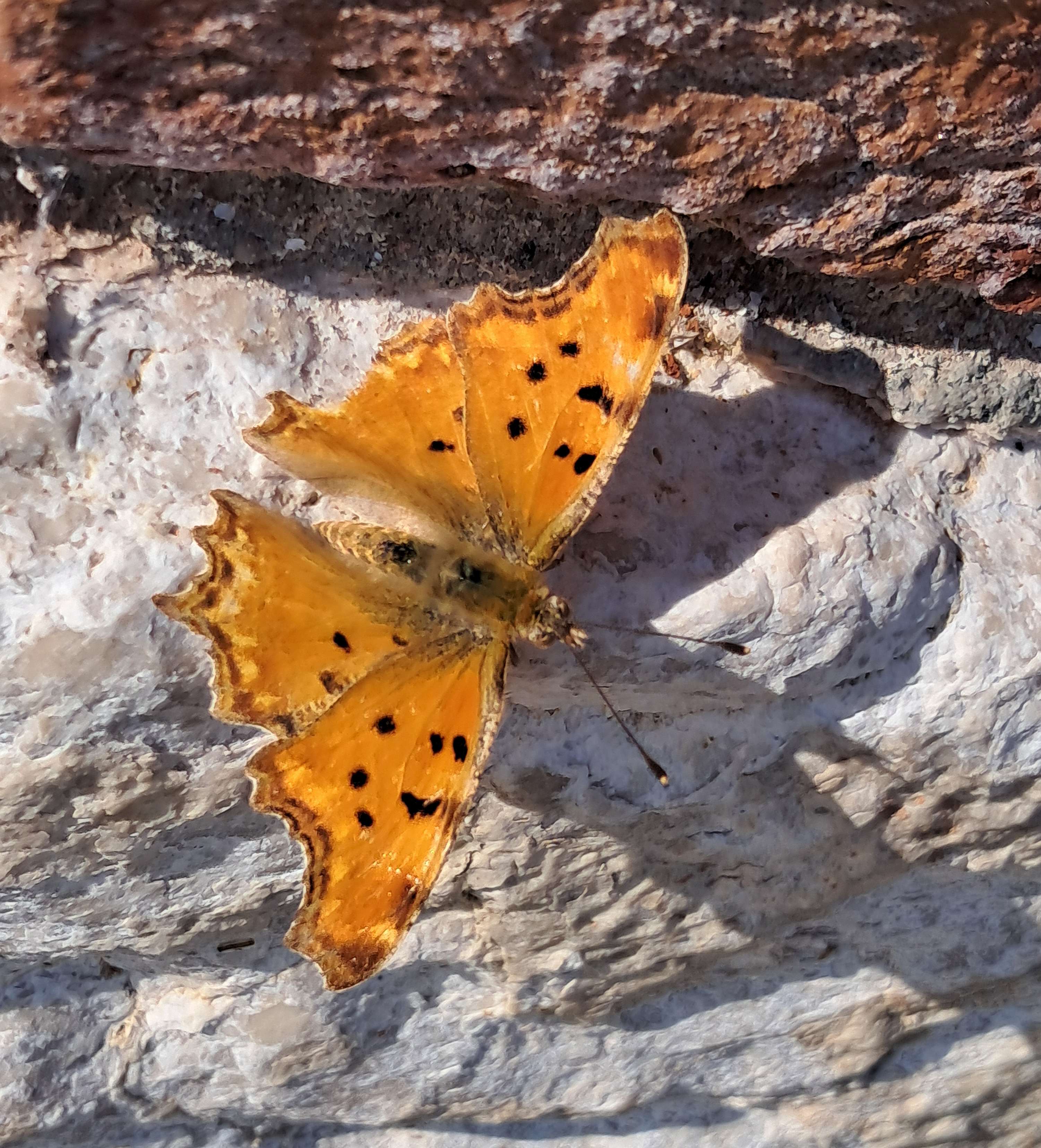
The cable car took us up to a plateau above Bolzano where there are roads, towns, houses, people living.
And a small train that runs along the edge of the plateau, connecting the towns. We hoped aboard and ran a long way. Then a glorious walk from one of the train stations, on wooded paths on the edge of the plateau. After which we were turned loose to drift back to Bolzano as we chose to. There were easy options and more arduous ones.
For a little more walking, it was possible to visit... (this bit to be finished later).
That took us even further south. Myself and another member of the tour used a local bus take us part of the way back to the railway station where we got the train back to the top of the cable car.
A grand morning/ afternoon!
By chance, we caught the train that many of the local 11-14 year old schoolkids were using to go home after their school day. They were a nice lot. Neatly dressed, casually. Well behaved. Many... boys and girls, had lovely hair. Everyone had snacks- a bag of potato chips, some cookies, crackerrs, etc. And they all shared! I doubt any child ate more than a fifth of the snack they'd brought.
A note on the school system in the area: At every age level there are parallel schools: One where the main language is German, and Italian is taught as a second lanugage. And another where there reverse pertains.
Seemed unworkable and inefficient to me, but I have it on good authority that it actually works, and isn't new. Certainly the school buildings and other facilities were impressive.
Throughout the trip, I was struck by how many birds and insects I saw around me... in cities, in the countryside. Maybe I just don't get out enough at home!
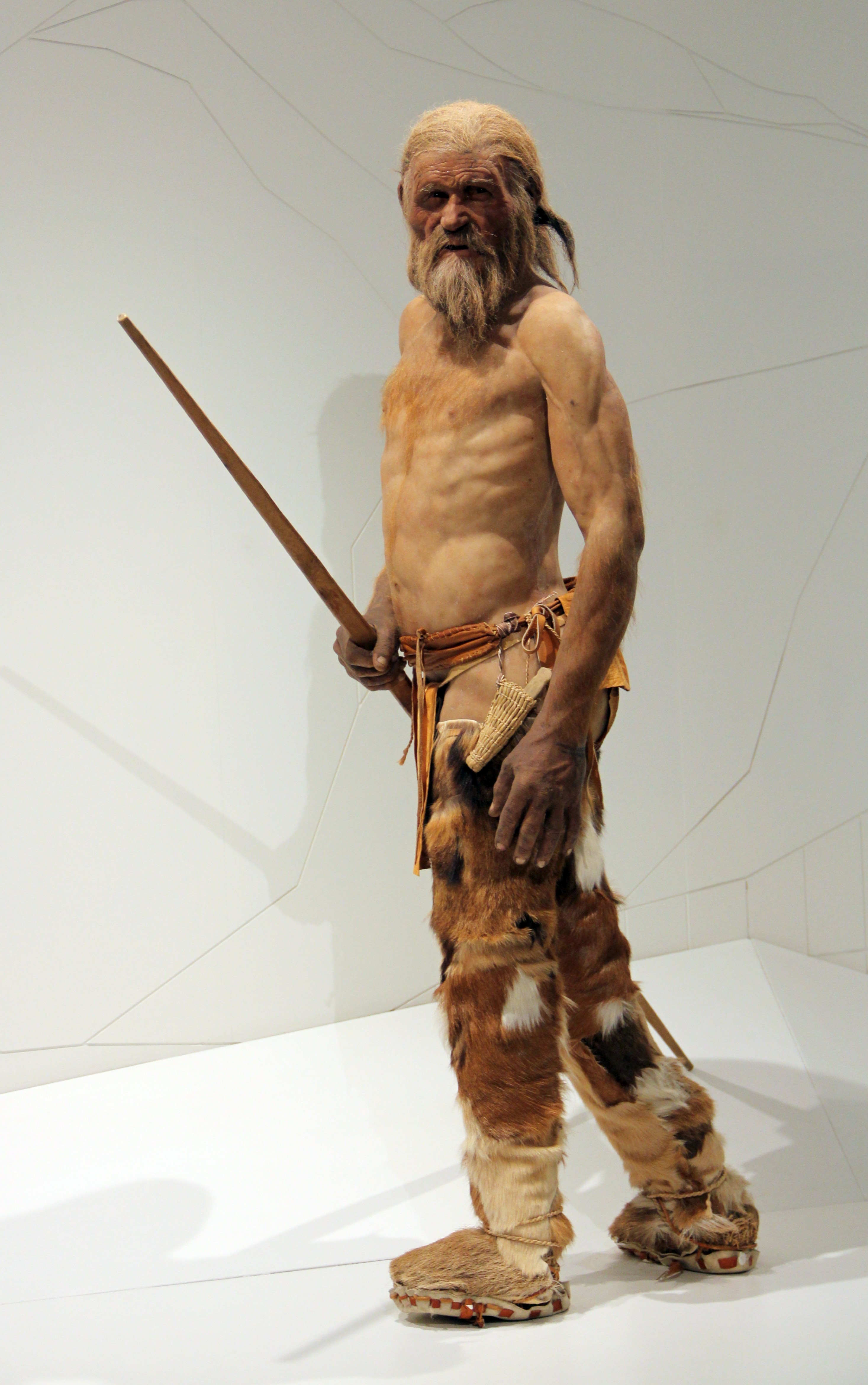
Then we walk through Bolzano’s colorful historic center and visit the South Tyrol Museum of Archaeology, famous for housing Europe’s oldest known natural mummified human corpse: Ötzi the Iceman.
I've long known about Ötzi. About 5,300 years ago he was killed in the alps on the border between Austria and Italy, about 30 miles NW of Bolzano.
His body fell... or was pushed?... into a shallow depression in the rock in one of the saddles between mountains. The snow fell. Evenually he was inside a huge "icecube". And there he sat until 1991.
The photo is of a life sized facsimile based on DNA and MRIs. We also saw him.
The museum's displays of him and about him are very good.
Long time ago...
What's a "long" time ago? Here are some candidates for you...
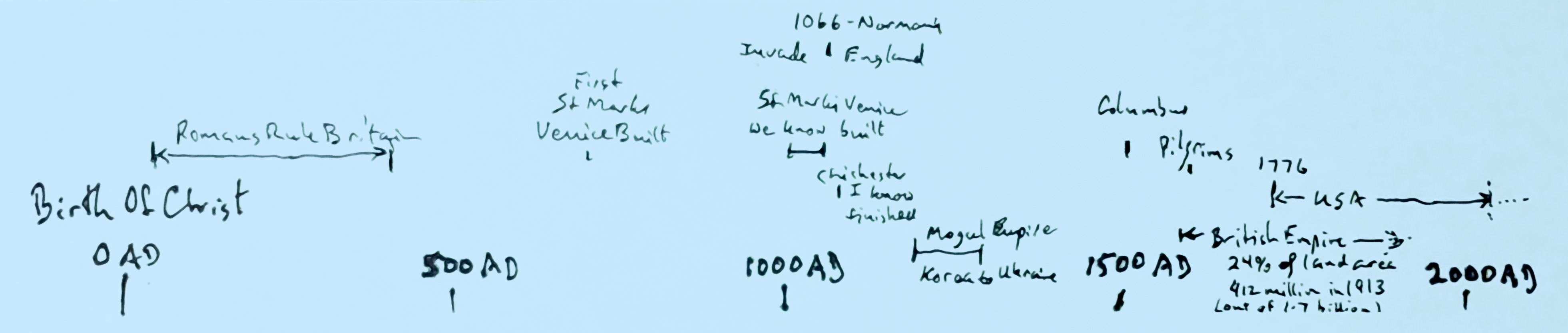
A very long time ago...
Otzi died a very long time ago.
Everything that "fit" in the first timeline only fills the right-hand third of a timeline that shows when Otzi died. (The first timeline's scope is indicated by the horzontal blue bars.)

Let's put it another way... Go back to the time of Christ. Go back that far again... you've almost reached the time when the Giza pyramids were being built. To get to Otzi you need to go back another thousand years. Use the upper graph to consider what has happened in the past thousand years. A thousand years is a long time...
Apologies for the crude diagrams. Text in the first...
Romans Rule Britain / First St Mark's, Venice, built / 1066- Normans Invade England (Last foreigners to successfully invade England) / St Mark's, [built to look as] we know it / [The} Chichester I know built / Mogul Empire: Korea to Ukraine / Columbus / Pilgrims / British Empire (24% of land area. In 1913 412 million people [ruled] out of 1.7 billion oin world at the time / 1776- USA
Text in the second...
Otzi / Giza Pyramids [built] / Egyptians making mummies deliberately [for about 1200 years... suggests a very long lived stable society.] / Beginnings of Great Wall of China / Romans Ruled Britain.
This evening is at leisure to enjoy this cosmopolitan city as we wish, perhaps to walk through the local fruit market square, Piazza delle Erbe, which much more resembles a narrow, outdoor shopping mall than an open square.
Dinner is on our own.
Ah. Dinner. I had a very, very special treat... I had dinner with a local person. A special local person.
Born in Bolzano. Went to Zambia as an infant, Italian parents engineers.
(Bolzano is at the heart of a region where there is Italian and German heritage is present. All signs, all official paperwork must be in both languages, and both are often encountered. (A third heritage has the same protections, but is represented by a small percentage of the population.)
When he was nine, in the mid 1970s, my host was sent to boarding school in England. I regularly collected him, exhausted and a bit disoriented, at 3am at Gatwick. We've had very little contact between then and now... but enough to set up this wonderful evening. It was so good to see him again. He was a "good kid". Settled well, never difficult evedn with the challenges "life" had given him. It was so pleasing to learn that his memories of England are good. (His parents returned to Bolzano when he was 12 or 13.)
DAY 13- Bolzano/ Venice: Thursday, 4th June, 2026. Began two nights at Palazzo Veneziano.
Driving out of the mountains was as wonderful as driving into them.
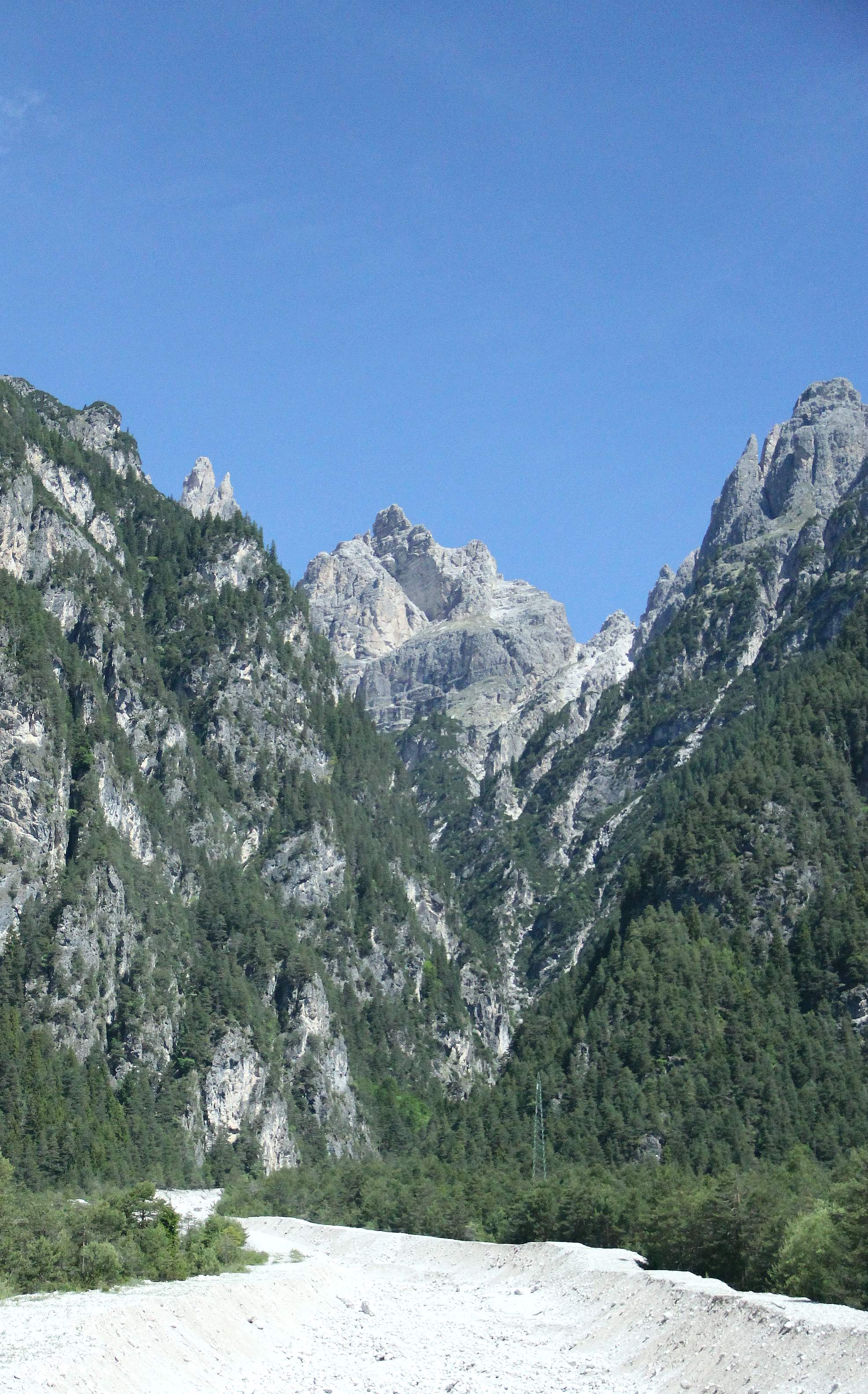
En route to canal-laced Venice today, we travel through the Dolomites themselves, enjoying jaw-dropping scenery at every turn.
While water is a blessing, sometimes it comes in unhelpfully large doses. In the forground at the right, you can see the riverbed formed by the awesome forces of the water when it comes down from the mountains too abundantly. The bottm of that channel was easily two ordinary road lanes wide.
But the mountains are so magnificent!
We passed many ski resorts, large and small.
We stopped for a break in the journey at a beautiful lake, surrounded by towering giants. (Misurina, just east of Monte Cristallo.)
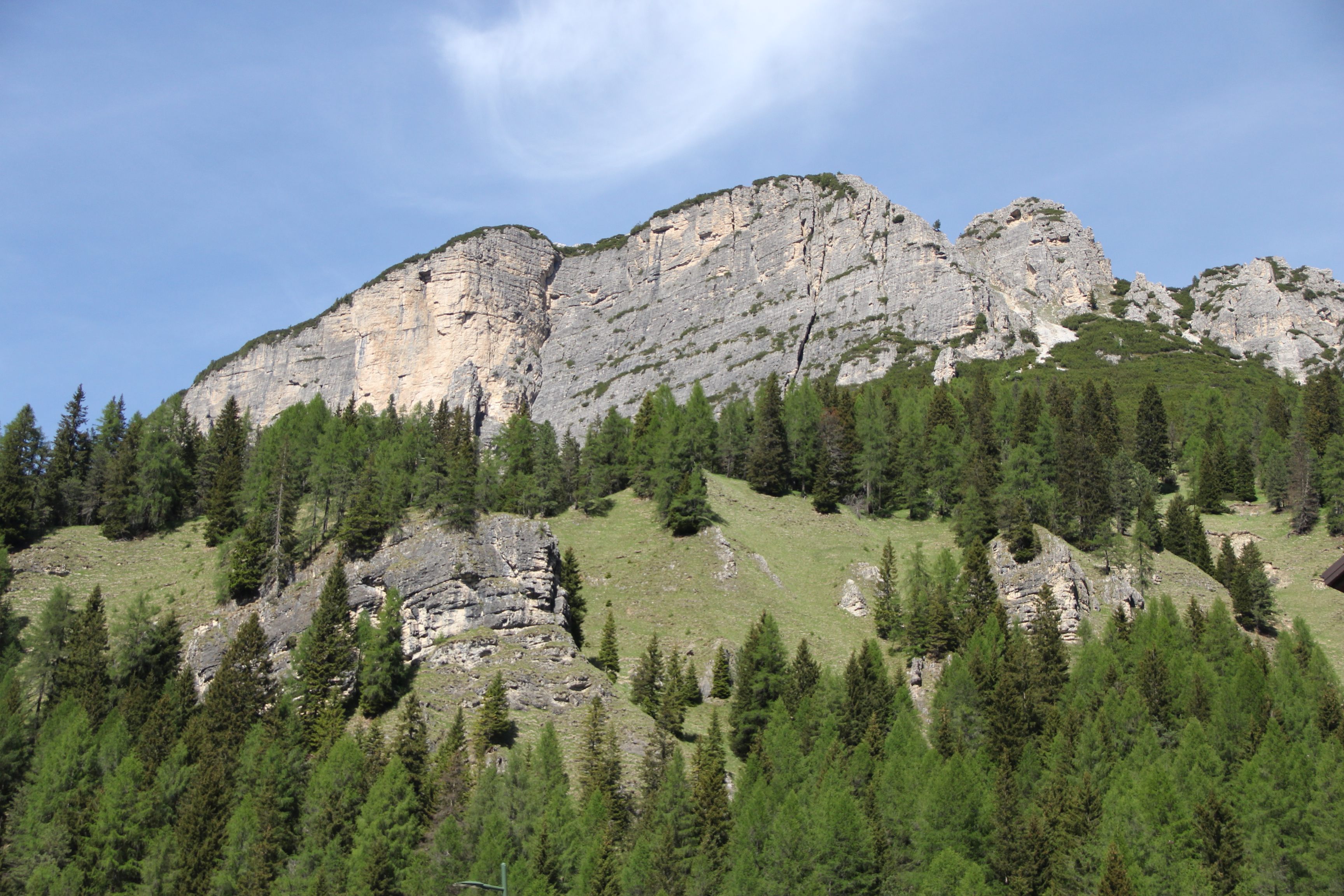
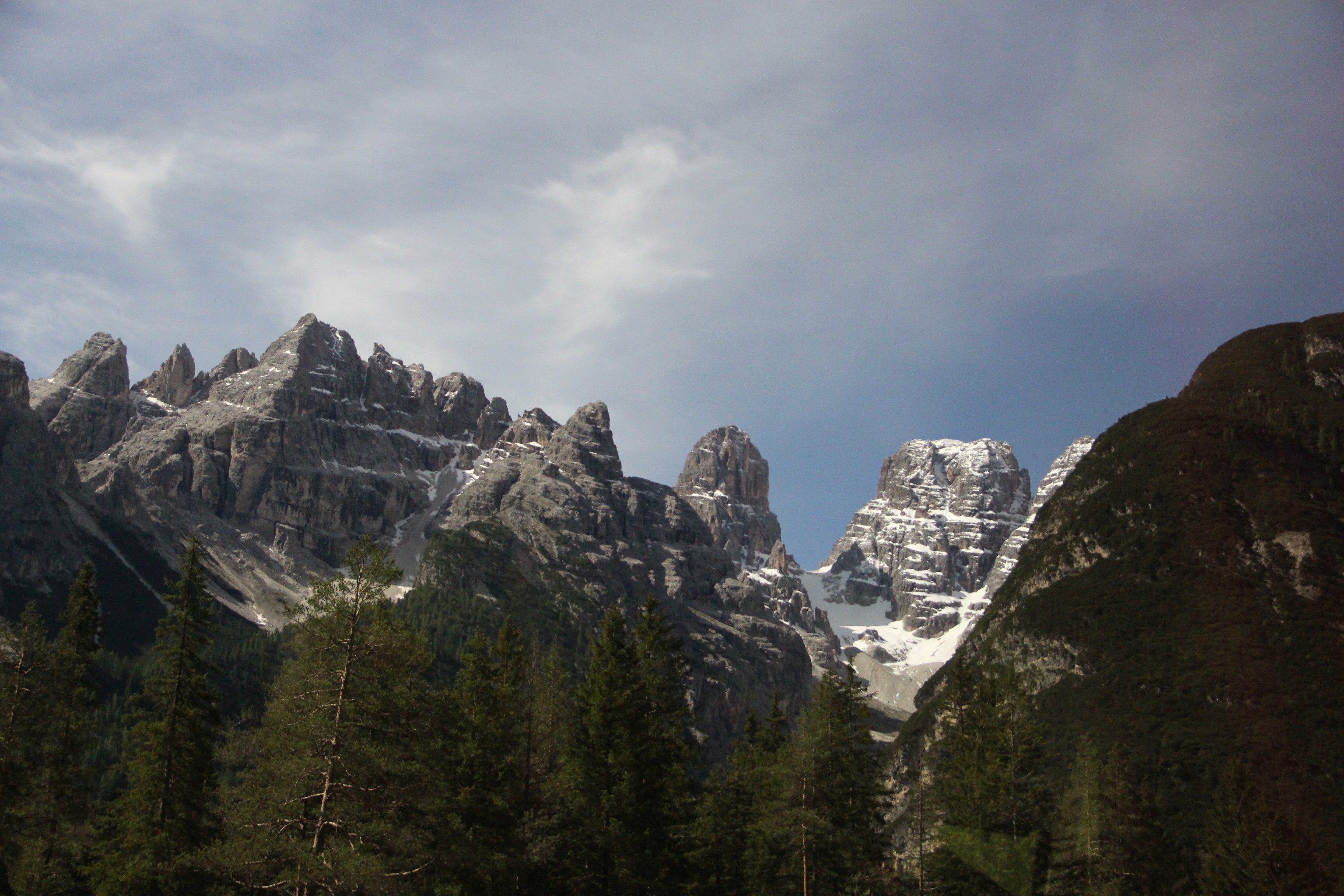
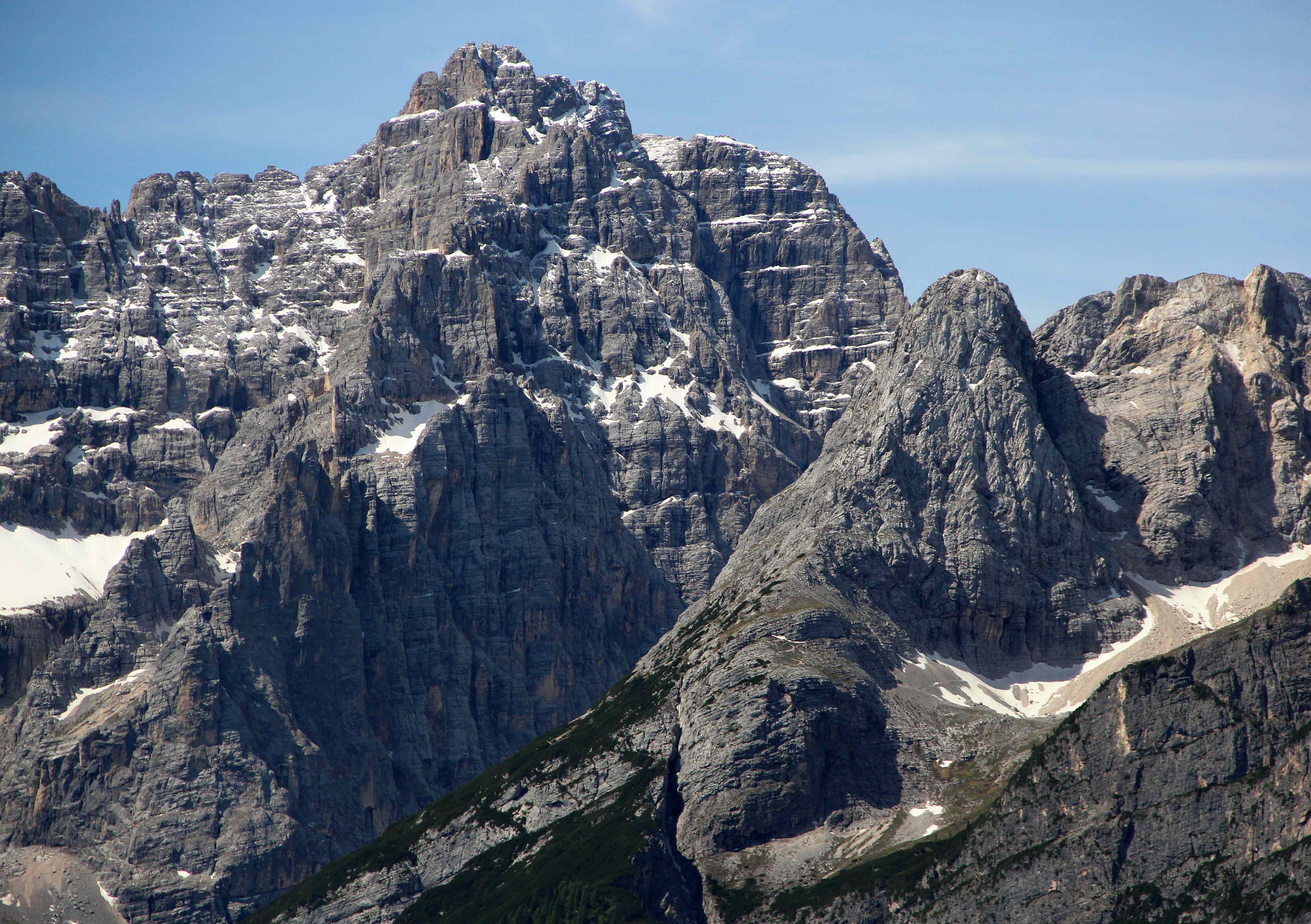
At some point, I need to do a page about Northern Italy's relationship with the Italian alps... in particular in respect of the water they provide.
I spoke a moment ago about the water sometimes coming down too abundantly.
After our stop at Misurina, we passed through the town of Longarone, site of a horrendous disaster on October 9, 1963. (Read the Wikipedia article for more jaw-dropping numbers.)
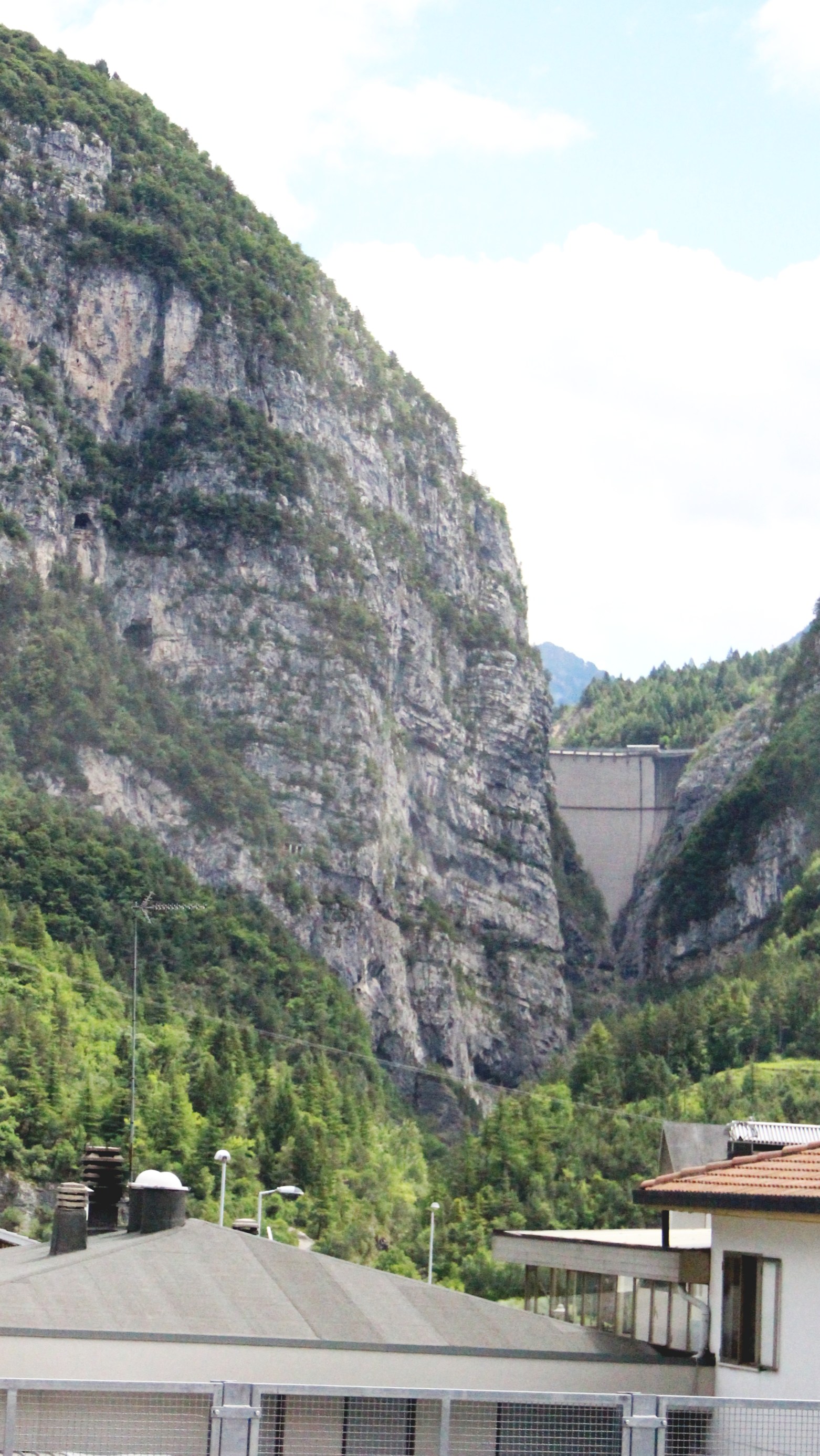
We saw the dam above the town, shown to the left. It's not as small as it looks. The dam is 860 ft high, one of the tallest dams in the world. (It has been disused since the disaster; the suices at the bottom are left open, so water does not collect behind it ever again.)
About 80% of the people in the town below the dam died. No one can be quite sure how many people died... the estimates run from 1,917 to 2,500.
The deaths weren't from a "simple" flood. And there were warning signs that might have told the engineers what could happen.
Let's not forget, though, the tremendous benefits dams were thought to bestow in the mid 1900s. Tragic that all the effort, expense, achievement should have produced such a terrible result.
Late at night, a landslide fell off the mountain upstream of he dam. Perhaps I should say "A LANDSLIDE".
About a mile of the flank of the mountain forming the north bank of the lake made by the dam fell into the water. About 10 billion cubic feet of trees, earth, rock.
The landside displaced about 4 billion cu ft of water.
1.8 billion cu ft of that "sloshed" over the top of the dam. the "wave" was about 800 ft high when it passed over the lip of the dam. The very high dam. And crashed down into the narrow valley below.
Let me put that another way. If the water that crashed down into the town had been the shape of a 600 foot high brick, it would have 1200 ft long and 2400 feet (c. 1/2 mile) long.
Two thirds of the height of the Eiffel Tower. Half the height of the Empire State building.
The drive east and south shows us the true diversity of Italy’s landscape; within a matter of hours, we move from sky-scraping mountain peaks to low coastal marshes, and soon into the Venetian lagoon. Consisting of 118 islands separated by 177 canals and connected via 409 bridges, Venice is by turns a living museum, a mazelike mystery, and a pedestrian paradise. As the streets are too narrow and the bridges too steep, Venice remains Europe’s largest car-free urban area. We reach this wondrous floating city this afternoon and are free to begin savoring everything it has to offer – maybe choosing to take a gondola ride. Tonight, we enjoy dinner on our own.
Accommodations: Palazzo Veneziano
Meals: Breakfast, Lunch
Venice...
Ah... Venice!...
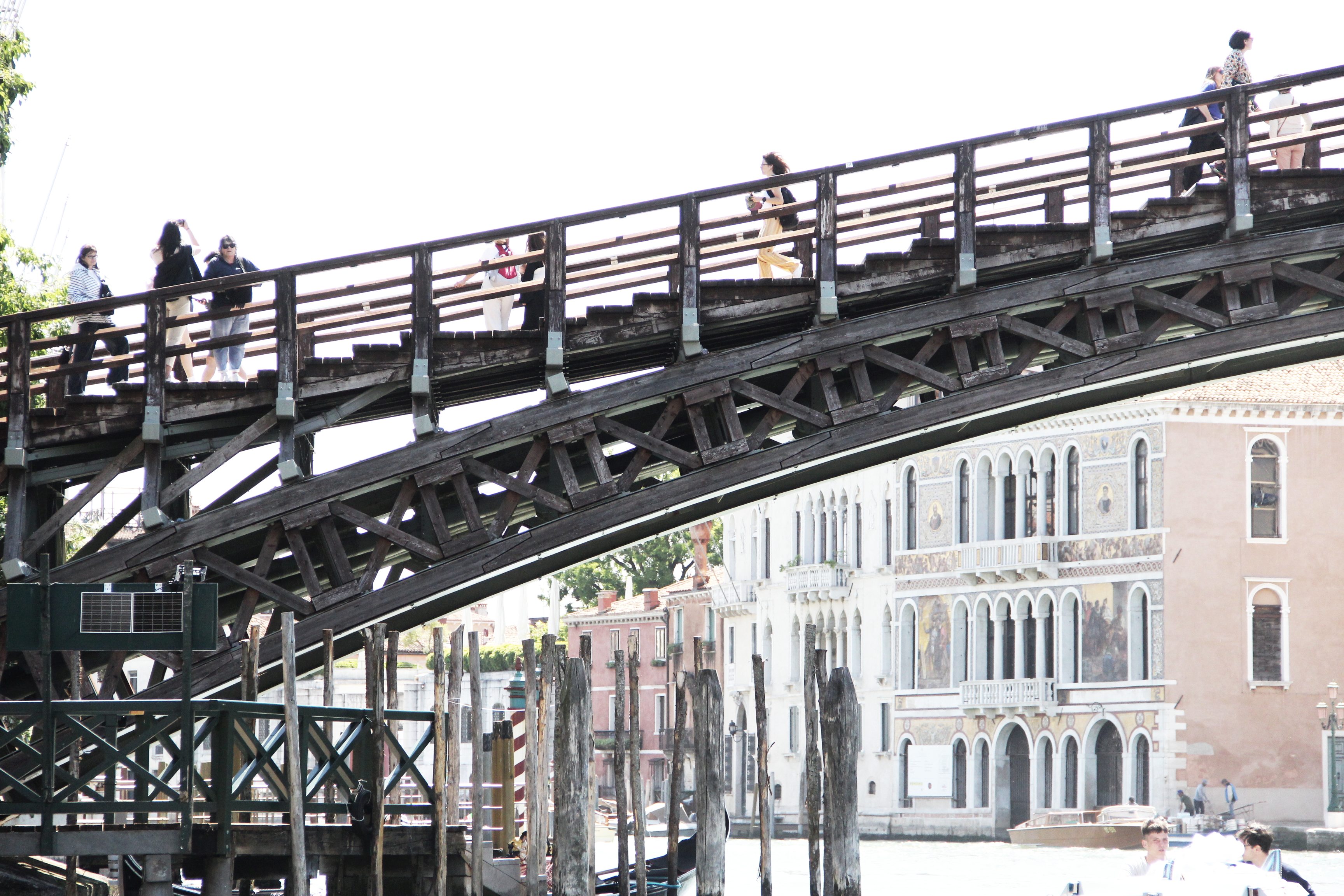
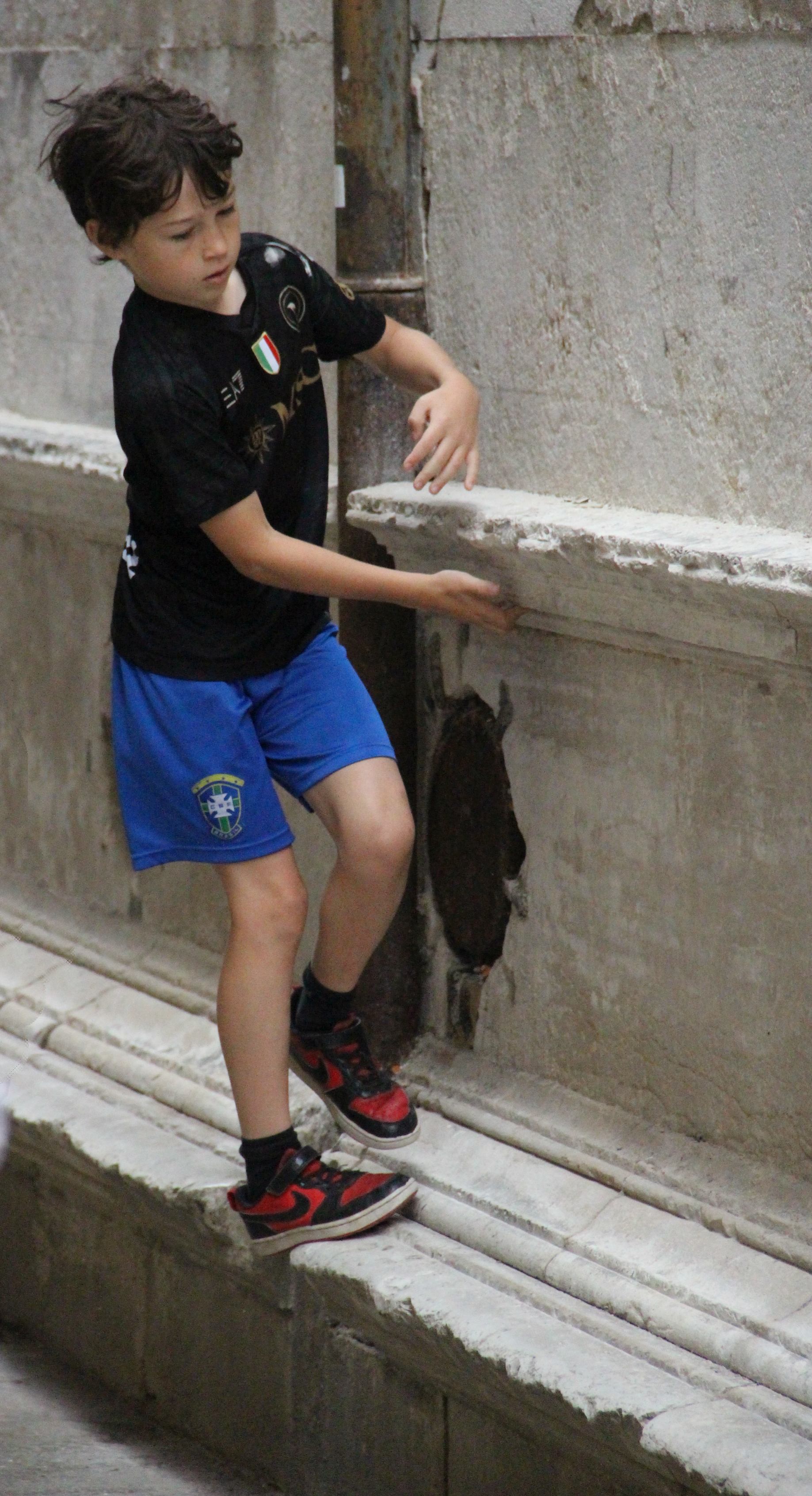
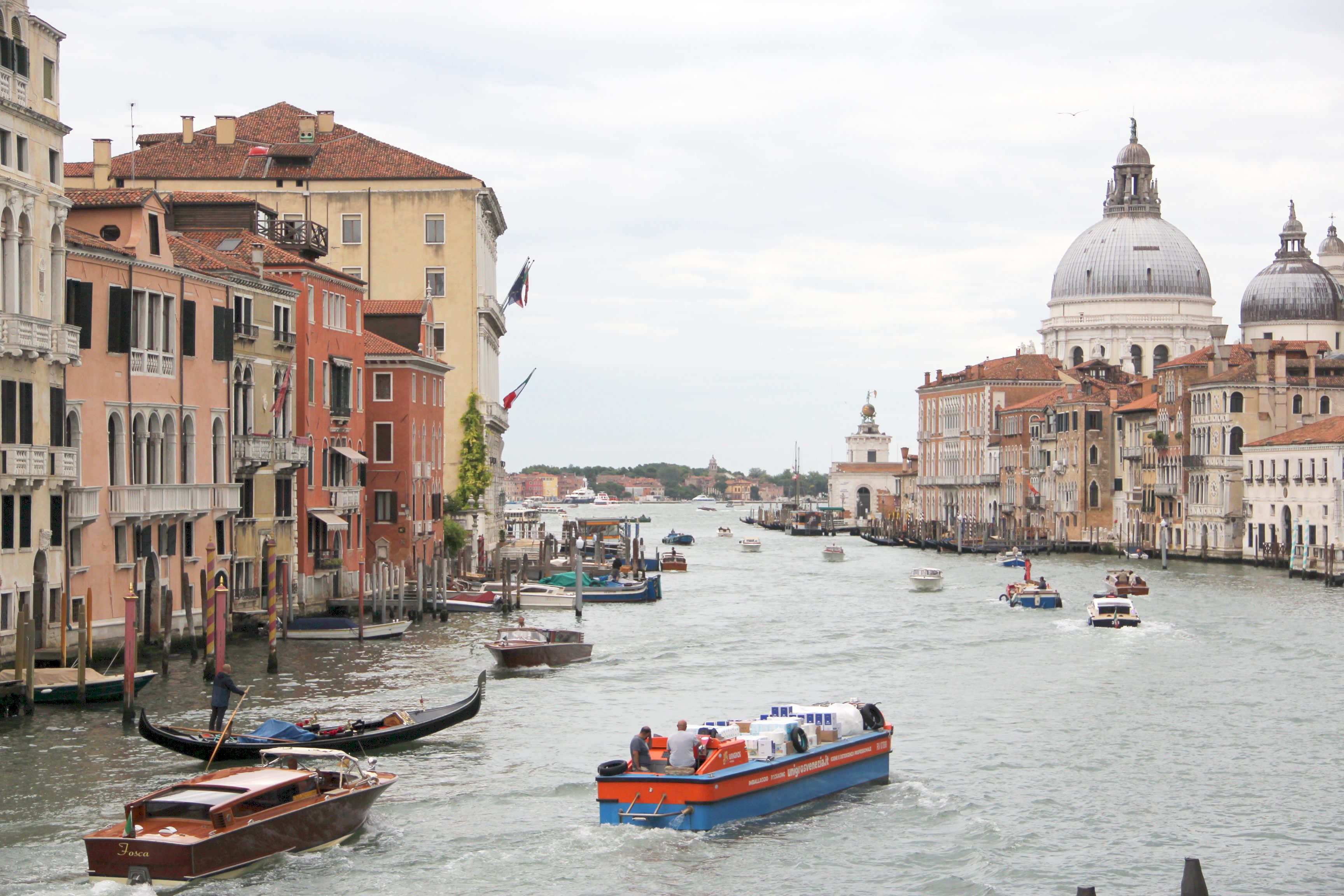
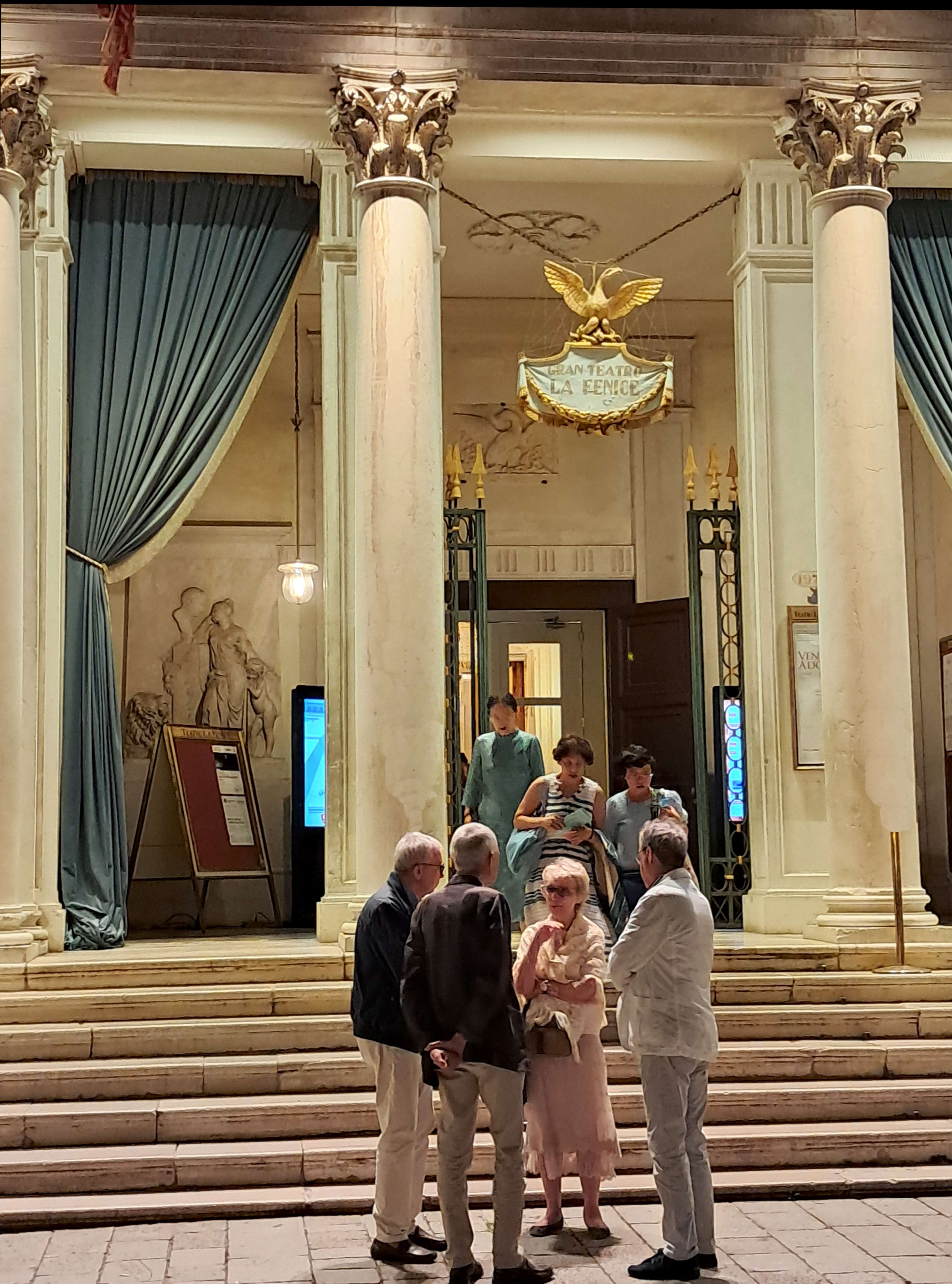
For our "free time" in the evening, a friend had arranged seats for an excellent bassoon/ piano recital at Venice's famous opera house, La Fenice. ("The Phoenix").
Wikipeda tells me that it "...was the site of many famous operatic premieres, works by Rossini, Bellini, Donizetti, and Verdi... [And that great conductors] have performed at La Fenice: Arturo Toscanini, Richard Strauss, Pietro Mascagni, Leonard Bernstein, Leopold Stokowski, Fritz Reiner, Tullio Serafin, John Barbirolli, Guido Cantelli, Dimitri Mitropoulos, Herbert von Karajan, Karl Böhm, Claudio Abbado, and Riccardo Muti."
It has been around since before 1774 when it had its first fire. It was gutted again in 1996, and rebuilt beautifully.
I had this treat thanks to the friend I with whom I am taking this trip. She is much better organized about this sort of thing than I am. Indeed, I owe my whole trip to her, as she found it, decided to go, and asked me if I wanted to go too. She's a good friend!
DAY 14- Venice, Friday, 5th June, 2026
This morning’s guided walking tour reveals a host of Venetian delights: Piazza San Marco (St. Mark’s Square), deemed “Europe’s most magnificent drawing room” by Napoleon Bonaparte; the romantic Bridge of Sighs; and the Rialto district with its bustling market, among many others.
Our local guide in Venice was particularly good. (Some others were probably as good... but this one got the luck of the draw, and I remembered to make a note to myself. (None were unsatisfactory!)
Our lovely group, and excellent tour director... Everyone still smiling after many days and miles together...
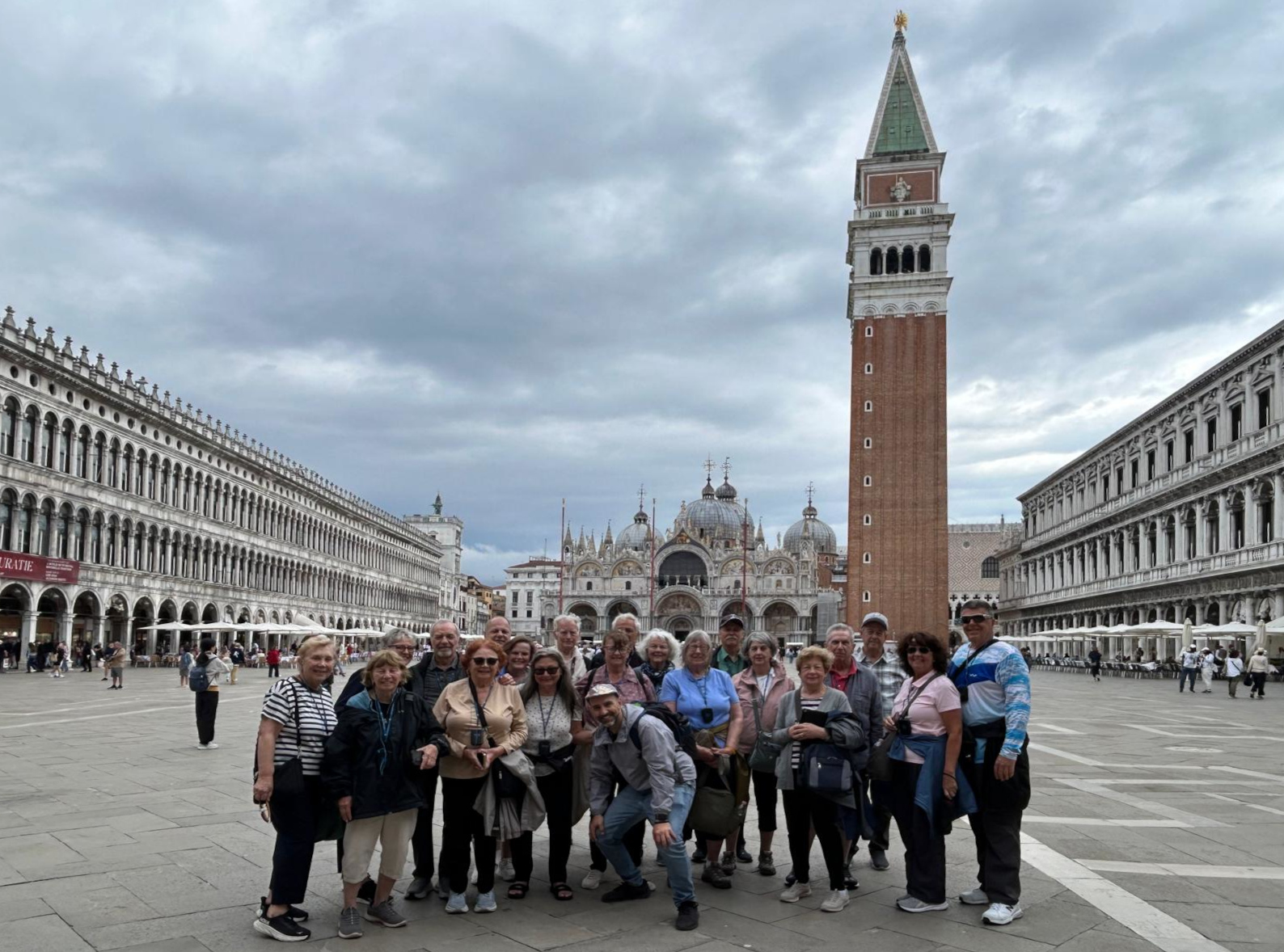
The afternoon is at leisure to enjoy this timeless city as we wish, perhaps by visiting one of the city’s museums (the Peggy Guggenheim collection is a favorite), exploring the history surrounding us (the Doge’s Palace presents a fascinating look at the opulence reserved for the city’s old rulers), or simply relaxing with a gelato or cappuccino.
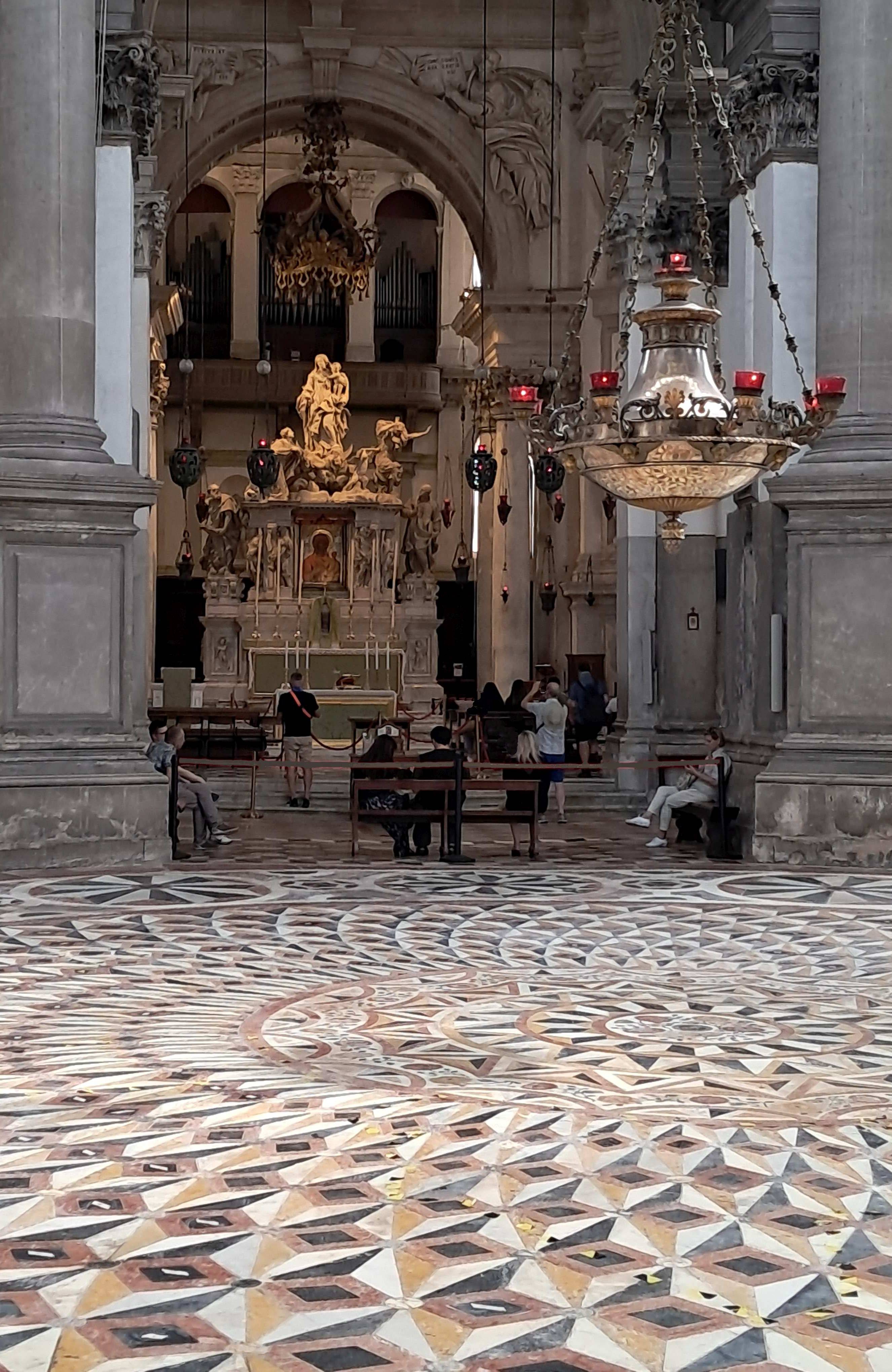
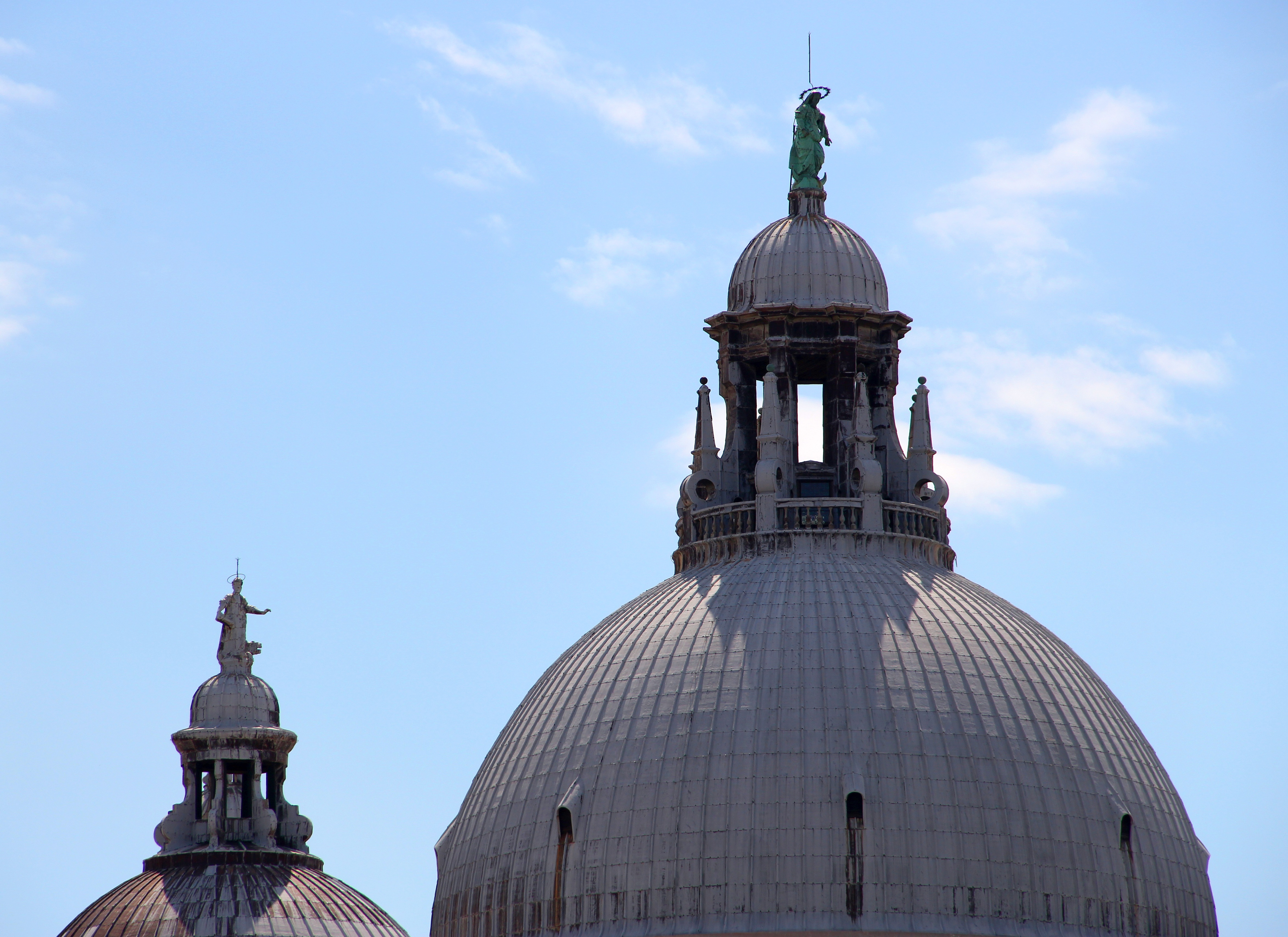
Near the end of the afternoon, I wandered into this gem.
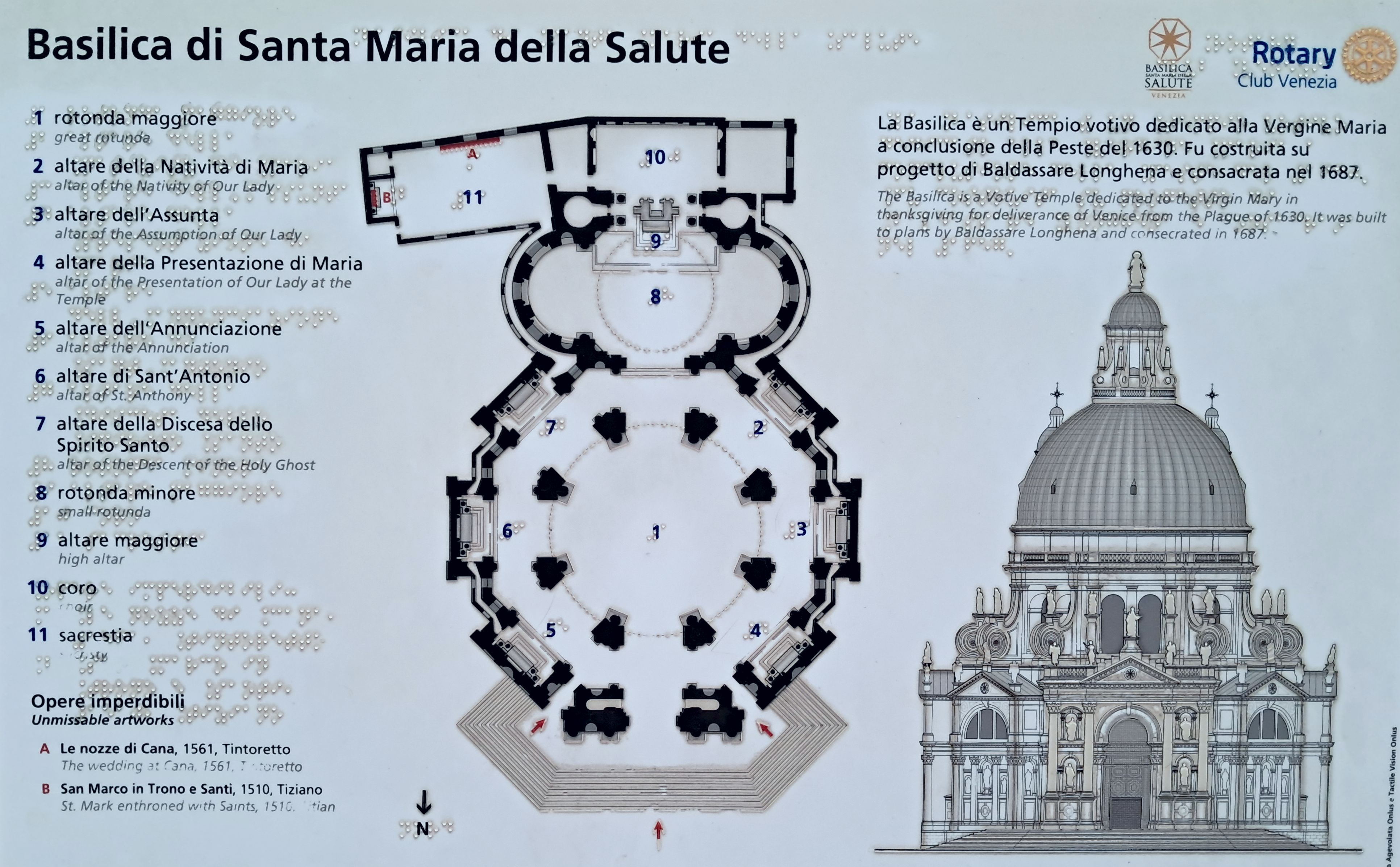
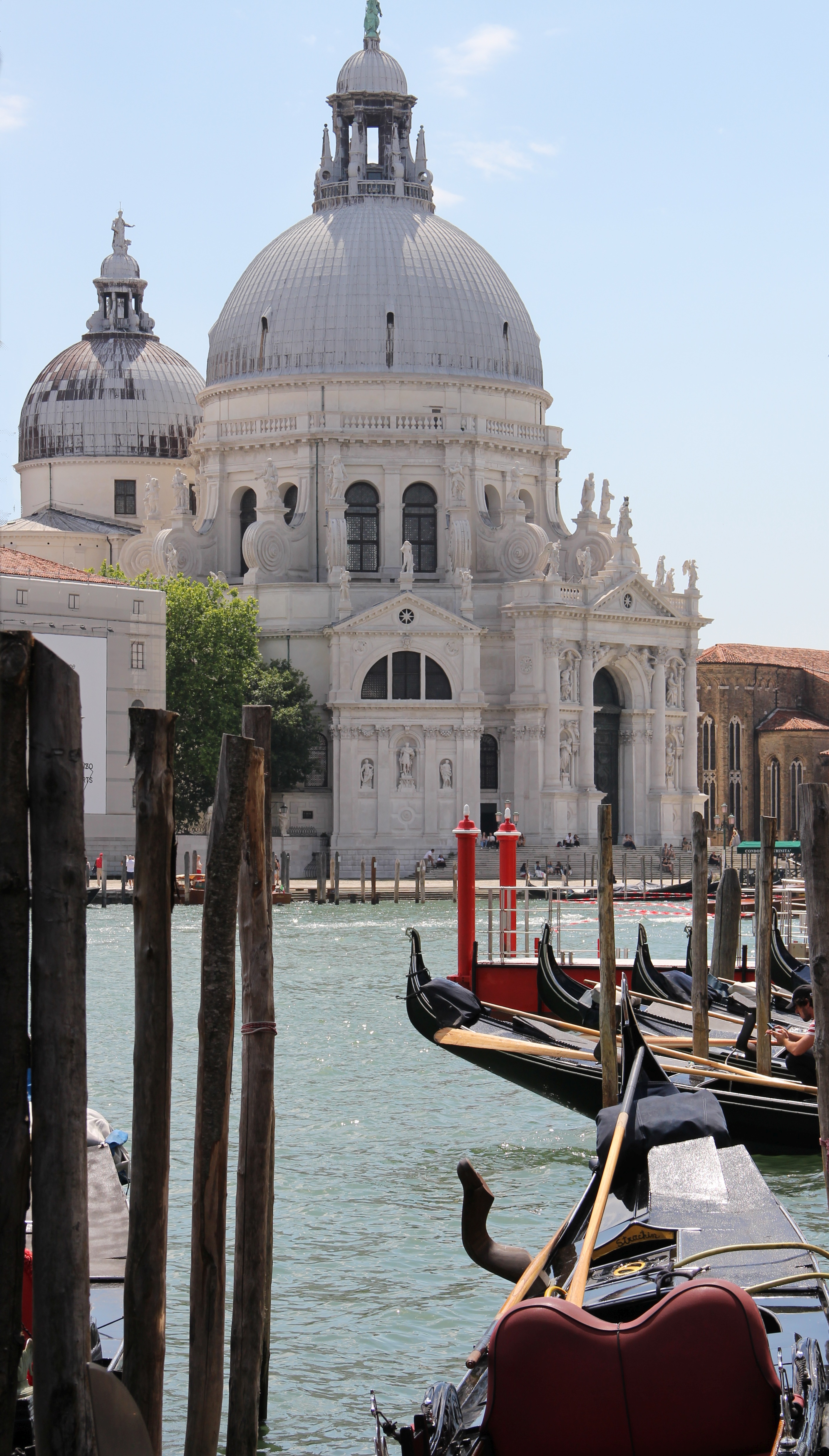
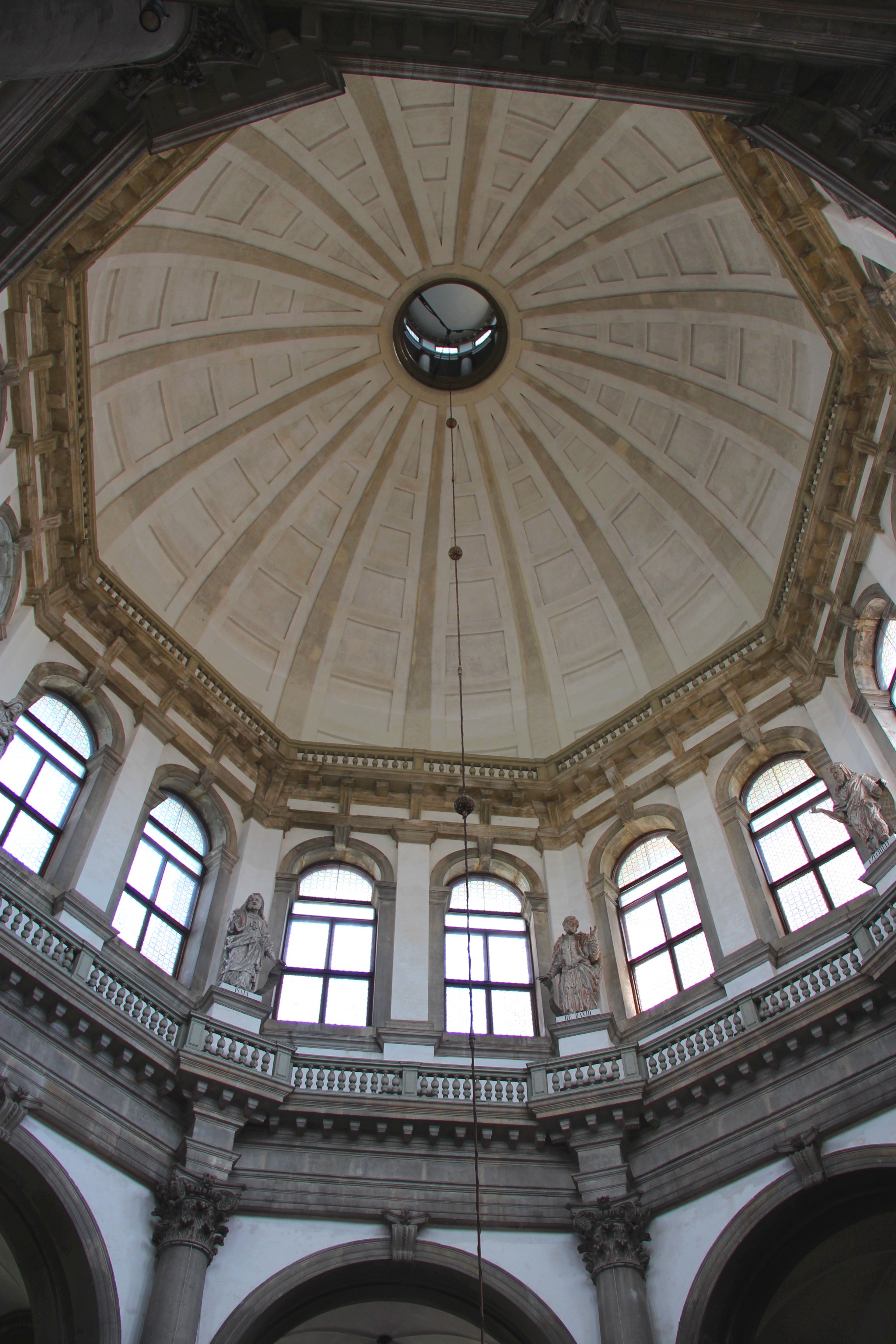
The Basilica di Santa Maria della Salute is not, as far as I am aware, one of Venice's "major", "must see" churches.
I hope these images will suggest the abundant beauty present in the city.
This evening, we gather for a farewell dinner to bid “arrivederci” to Italy and to our fellow travelers.
Accommodations: Palazzo Veneziano
Meals: Breakfast, Dinner
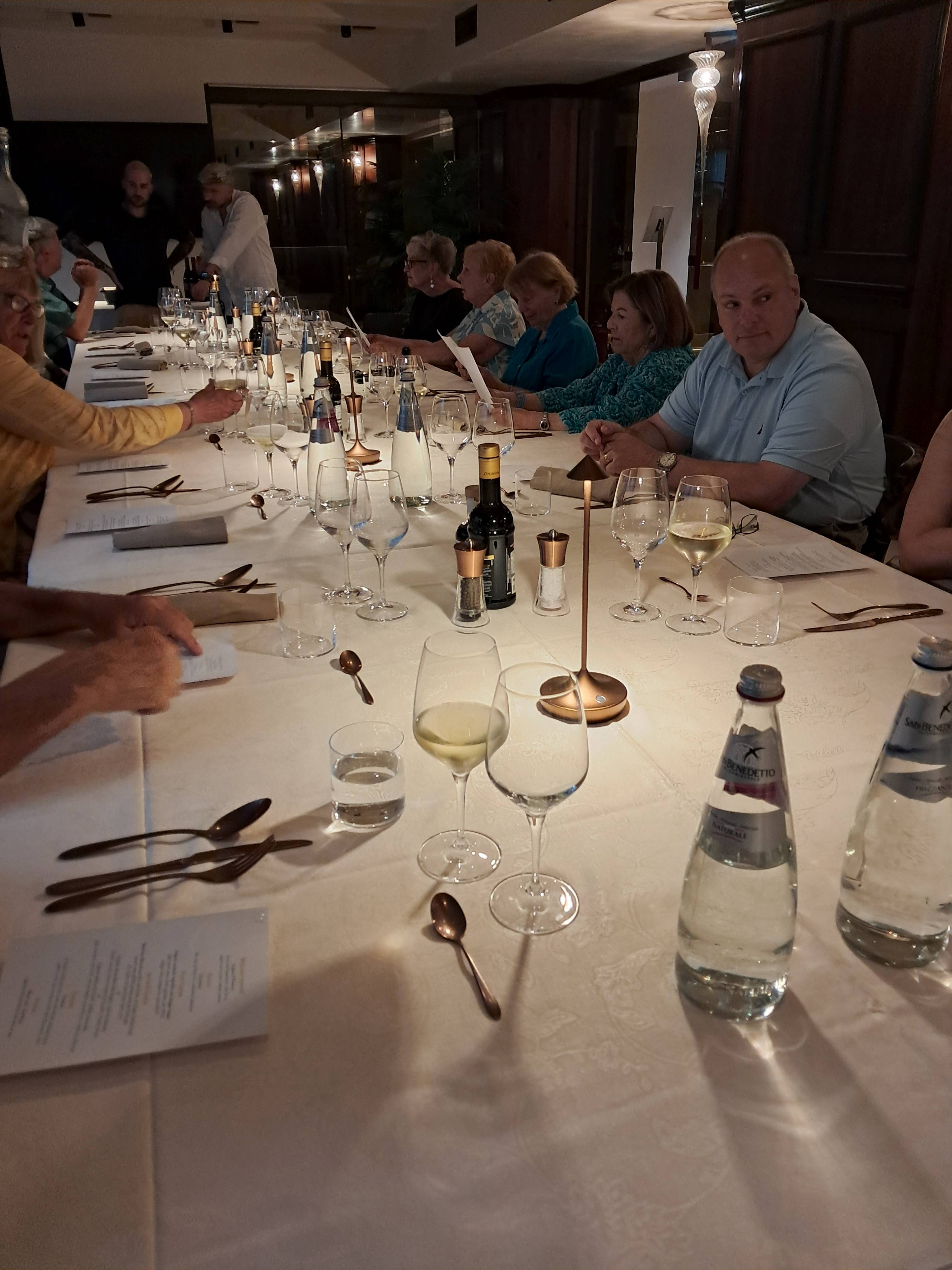
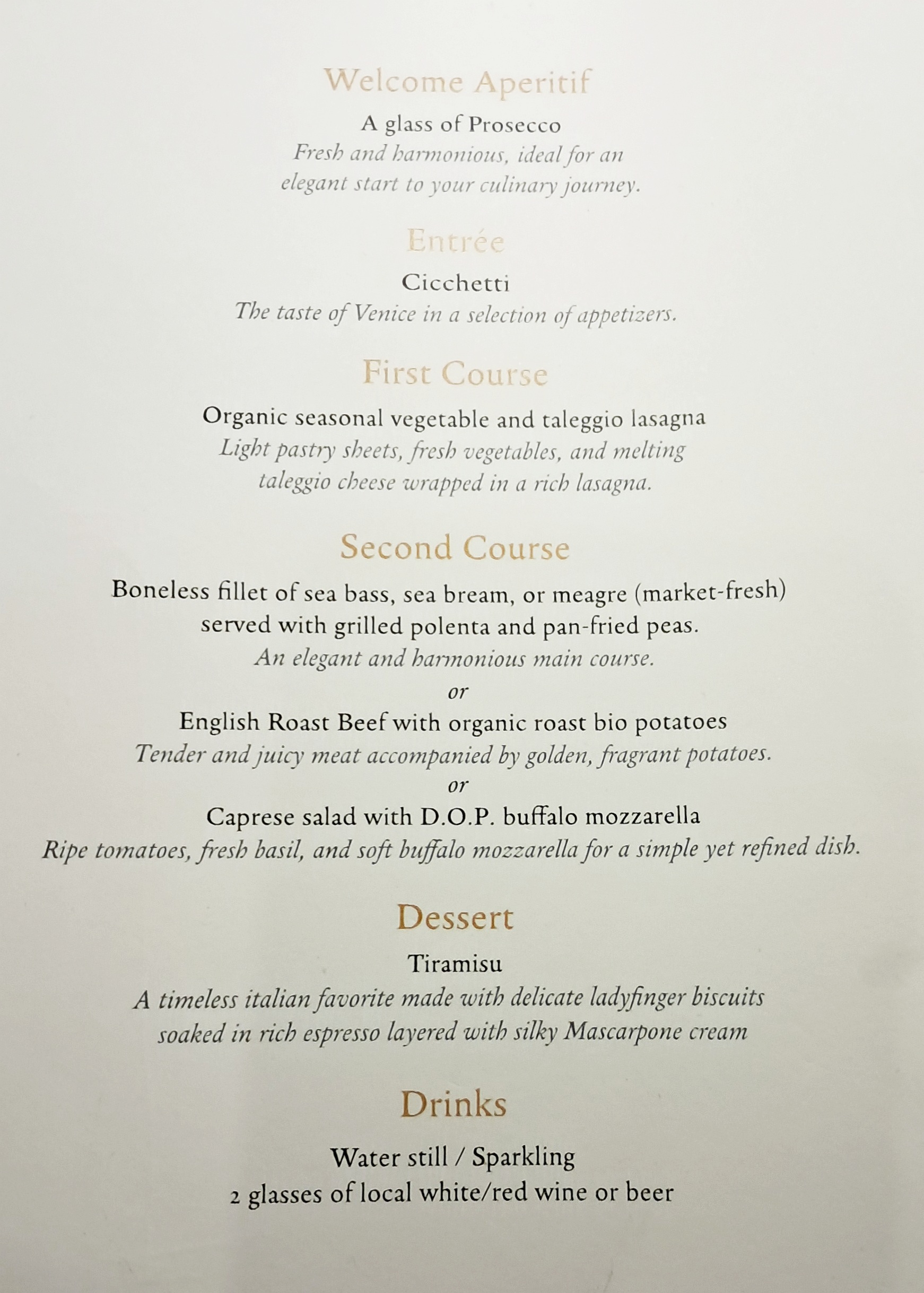
The hotel did a wonderful job of our farewell dinner. The room and the table were magnificent. I don't think I've ever dined at such a wide table! The food was excellent, and stylishly presented.
A lovely end to a very good tour.
DAY 15- Depart Venice, Saturday, 6th June, 2026
We depart early this morning for the airport and our flights home.
Meals: Breakfast
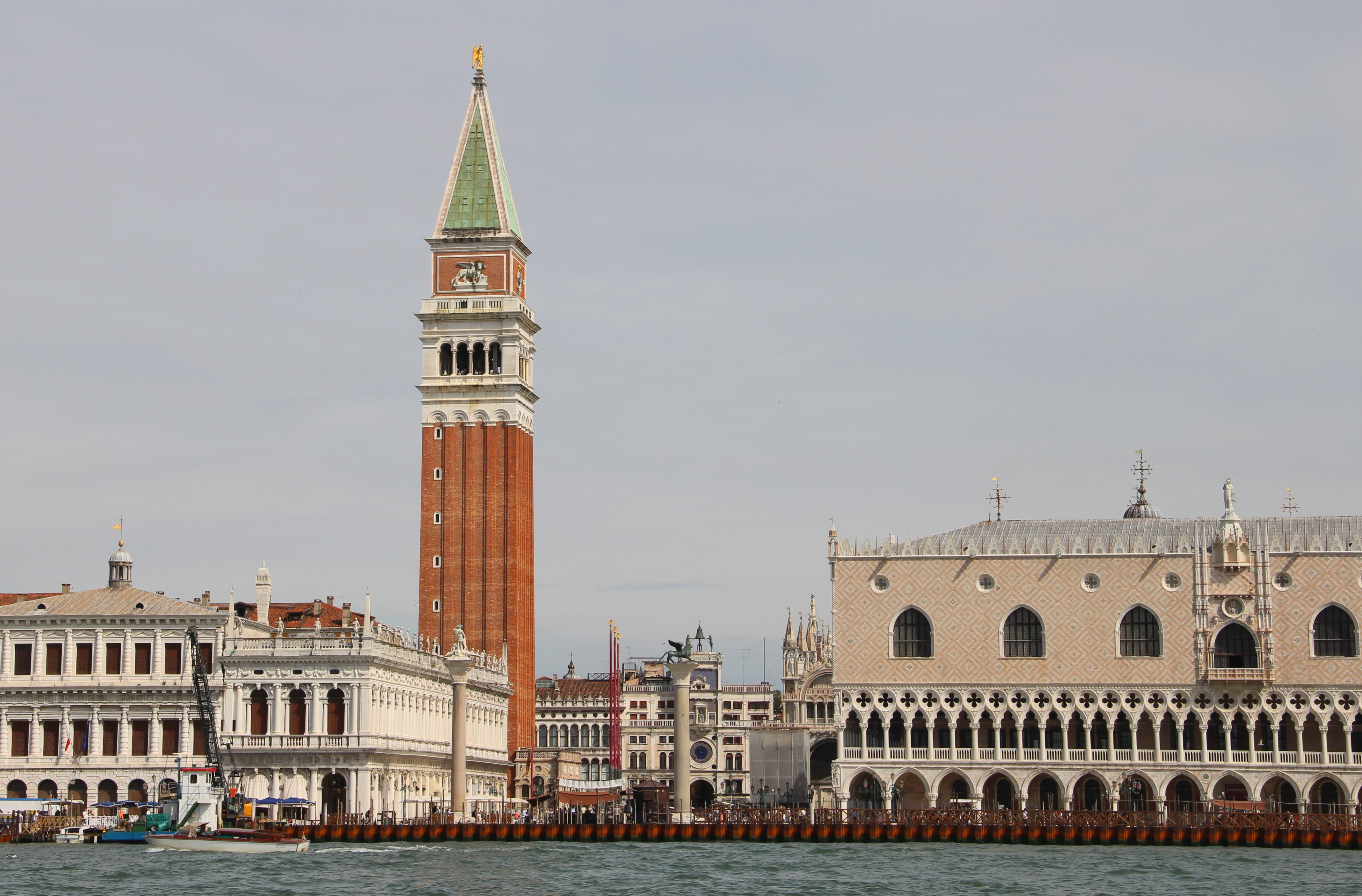
We went to the aiport in groups... one group had to get up at 3am. Groan!
We left Venice as we had arrived... in small motor launches which picked us up via the small canal behind our hotel, and delivered us to the airport on the mainland "the old fashioned way"... i.e. across the water of the lagoon. The way people have accessed Venice for centuries. There is, in fact, a bridge today... but using it takes away some of the romance! (The photo to the right of this was taken early in our journey to the airport; it was a joy to have such a splendid view of that iconic vista as a "last memory" of the trip.)
Our excellent tour director couldn't be everywhere at once, and the group I went to the airport with had a different person from Odysseys Unlimited taking care of us... which she did nicely, and thoroughly.
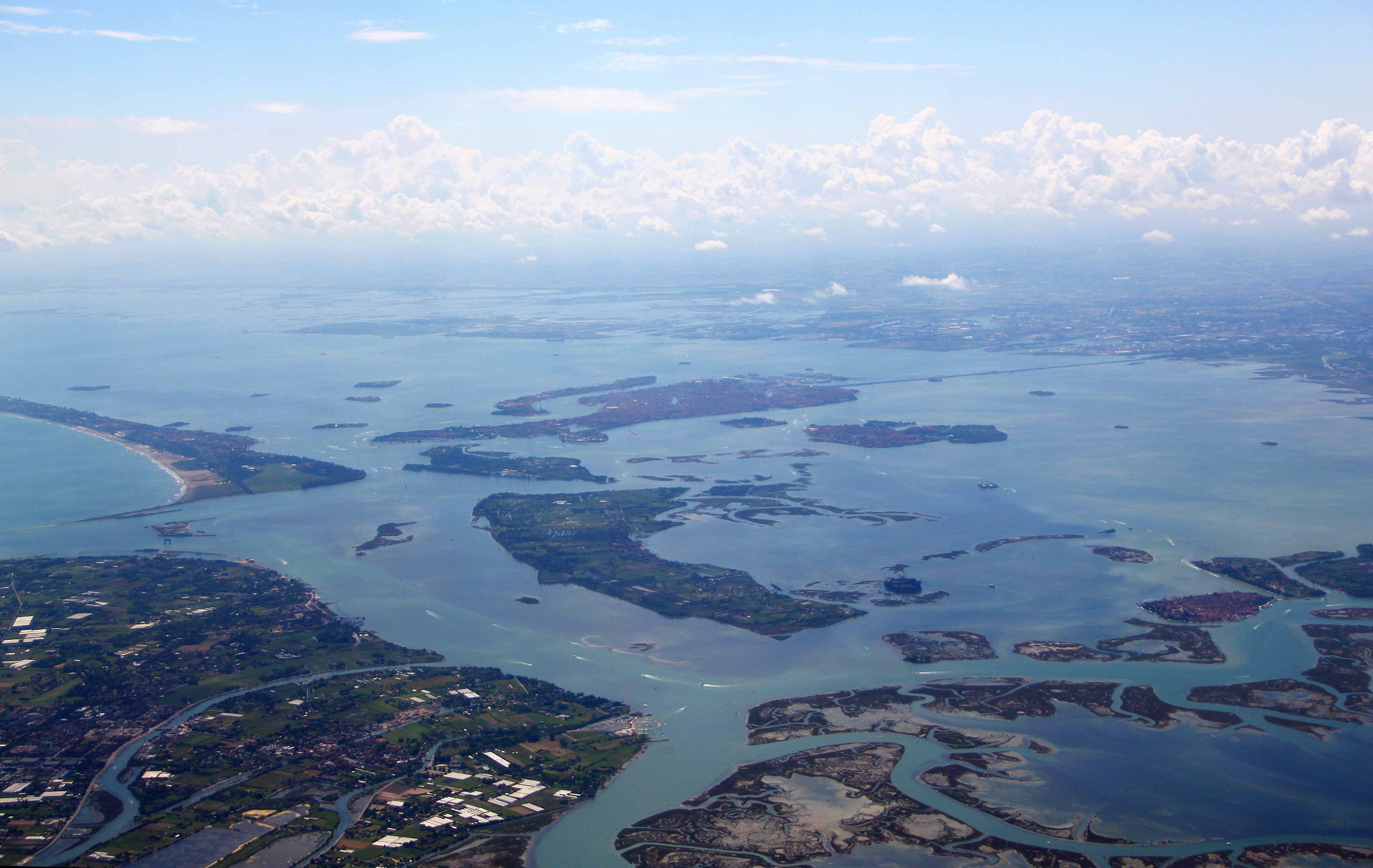
Here we see how Venice relates to some of the other islands in its large lagoon. Venice is in the center of the photo. The high density of tile roofs there gives it an orange tint. We were Northeast of Venice when the photo was taken.
I suspect the tourist board has done a deal with the air traffic controllers. It was a superb view.
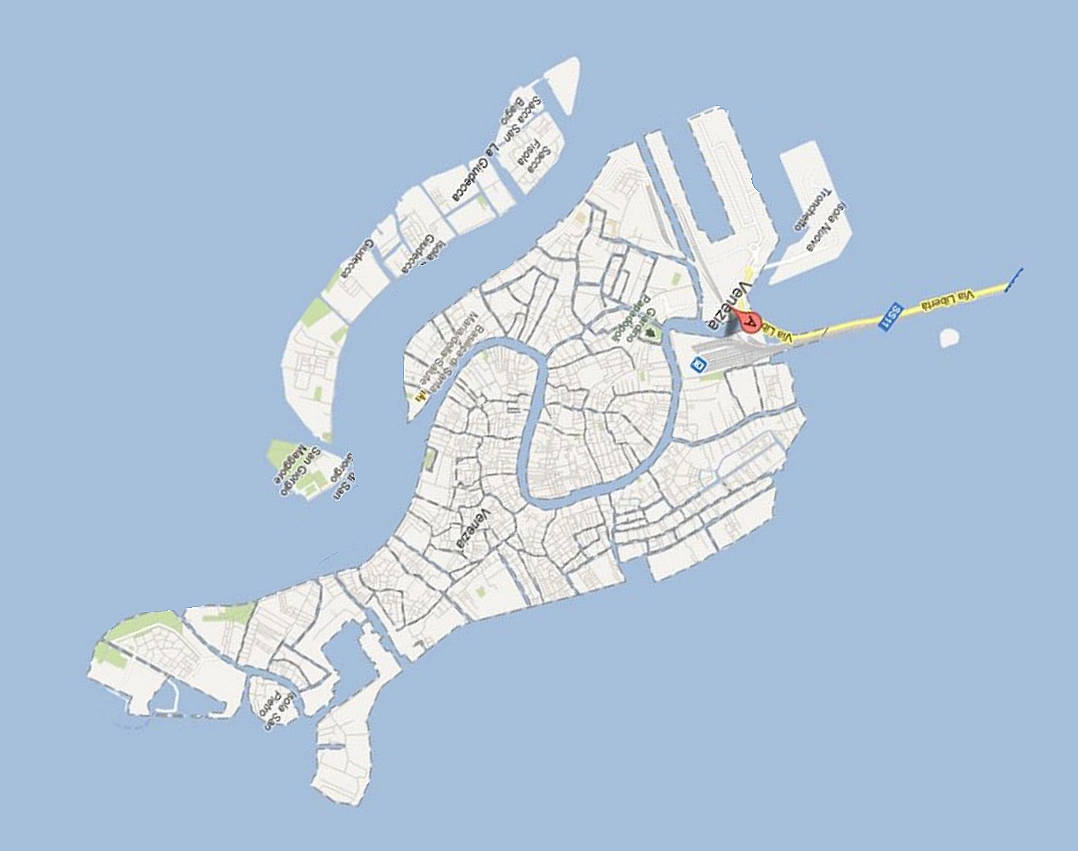
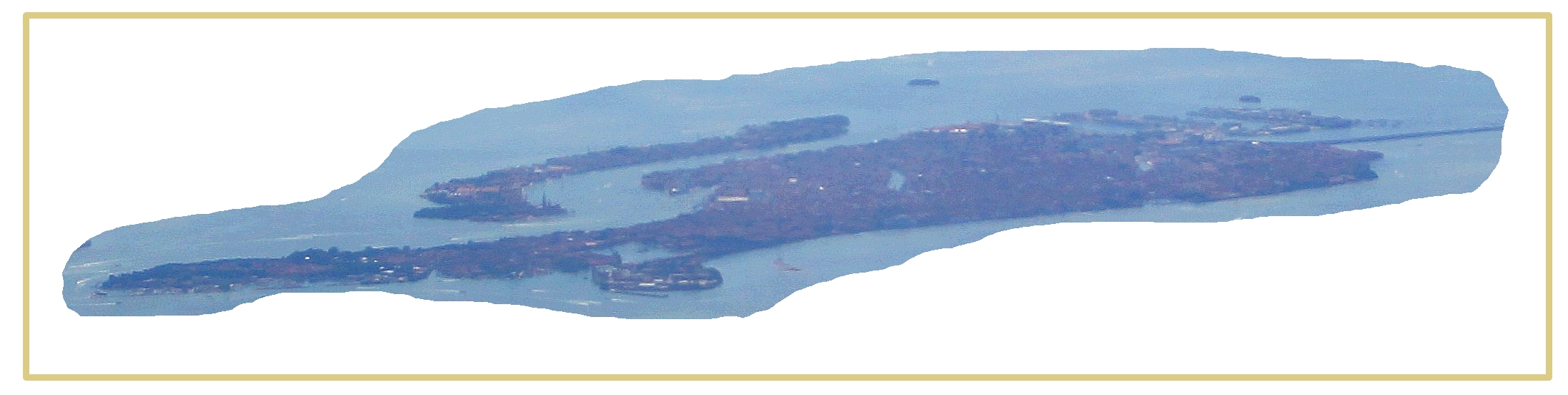
So! There you have it!
I hope you enjoyed the page.
Nothing to do with Italy trip... but... a little bonus for you!
Not long after we returned, the SpaceX IPO made Mr Musk history's first trillionaire.
I cannot get my head around "a trillion". Can you?
A trillion seconds is 31,000 years. The Earth 30,000 years ago was still deep in the grip of the latest Ice Age. It's possible there were even a few Neanderthas left.
If he could have turned all of his shares into cash...
and paid 50% tax on that...
and put them in to a crummy CD paying only 2%...
and paid 50% tax on THAT...
...... he'd have to limp along on "only" $1,500 per second.
-----
Do you know how many seconds there are in a day? Enough to leave him with about $130 million a day... on the taxed interest.
I think!
Try doing the sums yourself! Do get in touch with the right numbers, if I am wrong.
Remember as a tiny child being fascinated by the fact that no matter how many zeros you added to a number, it could still be made even bigger with MORE zeros?
Computers aren't like that. There's alway a limit to how big a number can be.
I suspected that I couldn't do it with a spreadsheet without using some power-of-ten tricks!!! (I was wrong, but I was nearly right. Libre Office will do exact integer representation to 15 significant digits. Integers larger than 9,007,199,254,740,992 will suffer from rounding errors and loss of precision because there are "gaps" between adjacent representable values. (That's 9,007 trillion)).
Search across all my sites with the Google search button at the top of the page the link will take you to.
Or...
Search SheepdogGuides.com site, including my trip reports...
What's New at the Site
/ /
Advanced search
This search tool (free to me and to you) provided by FreeFind.com... whom I've used since 2002. I'm happy with them... obviously!
Unlike the clever Google search engine, FreeFind's merely looks for the words you type, so....
* Spell them properly.
* Don't bother with "How do I get rich?" That will merely return pages with "how", "do", "I"....
Disclosure: FreeFind tells me what people have searched for. It doesn't tell me your personal details. (If someone would "spy" on you, wouldn't they also feel free to lie in a "privacy statement"? I didn't wite that to say "I'm not lying"... how can you tell? I wrote it to ask "What are privacy statements worth?".
I have other sites. The Freefind search will not include them. They have their own search buttons.
My SheepdogSoftware.co.uk site.
My "wywtk.com" site...WhatYouWantToKnow
My Skywoof.com site.
And there are links from those pages to pages at my SheepdogGuides.com, Arduserver.com and Flat-Earth-Academy.com sites.
My oldest-still-going site is at http://www.arunet.co.uk/tkboyd/index2.htm but that does not accept httpS access. An image of most of it is also available at https://skywoof.com/aru/index2.htm
Ad from page's editor: Yes.. I do enjoy compiling these things for you... I hope they are helpful. However.. this doesn't pay my bills!!! If you find this stuff useful, (and you run an MS-DOS or Windows PC) please visit my freeware and shareware page, download something, and circulate it for me? Links on your page to this page would also be appreciated!
--Click here to visit editor's freeware, shareware page.--
Apologies if there is an ad above here... but it helps search engines find my page.
This page's editor, Tom Boyd, will be pleased if you get in touch by email. Suggestions welcomed! Please cite "SheGui/tr/italy26/i-itin.htm.htm".

Page has been tested for compliance with INDUSTRY (not MS-only) standards, using the free, publicly accessible validator at validator.w3.org. It passes in some important ways, but still needs work to fully meet HTML 5 expectations.
AND tested for

One last bit of advice: Be sure you know all you need to about spyware.
. . . . . P a g e . . . E n d s . . . . .