
What is is rarely what has always been.
And don't underestimate how invigorating it can be to bestir yourself and have a new realization once in a while.
This essay will talk about the weather, and the history of humanity's partial conquest thereof. And it will explore an idea for a "do it yourself" project.
The project will probably come to nothing... but thinking about how it might be done could be fun for some. It was for me! (But then, I'm a little... eccentric?)
We take for granted that pretty good weather forecasts are available to us. We take for granted that if close friends live, say, 40 miles west of us, we will often have a good idea of what their weather will be today.
THINK about it! It was not always thus!
Not so very long ago, you knew what your local weather was at the moment, and you could hazard a guess as to what it would be like in six hours. But that was about it.
Come the Enlightenment, and this was Just Not Good Enough.
What the people who turned their attention to weather did in their quest to understand it better is breath-taking, if you study it carefully, and think hard about what you can learn.
This essay was inspired by Peter Moore's very readable book, The Weather Experiment: The Pioneers Who Sought to See the Future. (The link will open the Goodreads page about it in a new tab. Just close that to get back here.)
Try to imagine being there THEN!
People didn't know that big storms were caused by vast whirlpools of air. They only knew what they could see and feel WHERE THEY WERE!
Gradually, people got curious. What was the bigger picture.
But they had no radar, no satellites!!! And even if they did, and could make modern maps... they had no way to deliver those maps to people on the day that the weather was what the radar was saying.
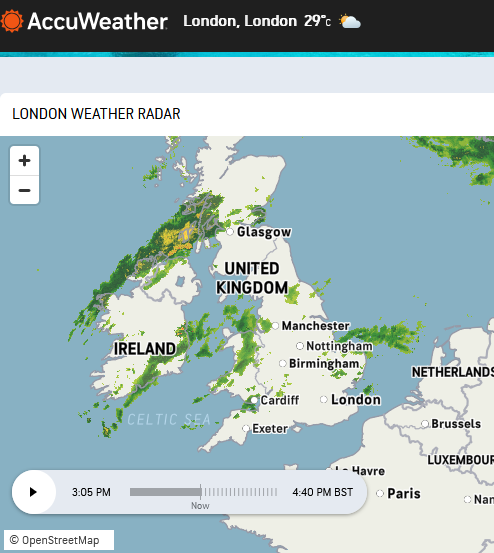
(That, of course, oh by the way, is just a screenshot from an animation showing the rain in the past 45 minutes, and a pretty good prediction of what will happen in the next 45 minutes. You can of course access the video of what's happening now, if you wish.)
Industrious souls sent letters out... "When did last week's storm hit where you were? What were the winds? What directions? What temperatures?" Etc, etc.
And when that information came in, they tried to make maps to show what happened at the time of the storm.
From patchy and anecdotal evidence, they tried to make maps to show what happened at the time of the storm!!!
And, incredibly, they had some success!
Some success because they worked very hard to collect LOTS of data. And then they worked very hard to put that on maps.
If you've really thought about this, you are saying "Incredible!".
Collecting enough data: Incredible.
Presenting it in a coherent form that told the story: Incredible.
All this without computers. Not emails. No database software. No copy/paste. No plotting of data points by computer.
!!! I-N-C-R-E-D-I-B-L-E !!!
But they did it!
More to come...
I dare you to try to figure out what YOU could do to "copy" what those amazing people did so long ago.
I see this as two challenges.
Try to find a pair of answers which could be "joined up" when you had each half working to give a full answer, but doing either challenge well will not be easy. Build half of Rome first, and then see if you have enough energy left to go on and build the other half.
The two halves are....
Just planning how you think you could do either half would be fun for some people. Try it! See if you are one of them?
(If you do work up "answers" to either, I'd be interested to hear about them. Contact details below... apologies for the fact that I don't watch that address very carefully. It is a secondary eddress which sometimes, because it is "out there" gets spam. I do check it from time to time, though!!! I'd be thrilled if either was used as an exercise in a school environment.)
Basically, you need to think of something people might be willing to do for you.
For the rest of this essay I'm going to talk about temperatures, as if temperature was all there is to the weather.
I'm sticking to temperature as an example. Of course, if you ever actually attempted all of this, you'd probably want to track other weather phenomenon as well.
Digression: I've long thought that it would be fun to set something like this up with perhaps 8 rainfall sensors spread across a 10 mile diameter circle... 5 on the rim, three "filling in" the middle.
If the sensors could record "mm of rain each minute", then perhaps the maps of what rain fell where could be amusing?
Simple rainfall sensors aren't horrifically expensive ($35) and the electronics to collect their data can be set up for perhaps another $25. But all of that is a detail in the context of this essay, so I'll stop this digression... in a moment.
The page the link above gives you a way to build a webserver to tell you temperatures. You'd have to pair that with a simple program to fetch the number and store it in a file. (Not rocket science, and explained at the page.)
What the page doesn't say is that modifying it to save readings to an SD card on the Arduino would not be hard.
oNow I'll end the digression.
You need to think about what data is to be recorded. How is the data going to be organized. How... and when!... it is going to be written down, sent to you.
Ask too much, and you won't get anyone to participate. Ask to little, or don't ask for the right things, and the data won't be as useful to you as you'd hoped.
Think about the options the experimenters had in the 1800s!
They could say...
"Please measure the temperature there every day at noon, write your numbers down on a page from a calendar, and send that to me by the end of the first week in the next month."
That might not have been too bad, for that era.
In this era, you would want to have the numbers in a computer file. Spreadsheet? Text document? Etc. You want something workable for the sender and easily used by you.
It is entirely possible (and not desperately expensive) to set up some electronics to record the data and write it to a file automatically!
You need to be sure that your data collectors have an accurate temperature sensor and put it in a good place.
Details, details! Can you think of everything that's relevant? And make good choices.
Digression: In the 1800's, quite by accident, the people investigating weather already had a HUGE collection of data.
Navy ships... and many merchant ships... kept "logs". ("Diaries", by another name.) They wrote down where they were, and some weather data every day! And the logs were collected and stored after voyages.
It was a mammoth task, but the people trying to understand weather went through vast numbers of entries, and picked out the weather data. When it was properly organized, the scientists found patterns in what winds occurred where and when in the oceans.
Knowing the likely winds in different places allowed captains to cut the time to cross the Atlantic by about a third by using the route with the best winds.
So! Imagine that you solved the data collection challenge, and you have a great pile of numbers.
Again, cast your mind back to how it was used back in the 1800s. Diligent and determined people spent hours and hours turning numbers into marks on maps. By hand. With limited opportunities for editing, or animating, or anything.
And yet they came up with useful presentations of the information in the data.
I never said that you should attempt to do what the people in the 1800's did. Forget quill pens.
All I am saying is: Can you collect the data?... taking advantage of modern things available to you. Can you transform that data into presentations that show the information in the data?
One "answer" I though would be fun is as follows...
Suppose you had data coming in from eight cities lying close to some line running from west to east... in an area where the weather often travel from west to east.
Let's say that the data is collected every two hours.
You could organize that data as follows...
(Bear with me, please! Read on past the paper maps and crayons!)
Print yourself 24 paper copies of a sketch map that shows your cities. We need a 5mm (diameter) empty circle near each city.
Set up a scale of colors running from blues for cold to reds for hot.
Now take the first map and the data for the first time the temperatures were read.
Color in the circles by the cities with the color for the temperature that it was there and then.
Do that 23 times more, and you will have made a "picture" of what the temperatures were doing in those cities over the two days in question.
I bet patterns would emerge. I think you would be able to see bodies of warmer air (and bodies of colder air) moving along the line of cites.
Now... of course I don't suggest that you do exactly what I've described above. I suggest that you simulate it in a computer. And you tell the computer to animate the whole thing, so it is as if the 1st map is on the screen for half a second, then the 2nd, then the 3rd, and so on. Then it would be really easy to see the moving areas of warm and cold, wouldn't it?
Okay! That's not a simple computer program. But it isn't rocket science either. Even a programming beginner should be able to write intelligently about what the innards of such a program would have.
If it was all super easy, could it be called a "challenge"???
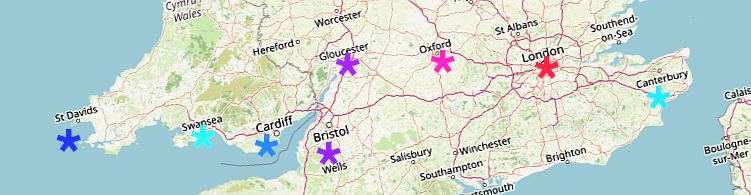
The image above is a crude mock up of the sort of thing I was trying to suggest.
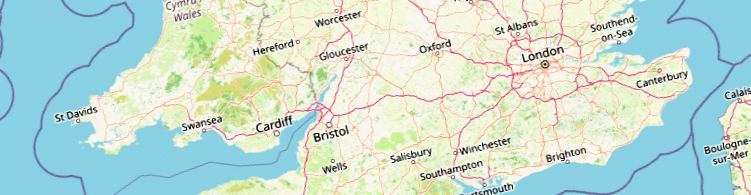
(And here's a copy of the underlay for the enterprising person who wants to create the simulation for everyone. (It's only small because of how it is displayed.) Just copy paste, and work your magic! Please send me an animated .gif to put on this page if you succeed? Contact details below.)
It's amazing what AI can tell you, and it's amazing what the internet has for us.
I was thinking about all of this. For me the "Information Presentation" challenge is more interesting. I was thinking of generating some made-up data to feed my program. I didn't want to face trying to arrange for people to send me data.
Then it occurred to me to ask the Brave search AI, LEO (http://search.brave.com) "Can I get free historical hourly weather readings from someplace?"
Within 10 minutes I'd downloaded a spreadsheet with three weeks' worth of hourly temperature readings for where I live. It was easy. Amazing.
And if I'd wanted, I could have had the hourly readings form many other phenomena, too.
Free.
I given this amazing body of data by https://open-meteo.com/en/docs/historical-weather-api. Not only was it a fabulous gift, but their web site is so well designed that I got what I wanted with my first try, no hassle, no hard thinking.
Besides open-meteo.com, you might want to have a look at https://www.wunderground.com/. It has been around for years, and as you've stuck with this, read as far as here, I think you would be interested in some of what Wonderground has to offer.
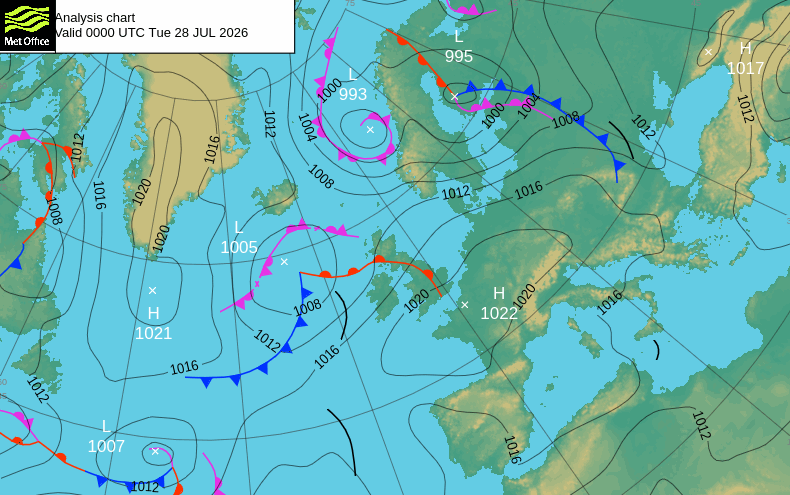
The next time you see something like this, I hope you will appreciate it more.
Search across all my sites with the Google search button at the top of the page the link will take you to.
Or...
Search SheepdogGuides.com site, including Flat-Earth-Academy...
|
What's New at the Site / / Advanced search
This search tool (free to me and to you) provided by FreeFind.com... whom I've used since 2002. I'm happy with them... obviously!
Unlike the clever Google search engine, FreeFind's merely looks for the words you type, so....
* Spell them properly.
* Don't bother with "How do I get rich?" That will merely return pages with "how", "do", "I"....
Disclosure: FreeFind tells me what people have searched for. It doesn't tell me your personal details. (If someone would "spy" on you, wouldn't they also feel free to lie in a "privacy statement"? Not to say I'm not lying... how can you tell?... but to say "What are privacy statements worth?".
The search engine merely looks for the words you type, so....
*! Spell them properly !*
Don't bother with "How do I get rich?" That will merely return pages with "how", "do", "I", "get" and "rich".
I have other sites. The Freefind search will not include them. They have their own search buttons.
My SheepdogSoftware.co.uk site.
My "wywtk.com" site...WhatYouWantToKnow
And there are links from those pages to pages at my SheepdogGuides.com, Arduserver.com and Flat-Earth-Academy.com sites.
My oldest-still-going site is at http://www.arunet.co.uk/tkboyd/index2.htm but that does not accept httpS access. An image of most of it is also available at https://skywoof.com/aru/index2.htm
--Click here to visit editor's freeware, shareware page.--
This page's editor, Tom Boyd, will be pleased if you get in touch by email. Suggestions welcomed! Please cite "FEA/sci/wea/fn_ame.htm".
Page has been tested for compliance with INDUSTRY (not MS-only) standards, using the free, publicly accessible validator at validator.w3.org. It passes in some important ways, but still needs work to fully meet HTML 5 expectations.
AND tested for

. . . . . P a g e . . . E n d s . . . . .